-

·
Breath Posture Exercises for Alertness and Clearer Focus
Slumping can make breathing shallower before you even notice your focus slipping. That’s why breath posture exercises can work so well for adults, students, and desk workers. They don’t create fake energy. Instead, they help your body breathe more freely, reduce the heavy feeling of a collapsed chest, and make it easier to feel switched…
-

·
Movement Breaks for Office Brain Fog: Simple Resets That Work
White-collar workers can spend up to 8.5 hours a day in prolonged sitting, according to the International Sport and Culture Association. That kind of stillness can leave office workers’ minds feeling slow, flat, and oddly heavy by mid-afternoon. If you’ve ever re-read the same sentence three times, you know brain fog at work is real.…
-

·
How Much Exercise Helps Memory Each Week
In an early 2026 study, adults who reached 150 minutes of aerobic exercise a week for a year had measures of brain volume that looked almost a year younger. That’s a big return for a habit as ordinary as brisk walking, a simple physical activity. If you want the short answer, weekly movement really does…
-

·
Best Time to Exercise for Focus: What Actually Works
Most studies on the best time to exercise for brain function do not crown one perfect hour as the winner. If you want better concentration, the best time to exercise is usually the time you can repeat without harming sleep, work, or motivation. Research up to March 2026 points in a clear direction: regular movement…
-

·
Coordination Exercises for Brain Health You Can Start Today
Your cerebellum helps with balance, timing, attention, and cognitive function, not just movement. That matters because every time you catch yourself, switch sides, or match hand to eye, your brain has to sort and correct live information. That is why coordination exercises for brain health are worth your time. These neuromotor exercises train movement, but…
-

·
Yoga for Stress Reduction and Focus on Busy Days
Stress often steals mindfulness, clear thinking before you even notice your shoulders have crept up to your ears. That’s why yoga can feel so helpful, so quickly. It works through the body first, then the mind follows. For yoga stress reduction, you don’t need an hour, fancy kit, or advanced poses. A few minutes of…
-

·
The NSDR Protocol For Fast Stress Recovery And Focus
A short nap can sometimes make you feel worse before you feel better. That groggy “where am I?” feeling is common, yet it’s the opposite of what you need mid-day. The NSDR protocol (Non-Sleep Deep Rest), popularized by Andrew Huberman, is a guided way to rest without fully sleeping. It’s designed for fast stress recovery,…
-
·
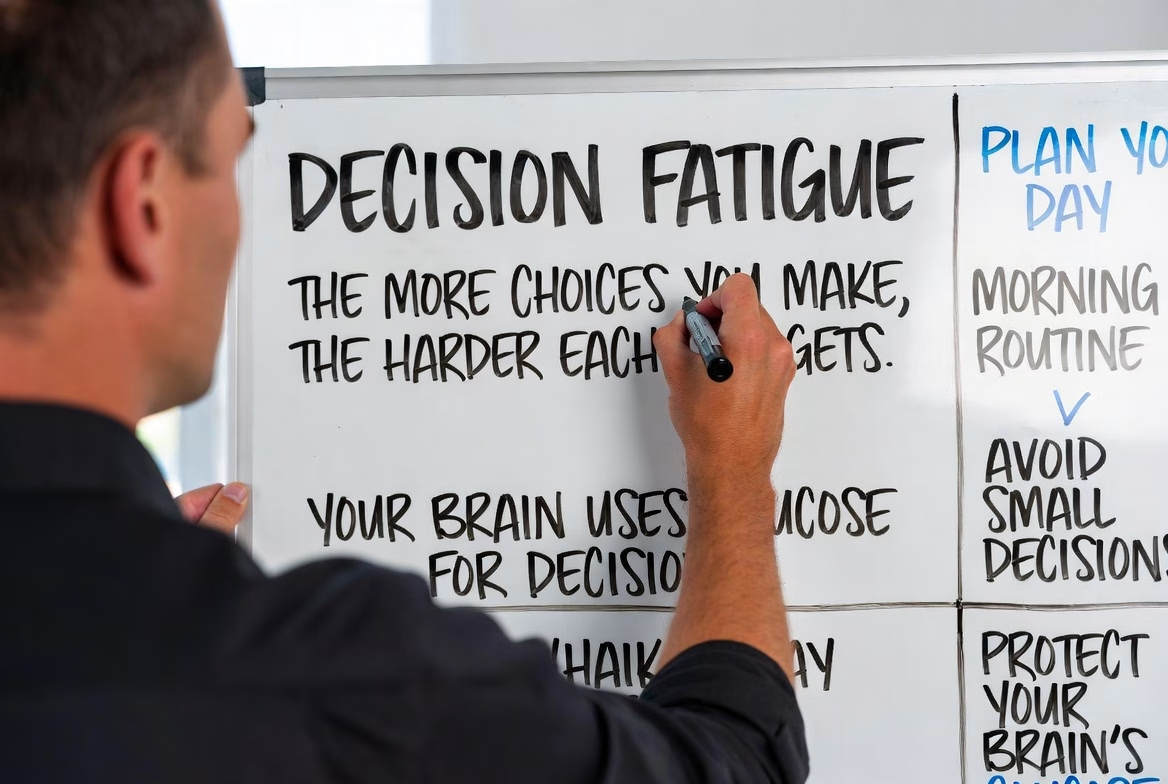
How to Beat Decision Fatigue with a Simple Morning Routine
Imagine you make over 35,000 choices every single day. From what to wear to which email to answer first, your brain is constantly on call. This mental load has a name: decision fatigue. It is the exhausting feeling that creeps in after a long day of making choices, big and small. It can leave you…
-

·
How Walking Boosts Your Brainpower for Better Ideas and Memory
Nearly half of all adults in the UK do not meet the recommended weekly physical activity targets. Yet, one of the simplest forms of movement—walking—holds surprising power for our minds. It is not just about physical health. Regular walking can directly improve your working memory and unlock creative thinking. This connection between a basic activity…
-
·
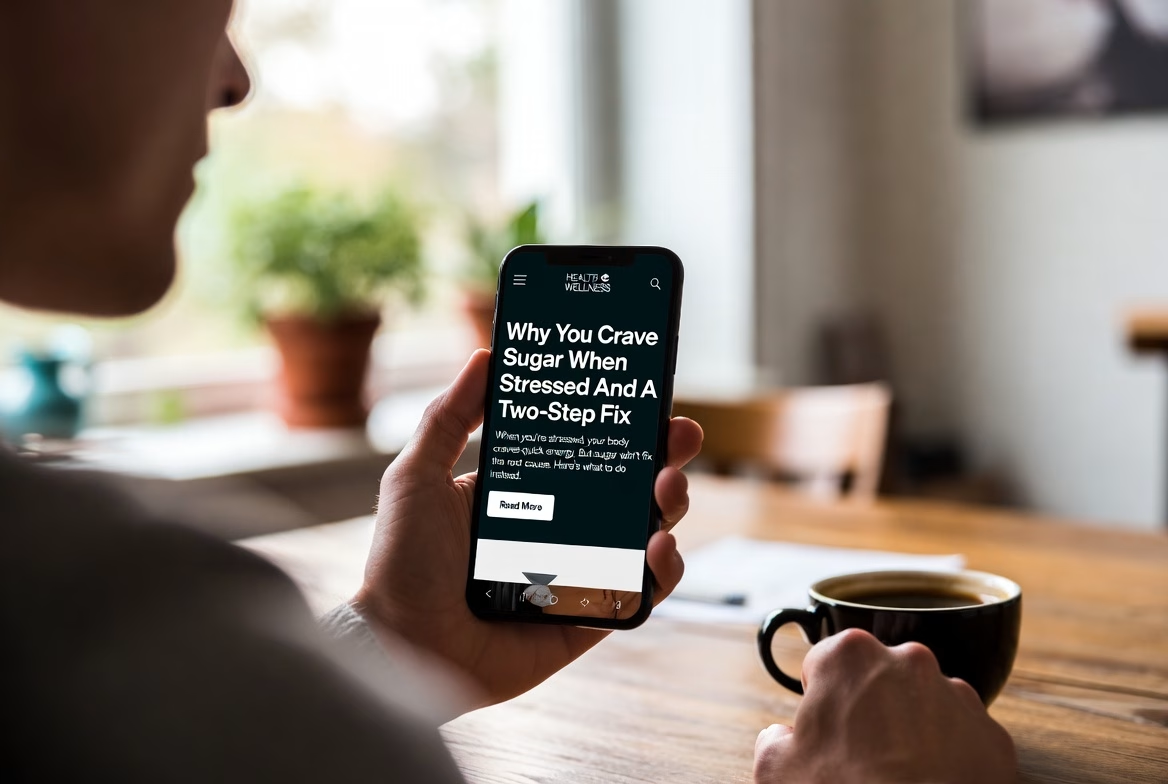
Understanding Stress-Related Sugar Cravings and a Simple Two-Step Solution
Did you know that a stressful day can make a chocolate bar seem almost irresistible? This pull isn’t just a lack of willpower; it’s a deeply wired biological response. When stress hits, your body’s systems shift into high gear, and one common side effect is an intense desire for sugary, high-calorie foods. Recognising this connection…
-

·
Finding Your Calm: How to Discover Your Personal Breathing Rate Sweet Spot
Your resting breathing rate might be higher than you think. Many adults breathe between 12 and 20 times per minute without even noticing. This quiet, automatic rhythm is a powerful window into your nervous system. Learning to gently slow it down can be a direct route to feeling more settled and focused. Key Takeaways Your…
-
·
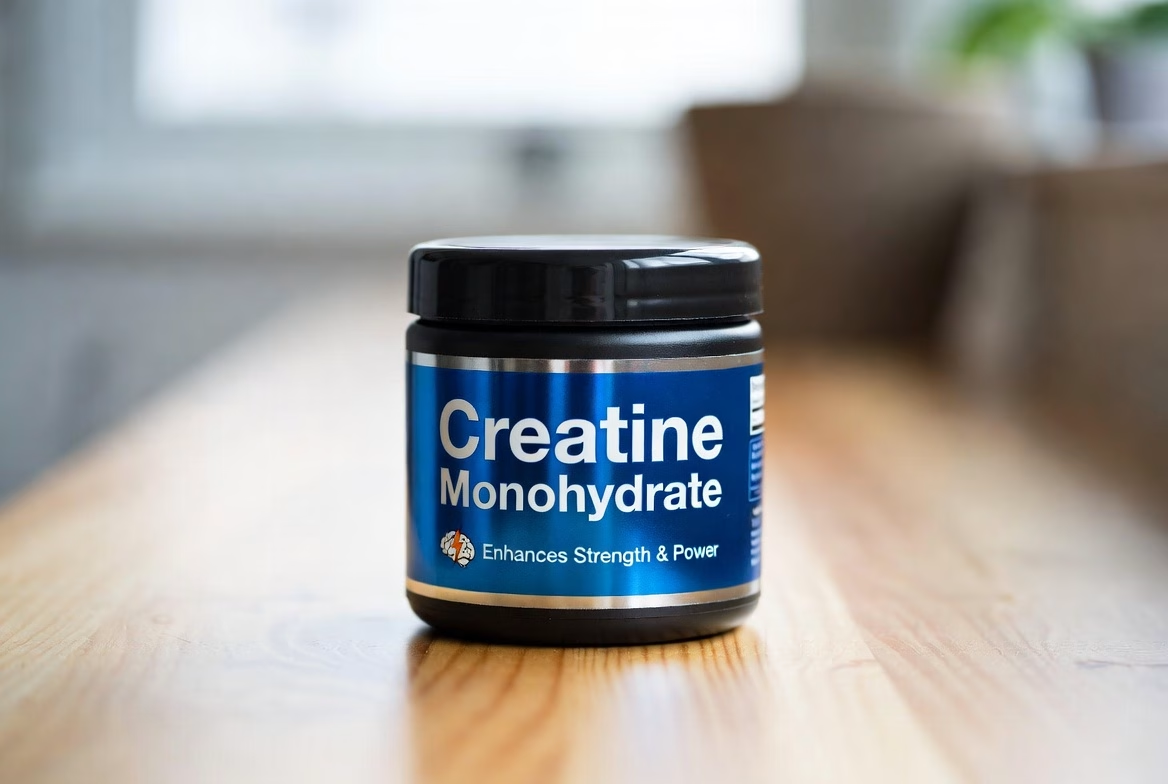
Creatine for Brain Health: Expected Benefits and Safe Dosage Guidelines
Creatine, a supplement long associated with muscle building, is now gaining serious attention for its potential effects on the mind. Research suggests it may improve memory and mental performance in certain groups, particularly under conditions of stress or fatigue. Key Takeaways Creatine may support short-term memory and reasoning, especially during tasks that drain mental energy.…
-

·
Jet Lag Protocol Using Light Meals and Movement for Faster Adjustment
Jet lag from crossing multiple time zones often isn’t caused by the flight itself, it’s caused by light hitting your eyes at the “wrong” local time. Your brain reads that light as a timing signal for your circadian clock, disrupting your circadian rhythm, then your sleep, appetite, mood, and energy follow behind like confused luggage.…
-
·
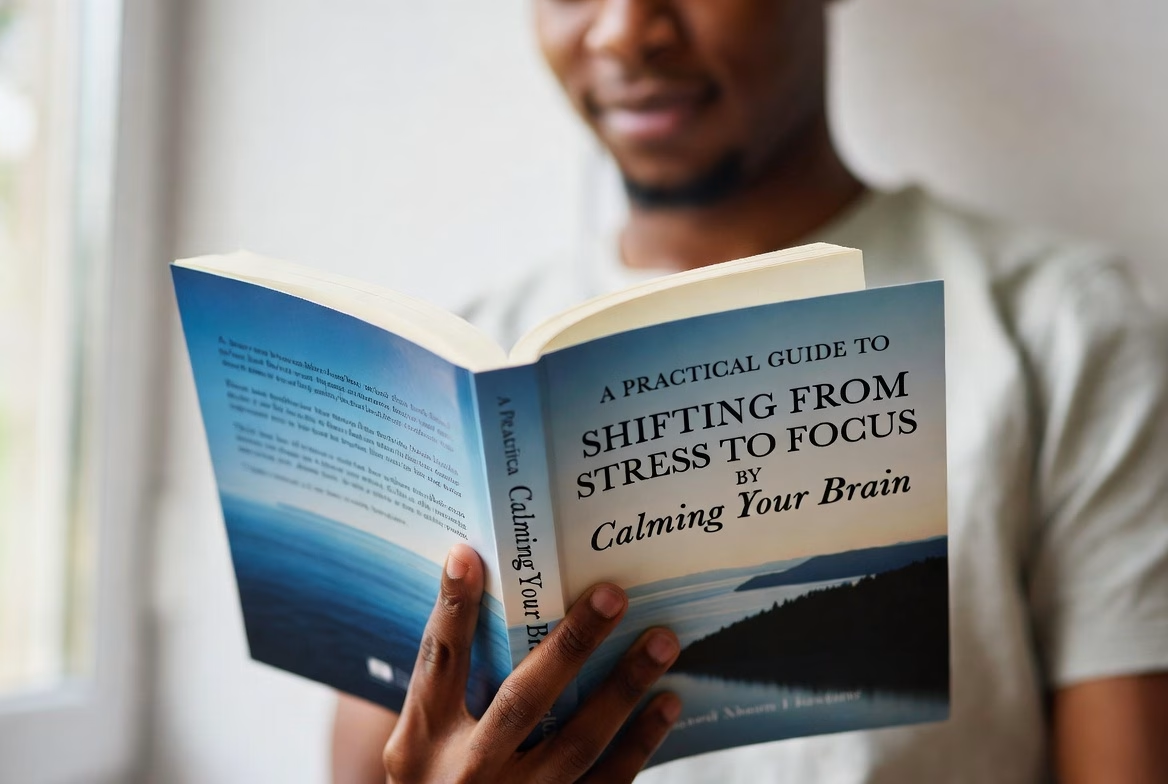
A Practical Guide to Shifting from Stress to Focus by Calming Your Brain
Imagine a part of your brain, no bigger than an almond, that can hijack your entire day. This is your amygdala, and when it senses a threat, it can switch off your ability to think clearly in less than a second. The good news is you can learn to calm this alarm system and engage…
-
·
Strategic Protein Timing for Sharper Thinking and Better Health
Did you know your brain uses about 20% of your body’s energy, yet it has no storage for fuel? It relies on a constant supply of nutrients from your bloodstream, with protein playing a starring role in keeping your mind sharp. While we often link protein to muscles, its influence on your cognitive function is…
-

·
How Morning Sunlight Resets Your Body Clock and Boosts Your Day
Imagine a free, simple action that could improve your sleep, sharpen your focus, and lift your mood. For many people, getting morning sunlight is that very action. The science behind it is compelling, yet it’s a daily habit often overlooked in favour of more complicated wellness routines. Key takeaways The Master Clock In Your Brain…
-

·
Biohacking Ethics: Navigating the Fine Line Between Self-Improvement and Risk
Imagine a world where you could edit your genes at home with a kit ordered online. For a small but growing community, this is not science fiction. It is a reality raising urgent ethical questions that affect us all. Key takeaways Defining The Biohacking Spectrum Biohacking is a broad term covering many activities. On one…
-

·
How to Quiet Your Inner Voice and Truly Listen to Others
Most of us think we’re good listeners, but research suggests we only remember about 25% of what we hear. The biggest barrier isn’t noise around us, but the constant commentary inside our own heads. Key takeaways The Problem of the Rehearsing Mind When someone speaks to us, our minds often race ahead. We plan our…
-
·
Metacognition For Skill Practice: A Simple Session Structure That Speeds Up Progress
Most people don’t stay stuck because they lack talent, they stay stuck because practice turns into repetition without thought. That’s where metacognition helps. It’s a simple idea: thinking about how you learn while you practise. When you use it, you start acting like your own coach. You set a clear goal, watch what’s happening, then…
-

·
The Spotlight Effect: Why We Think People Are Looking (And Why They Aren’t)
In a classic psychology study, people thought about half a room would notice their embarrassing T-shirt, yet only around a quarter did. That gap captures something most of us feel, then forget. You spill coffee on your top, stumble over a word in a meeting, or trip on the pavement. Instantly, it feels like every…