
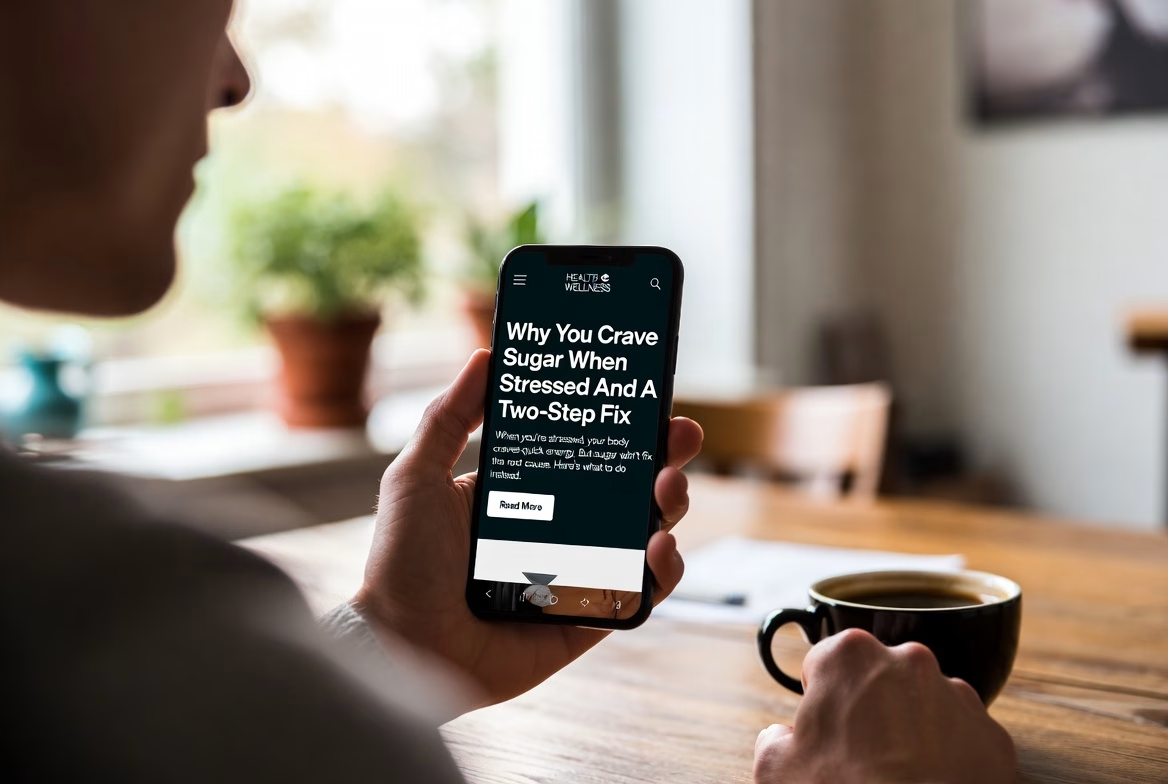
Did you know that a stressful day can make a chocolate bar seem almost irresistible? This pull isn’t just a lack of willpower; it’s a deeply wired biological response. When stress hits, your body’s systems shift into high gear, and one common side effect is an intense desire for sugary, high-calorie foods. Recognising this connection is the first step toward breaking the cycle.
Key Takeaways
- Stress triggers the release of cortisol, a hormone that can increase your appetite and drive cravings for quick energy from sugar.
- Eating sugar provides a temporary mood boost by releasing dopamine, which your brain learns to seek during difficult times.
- Chronic stress and high sugar intake can create a harmful cycle that impacts both mental and physical health.
- The first step to managing these cravings is to pause and identify your true need, whether it’s energy, comfort, or distraction.
- The second step is to choose a targeted alternative action that addresses that need without relying on sugar.
- Building a toolkit of healthy snacks, quick activities, and relaxation techniques can prepare you for stressful moments.
- Improving your overall diet with balanced meals helps stabilise blood sugar, making you less vulnerable to cravings.
- Managing stress through regular practices like walking or mindfulness reduces the frequency and intensity of sugar urges.
The Biology Behind The Craving
When you feel stressed, your body activates its fight-or-flight response. This process releases hormones like cortisol and adrenaline. One of cortisol’s jobs is to signal that you need energy to face a perceived threat. Historically, this meant seeking high-calorie food for survival. Today, your brain interprets this signal as a craving for fast-acting carbohydrates, like sugar, which provide a rapid glucose hit. So, that sudden urge for biscuits isn’t random; it’s a primal call to refuel.
Sugar As A Quick Mood Fix
Reaching for sugar does more than just provide energy. Consuming sweets triggers the release of dopamine in the brain’s reward centre. Dopamine creates feelings of pleasure and satisfaction. During stress, when you might feel low or anxious, this quick dopamine hit acts as a temporary mood lifter. Your brain quickly learns this association: stress feels bad, sugar feels good. This learning reinforces the craving habit, making it a go-to coping strategy, even if the relief is short-lived.
The Vicious Cycle Of Stress And Sugar
The problem with using sugar to cope is that it often starts a negative cycle. The initial sugar rush is frequently followed by a crash in blood sugar and energy. This crash can increase feelings of irritability and fatigue, which your body may interpret as a new stress signal. That can lead to another craving, trapping you in a loop. Over time, this pattern can contribute to weight gain, energy slumps, and even heightened anxiety, adding more sources of stress to your life.
Step One: Pause And Identify The Trigger
The first and most powerful step to break this cycle is to create a moment of pause. When a sugar craving strikes, especially during stress, try not to act on it immediately. Instead, take a few deep breaths. Ask yourself a simple question: “What do I really need right now?” The answer is rarely just sugar. You might be seeking an energy boost, a distraction from a difficult task, emotional comfort, or even hydration. Naming the true need removes the craving’s power and gives you a clear direction.
Step Two: Choose A Targeted Alternative
Once you identify the real need, you can choose a healthier action that addresses it directly. This is the second step. If you need energy, try a piece of fruit or a handful of nuts for sustained fuel. If you need comfort, wrap yourself in a cosy blanket or call a friend. For distraction, take a five-minute walk or do a quick household task. For hydration, drink a full glass of water. By meeting the actual need, you satisfy the craving’s root cause without the negative effects of sugar.
Building Your Personal Craving Toolkit
Preparation is key to making the two-step fix work under pressure. Build a personal toolkit of alternatives for when stress hits. Keep healthy snacks like yoghurt, oatcakes, or pre-cut vegetables readily available. Write a list of quick, pleasurable activities, like listening to a favourite song or stretching. Have a stress-relief object at your desk, like a stress ball or a pleasant scent. When a stressful moment arrives, you won’t have to think—you can just reach into your prepared toolkit.
Strengthen Your Foundation With Diet
While managing acute cravings is crucial, strengthening your daily diet builds long-term resilience. Eating regular, balanced meals with protein, fibre, and healthy fats helps keep your blood sugar levels stable. When your blood sugar is steady, you are less likely to experience sudden energy dips that mimic stress and trigger cravings. Starting your day with a breakfast containing protein, like eggs or Greek yoghurt, can set a stable tone and reduce mid-morning sugar urges.
Address The Root Cause With Stress Management
Ultimately, reducing the frequency of sugar cravings means managing the stress that causes them. Incorporate small, consistent stress-relief practices into your routine. This doesn’t require hours of meditation. A daily 10-minute walk, a few minutes of deep breathing, or writing down worries in a journal can significantly lower baseline stress levels. Over time, these practices reduce the constant drip of cortisol, meaning your body sends fewer urgent signals for sugary relief.
Conclusion
Craving sugar when you’re stressed is a normal biological reaction, not a personal failing. By understanding the why—the hormone-driven search for quick energy and mood relief—you can approach cravings with curiosity instead of criticism. The simple two-step fix of pausing to identify the real need, then choosing a targeted alternative, empowers you to break the cycle in the moment. For lasting change, support this habit by stabilising your diet with balanced meals and integrating small, daily practices to manage stress. Start by picking one alternative from your new toolkit to try the next time a craving strikes.
FAQ
What exactly causes a sugar craving when I’m stressed?
Stress hormones, primarily cortisol, increase your appetite and drive your body to seek quick energy sources. Your brain associates sugar with a rapid dopamine release, which temporarily improves mood, creating a learned craving during difficult times.
Is all sugar bad when I’m feeling stressed?
Not all sugar is equal. The issue is often highly processed, added sugar found in sweets and biscuits, which causes sharp blood sugar spikes and crashes. Natural sugars in whole fruits, paired with fibre, provide energy more steadily and are a better choice if you need something sweet.
How long does it take for these cravings to reduce after I start this method?
You may notice a difference in a few weeks. As you consistently use the pause-and-replace technique and improve your overall diet, the intensity and frequency of cravings should gradually decrease. The key is consistency, not perfection.
Can lack of sleep make stress-related cravings worse?
Yes, absolutely. Poor sleep disrupts hormones that regulate hunger and satiety, like ghrelin and leptin. This disruption can increase appetite and cravings, making you more vulnerable to stress-induced urges for sugary foods.
What if the craving is for comfort, not energy?
If the need is comfort, a sugary treat is just one option. Often, non-food comforts are more effective. Try a warm drink like herbal tea, wrapping up in a soft blanket, watching a funny video, or having a brief, kind conversation with someone you trust.
Are there specific foods that can help prevent these cravings?
Foods that help stabilise blood sugar are excellent for prevention. Focus on including protein (chicken, beans, lentils), healthy fats (avocado, nuts), and high-fibre foods (vegetables, whole grains) in your meals. These nutrients provide slow, sustained energy.
What’s a quick alternative if I need an immediate distraction?
Keep a list of five-minute activities handy. Examples include walking around the block, doing a set of stretches, organising a drawer, or even brushing your teeth. The act of physically moving or completing a small task can effectively redirect your focus.
Could these cravings be a sign of a nutrient deficiency?
While possible, it’s not the most common cause for stress-related cravings. However, consistently craving specific foods might hint at a need. For example, craving chocolate could sometimes relate to low magnesium levels. If you’re concerned, it’s best to discuss this with a doctor or a registered dietitian.
Leave a Reply