
Stress often steals mindfulness, clear thinking before you even notice your shoulders have crept up to your ears. That’s why yoga can feel so helpful, so quickly. It works through the body first, then the mind follows.
For yoga stress reduction, you don’t need an hour, fancy kit, or advanced poses. A few minutes of slow movement, steady breathing, and simple holds can calm your system, support stress management, and sharpen your attention. That matters whether you’re starting work, coming home frazzled, or trying to reset between meetings.
Key Takeaways
- Yoga lowers stress best when you move slowly and breathe even more slowly.
- Short sessions count, and five to ten minutes can still change your state.
- Child’s Pose, Cat-Cow, and seated breathing exercises are strong choices for beginners.
- Focus improves when your body feels safe, supported, and less tense.
- Long exhales help switch you out of fight-or-flight mode.
- Gentle practice works better than forcing deep stretches for flexibility.
- A repeatable routine matters more than doing lots of physical postures.
- You can use yoga at home, in the office, or before bed.
Why Yoga Helps Stress And Focus At The Same Time
When you’re stressed, your breath gets shallow and your muscles brace. Your jaw tightens, your chest lifts, and your thoughts start bouncing. Yoga interrupts that pattern through deep breathing and grounded poses. These practices shift your body from the sympathetic nervous system (fight-or-flight mode) to the parasympathetic nervous system (rest-and-digest mode), helping to balance the autonomic nervous system overall. This leads to improved heart rate variability, lower cortisol levels, and a calmer state that signals to your brain the threat has passed.
That’s why yoga often improves focus as well as mood. A calmer nervous system gives more space for planning, attention, and self-control, with changes in brain wave activity promoting alpha waves for a meditation-like state and enhanced mindfulness. If you want a deeper look at this body-first shift, Neural Hackers has a useful guide on body-first techniques for calm concentration.
The fastest route to a calmer mind is often a calmer body.
Gentle yoga also gives your attention one place to land. Instead of replaying emails or tomorrow’s to-do list, you notice your feet, your ribs, and your breath. That’s simple, but powerful. If you want extra beginner-friendly context, this simple guide to yoga for stress relief explains why slow styles work so well.
The Best Beginner Poses For Yoga Stress Reduction
You don’t need a long sequence to feel a shift. A few reliable Hatha yoga poses can do a lot. These movements help release muscle tension and improve blood flow.
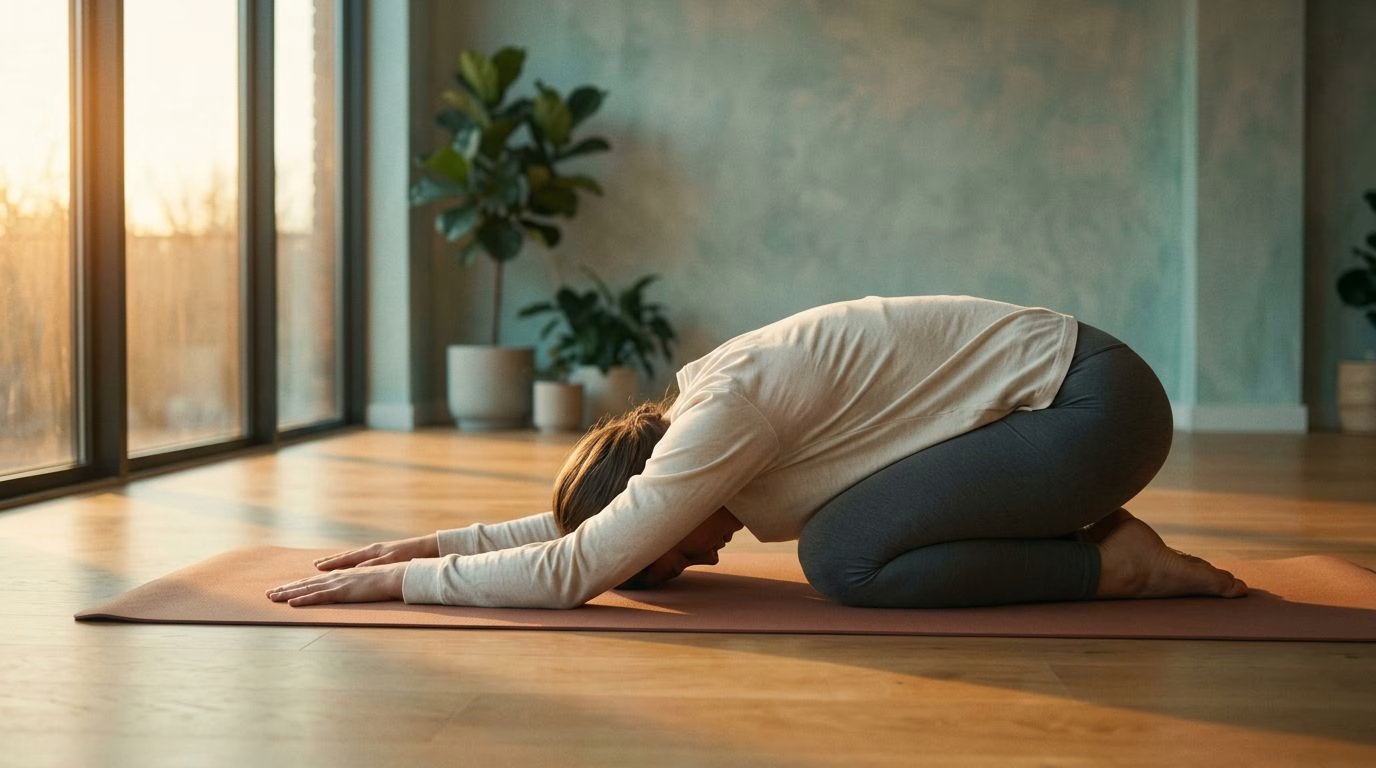
Child’s Pose is the classic reset. It softens the back, quiets the neck, and gives you a feeling of being held. Stay for five to eight slow breaths. Cat-Cow helps when stress sits in the spine. Move gently with your breath, lifting the chest on the inhale and rounding the back on the exhale. Seated Forward Fold can ease that restless, overclocked feeling, especially if you bend your knees and relax your neck. Mountain Pose looks simple, but it’s great for focus. Stand tall, spread your toes, and breathe steadily for one minute.
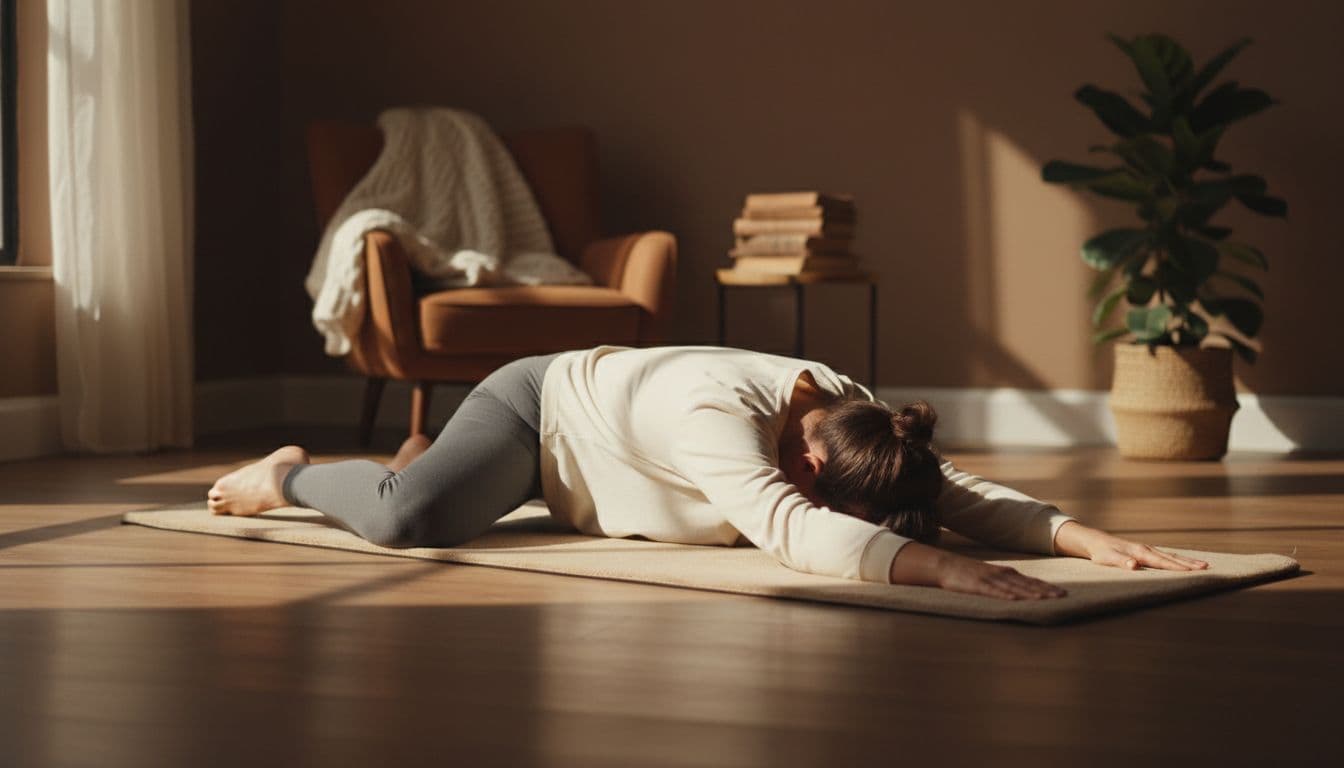
A good rule is this: if a pose makes you grip, it’s too much for stress relief. Back off, support yourself, and breathe more slowly. Busy readers may also like this 10-minute calming yoga sequence, which keeps things practical and short.
A Simple Seven-Minute Routine For Home Or Work
Start with one minute of standing still. Let your arms hang, unlock your knees, and breathe out for slightly longer than you breathe in. That longer exhale matters because it nudges your system towards calm.
Next, do one minute of Cat-Cow. Then spend two minutes in Child’s Pose. After that, sit comfortably for two minutes and keep your eyes soft or closed. Rest one hand on your chest and one on your belly. Practice deep breathing by inhaling gently through your nose, then exhaling slowly and smoothly. Finish with one quiet minute in Mountain Pose or seated stillness, which can serve as a brief meditation or even a short Savasana if lying down, before you return to your day.
This yoga routine is small on purpose. When stress is high, smaller is often better. Repetition teaches your brain what “settled” feels like, and over time that response gets easier to reach. That’s the same basic idea behind lifelong brain adaptability explained. If your afternoons feel scattered, it also helps to look at caffeine timing for steady focus, because too much late caffeine can make calm yoga feel harder.
Common Mistakes That Make Yoga Less Calming
The biggest mistake is treating yoga like a performance. As one of many relaxation techniques that promotes mental relaxation, stress relief yoga isn’t about stretching further or “winning” the pose. It’s about lowering the volume in your system.
Moving too fast can also keep you wired. So can holding your breath, checking your phone between poses, or picking intense flows when you’re already overstimulated. Less is more here. Choose fewer poses, stay longer, and make the exhale smooth.
Another common problem is inconsistency. One long class can feel lovely, but a short daily reset usually does more for focus. Think toothbrush, not boot camp.
Conclusion
Yoga works for stress reduction and focus because it gives your body a direct route back to calm, improving emotional well-being and sharpening cognitive function. When your breath slows and your muscles stop bracing, attention gets steadier too. Start small, keep it gentle, and repeat the same short routine for a week. Consistency is what turns a nice idea into a daily reset you can trust.
FAQ
How often should beginners do yoga for stress reduction?
Three to five short sessions a week is a good start for managing symptoms of anxiety and depression. Daily practice works well too, even if it’s only five minutes.
What type of yoga is best for stress?
Gentle, slow styles usually help most. Relaxation techniques like restorative yoga, Yin, and yoga nidra, along with breathing exercises such as Sudarshan Kriya, are often easier on busy, tired bodies.
Can yoga improve focus straight away?
It can. Many people feel clearer after a few minutes because their breathing slows, muscle tension drops, and markers like blood pressure and galvanic skin response improve.
Do I need to be flexible to start?
No. Flexibility isn’t the goal here. Comfort, steady breathing, and regular practice matter far more.
Is morning or evening yoga better?
Both can work. Morning yoga can set your attention for the day, while evening yoga can help you unwind and sleep better.
What if my mind keeps wandering?
That’s normal in meditation. Bring your attention back to one thing, usually your exhale or the feeling of the floor under you.
Leave a Reply