
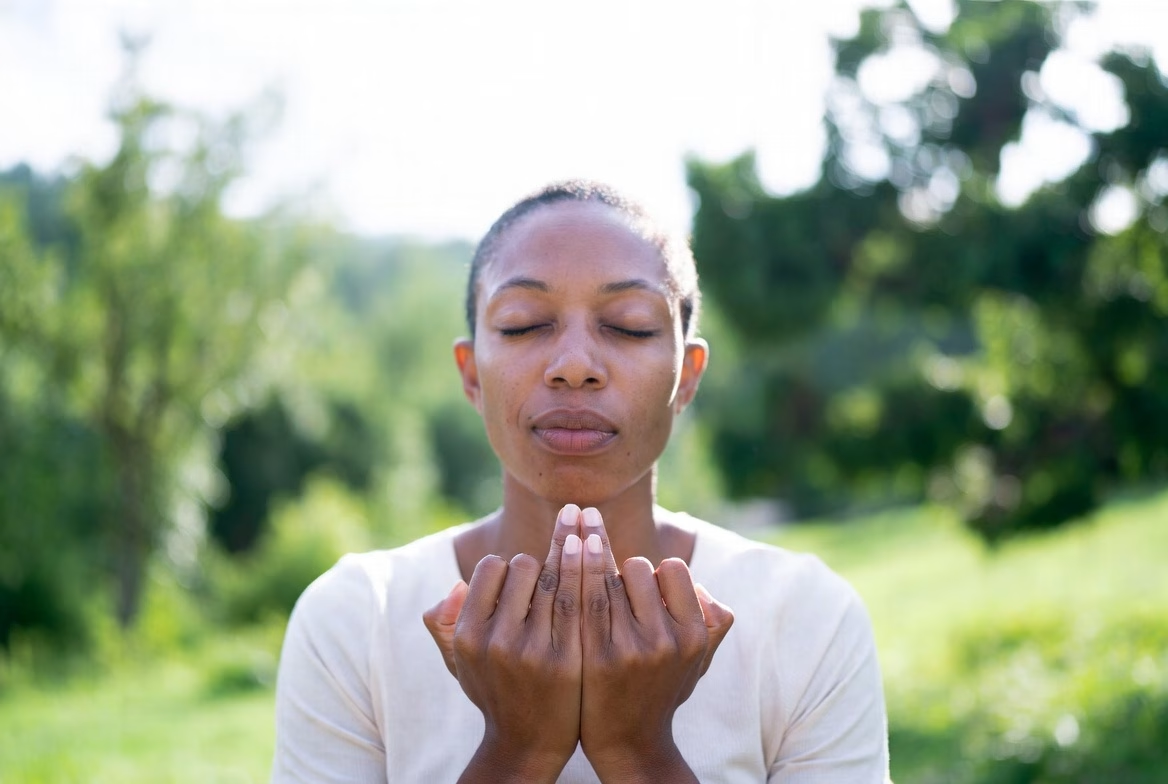
Your resting breathing rate might be higher than you think. Many adults breathe between 12 and 20 times per minute without even noticing. This quiet, automatic rhythm is a powerful window into your nervous system. Learning to gently slow it down can be a direct route to feeling more settled and focused.
Key Takeaways
- Your natural breathing rate is a personal metric that directly influences your stress levels.
- Finding your calm breathing rate involves first noticing your baseline rhythm without trying to change it.
- A practical sweet spot for calm breathing is often between 5 and 7 breaths per minute.
- Simple counting techniques, like the 4-7-8 method, can help you slow your breath effectively.
- Consistency with short, daily practice is far more valuable than occasional long sessions.
- Your ideal calming breath will feel easy and sustainable, not forced or strained.
- Pairing breathwork with a routine activity, like your morning coffee, helps build the habit.
- Listening to your body’s signals is crucial to avoid dizziness or over-breathing.
Your Breathing Rate Is a Personal Metric
Think of your breathing rate like your fingerprint. It is unique to you. While average ranges exist, your normal rhythm is influenced by your fitness, posture, and even your mood at any given moment. This rate is not just a number. It is a live feed from your body to your brain, signalling either safety or alertness. By tuning into it, you gain a simple tool for self-regulation. The first step is always observation, not immediate change.
Start By Discovering Your Baseline
You cannot find your sweet spot without knowing your starting point. To find your baseline, sit quietly for a minute after resting. Then, count how many times you naturally breathe in and out over 60 seconds. Do not try to control or judge the breath. Just observe. You might be surprised if the count is higher than expected, especially after checking emails or having a conversation. This number is your neutral reference point. All effective calming practice begins from this honest assessment.
The Science Points to a Slower Rhythm
Research into heart rate variability shows a fascinating pattern. When we breathe at a rate of about five to seven breaths per minute, our body’s systems tend to synchronise. This rhythm often promotes a state called coherence, where the heart, lungs, and brain communicate more efficiently. It is not about holding your breath or taking huge gulps of air. Instead, it is the gentle, measured slowdown that encourages the nervous system to shift from ‘alert’ to ‘calm’. This range is a useful target, not a strict rule.
A Simple Method to Slow Down
One accessible technique is known as the 4-7-8 pattern. You breathe in quietly through your nose for a count of four. Then, you hold the breath comfortably for a count of seven. Finally, you exhale slowly through your mouth for a count of eight. This structure naturally lengthens the exhale, which is key for triggering relaxation. Complete just four cycles of this. It acts as a gentle brake for your physiology. You can use it anytime you feel tension rising.
Consistency Trumps Duration
Aiming for one perfect 20-minute session each week is less effective than a brief daily habit. Try committing to just two or three minutes of mindful breathing each day. You could do it after brushing your teeth or while waiting for the kettle to boil. This regular, short practice rewires your neural pathways over time. It makes accessing that calm state easier and faster when you really need it. The goal is to make it a normal part of your day, not a special event.
Your Sweet Spot Should Feel Easy
The right calming breath for you should not feel like hard work. If you are straining, gasping, or feeling dizzy, you are pushing too hard. Ease off and let your breath be softer. The sweet spot is a rhythm that feels soothing and almost effortless. It might be a six-second inhale and a six-second exhale. For another person, it could be a different count entirely. Let comfort be your primary guide. Forced breathing creates stress, which defeats the entire purpose.
Pair Breathing With an Existing Habit
Habit stacking is a powerful way to make this practice stick. Link your breathing exercise to something you already do without fail. For example, take three mindful breaths at every red traffic light. Or practice for one minute before you open your laptop in the morning. By anchoring the new behaviour to an established one, you dramatically increase your chances of remembering to do it. Soon, it will become an automatic part of your routine.
Listen to Your Body’s Signals
Always pay close attention to how you feel during and after practice. Mild light-headedness can sometimes occur if you are new to deeper breathing. If this happens, simply return to your normal breathing pattern. The aim is gentle influence, not control. Your body will tell you what rhythm is most restorative on any given day. Some days you might naturally settle at five breaths a minute. On others, seven might feel just right. Trust that feedback.
Technology Can Offer a Helpful Guide
While not essential, certain tools can provide useful feedback. Basic smartphone apps or wearable devices can measure your breathing rate in real time. They can help you see the direct impact of a technique on your physiology. Use these as guides, not judges. The real measure of success is how you feel, not the number on a screen. They are best for the initial learning phase to connect the feeling with the effect.
Apply Your Calm Breath in Real Time
The ultimate test is using your skill in daily life. When you feel a wave of frustration or anxiety, pause for just 90 seconds. Guide your breath toward your practised sweet spot. This short pause can prevent a reactive response and create space for a clearer choice. It turns a theoretical exercise into a practical life tool. You are not avoiding stress, you are changing your relationship to it through your physiology.
Conclusion
Finding your personal breathing rate for calm is a journey of gentle exploration. It begins with noticing your own unique rhythm without criticism. From there, you can experiment with slowing it down to a pace that feels soothing and sustainable. The benefits of this simple practice accumulate with regular, brief moments of attention. Start today by simply observing your next three breaths, exactly as they are. That mindful pause is the foundation of everything that follows.
FAQ
What is a normal resting breathing rate?
A typical adult resting breathing rate is between 12 and 20 breaths per minute. However, this can vary based on fitness, health, and stress levels. The key is to find your own personal baseline when you are truly relaxed.
How do I measure my breathing rate accurately?
Sit quietly for a minute after resting. Set a timer for 60 seconds and count each complete breath in and out. Do not change your breathing, just observe. Repeating this a few times at different times of day will give you a reliable average.
Can breathing too slowly be harmful?
For most healthy people, gently slowing the breath to around five to seven breaths per minute is safe. Always listen to your body. If you feel dizzy or strained, ease back to your natural rhythm. The goal is comfort, not an extreme target.
What is the 4-7-8 breathing technique?
It is a simple pattern to promote calm. Inhale through your nose for 4 seconds, hold the breath for 7 seconds, and exhale slowly through your mouth for 8 seconds. This lengthens the exhale, which helps activate the body’s relaxation response.
How long until I see benefits from breathwork?
Many people feel a sense of calm immediately after a short session. For longer-term changes in your stress response, consistent daily practice for a few weeks is typically needed. The benefits build gradually with regularity.
Is it better to breathe through the nose or mouth?
For calming practices, inhaling through the nose is generally recommended. Nasal breathing filters air and can help slow the breath down. Exhaling through the mouth can feel more releasing, but a gentle nasal exhale is also fine.
Can I use this to help with sleep?
Yes, absolutely. Practising a slow breathing technique for five minutes before bed can quiet the mind and prepare the body for sleep. The 4-7-8 method is particularly popular for this purpose.
What if I can’t focus or my mind keeps wandering?
A wandering mind is completely normal. The practice is simply to notice when your attention drifts and gently bring it back to the sensation of your breath. Each time you do this, you are strengthening your focus, just like a muscle.
Leave a Reply