

A short nap can sometimes make you feel worse before you feel better. That groggy “where am I?” feeling is common, yet it’s the opposite of what you need mid-day.
The NSDR protocol (Non-Sleep Deep Rest), popularized by Andrew Huberman, is a guided way to rest without fully sleeping. It’s designed for fast stress recovery, to reset attention, and to help you get back to work with a clearer head. No incense, no special kit, no hour-long meditation.
Key takeaways
- Non-Sleep Deep Rest is a structured rest practice that keeps you out of full sleep.
- Ten to twenty minutes is often enough to feel a shift.
- The goal is nervous system downshift, not “empty mind” perfection.
- Use NSDR after stress, before deep work, or when you feel overstimulated.
- A comfortable setup matters more than willpower for deep rest.
- You’ll get better results if you keep breathing slow and easy.
- Don’t use NSDR to replace night sleep, use it to support it.
- If you feel anxious lying still, switch to a seated version.
What NSDR Is And Why It Helps Busy Brains
NSDR, or Non-Sleep Deep Rest, is a term coined by Andrew Huberman to make Yoga Nidra more accessible to a modern audience. It sits between a nap and meditation. You rest deeply, but you don’t aim to drift into proper sleep. Think of it like putting your phone into low power mode for deep rest. The device still runs, but heat and drain drop fast.
This matters because knowledge work burns attention in small, constant bursts. Emails, meetings, and notifications keep your system “on”. NSDR gives you a planned off-switch, perfect for overcoming the afternoon slump, so you’re not relying on coffee and grit when your brain’s already overloaded.
How NSDR Shifts You From Stress To Rest
When stress stays high, your body acts like something’s chasing you, even if it’s just a deadline. Breathing gets shallow, shoulders rise, and your mind keeps scanning for problems. NSDR works because it starts with the body to activate the parasympathetic nervous system, shifting your nervous system from fight-or-flight to rest. This promotes cortisol reduction and replenishment of dopamine levels, then the mind follows.
Most NSDR sessions use calm breathing, a body scan, and simple cues that reduce mental friction. Over time, you also learn what “downshifting” feels like, which supports neuroplasticity and makes it easier to interrupt spirals earlier. If you want a practical primer on body-first calming and stress reduction, this guide on shifting from stress to calm concentration pairs well with NSDR.
The NSDR Protocol: 10 To 20 Minutes, No Kit Required
Pick a time when you can be uninterrupted. Mid-afternoon works for many people, but any time is fine if you’re wired and foggy. Use a timer, so part of your brain can stop “watching the clock”.
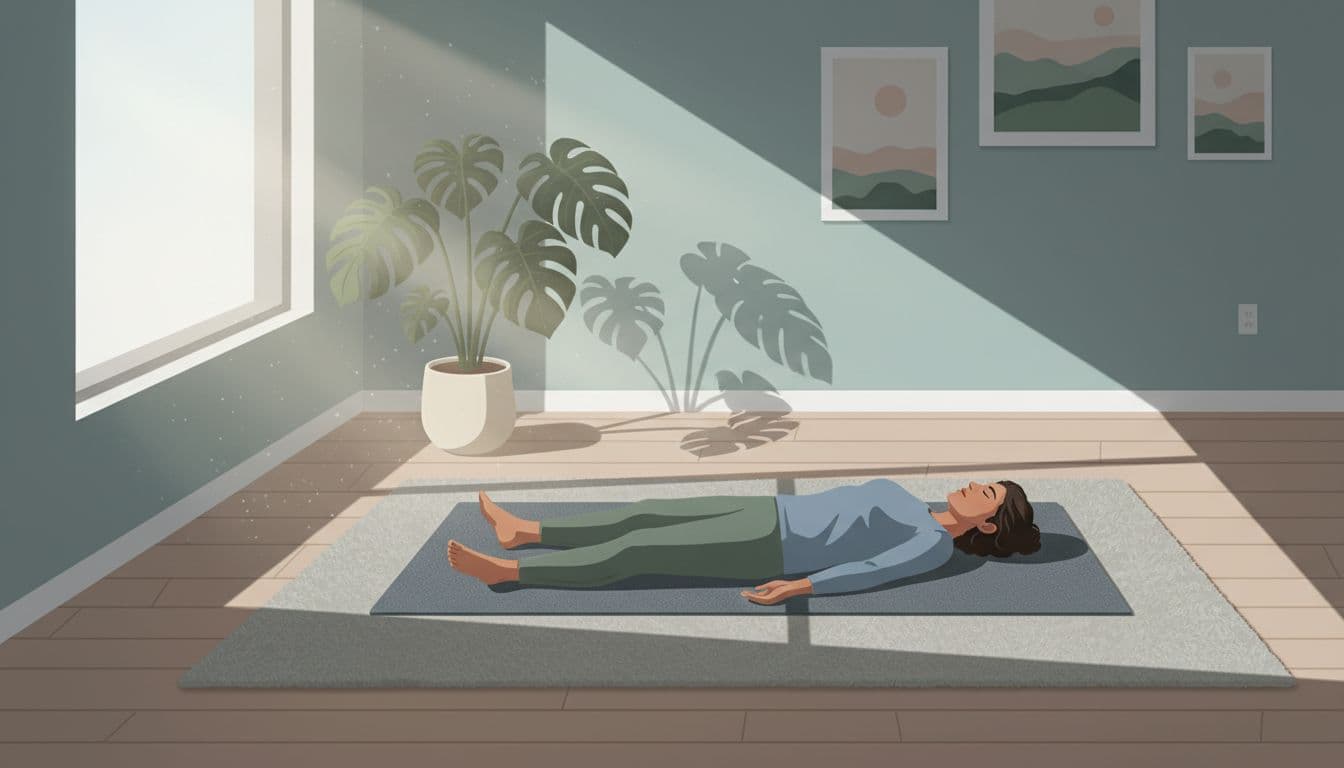
Here’s a simple, repeatable NSDR protocol you can run via guided audio or as a self-directed relaxation:
- Get into position: Lie on your back in a pose derived from Yoga Nidra (or sit supported if needed), loosen tight clothing.
- Set one intention: “I’m resting, not solving.” Keep it plain and short.
- Breathing exercises: Low and slow, with a slightly longer exhale.
- Do a body scan: Move attention from face to feet, softening each area.
- Let thoughts pass: Notice them, then return to breath or body sensations.
- Exit slowly: Wiggle fingers, open eyes, sit up, then stand from deep relaxation.
If you “do it wrong”, you’re probably doing it right. The practice is returning, not controlling.
A Quick Focus Return After NSDR
NSDR can leave you calm and a bit floaty. That’s nice, but you still need to do your job. The fix is a short re-entry routine that delivers cognitive restoration and tells your brain it’s time to act.
First, sit up and take 30 to 60 seconds to orient. Next, drink a glass of water, or at least rinse your mouth, to sharpen your focus and attention. Then write down one small next step, not a full to-do list. This keeps the calm, while nudging your focus and attention into a single channel.

Common Mistakes That Reduce The Effect
The biggest mistake is treating NSDR like a performance. If mental chatter has you judging every second, you stay in “task mode”. Instead, make it boring on purpose.
Another common issue is doing NSDR in a place that feels unsafe or exposed. If your body stays on alert, deep rest won’t land. Also watch the caffeine timing. A strong coffee right before NSDR can keep your system buzzing, even with perfect technique. Finally, don’t stack NSDR on top of five other new habits in one week. Keep it simple, so it actually happens.
Safety Notes And Smart Adjustments
NSDR is gentle, but context matters. Don’t practise it while driving, standing, or doing anything that needs attention. If you tend to fall asleep easily, set a timer and choose a seated version at first.
If closing your eyes spikes anxiety, keep them softly open and lower your gaze. If the deep relaxation of stillness feels uncomfortable, add small movement, like slow hand opening and closing. People with panic attacks, PTSD, or severe insomnia (who may benefit from emotional regulation) may want to start with shorter sessions, and stop if symptoms rise. When in doubt, treat NSDR as supportive, not as a substitute for insomnia treatment or medical care.
Conclusion
Stress recovery doesn’t need to be dramatic to work. A consistent NSDR protocol gives you a calm reset that fits into real days, even messy ones. Keep the set-up easy, keep the breathing gentle, and keep the re-entry step practical. Try 10 minutes of NSDR (Non-Sleep Deep Rest) three times this week for deep rest, then notice the cumulative benefits in your focus and mood.
FAQ
What Does NSDR Stand For?
NSDR stands for Non-Sleep Deep Rest. The NSDR protocol, similar to Yoga Nidra, is a guided rest practice that aims to relax the body and quiet mental noise. You’re resting deeply, without needing to fully fall asleep.
How Long Should An NSDR Session Be?
Most people use 10 to 20 minutes. Shorter sessions can still provide stress reduction when you’re stressed or overstimulated. Longer sessions may be better on days you’re running on fumes.
Is NSDR Just A Nap?
Not quite. A nap often tips into sleep and can cause grogginess on waking. NSDR aims to keep you in a deeply relaxed, aware state similar to the hypnagogic state or liminal state dominated by theta waves, which many people find easier to bounce back from.
Can I Do NSDR At My Desk?
Yes, if you make it safe and comfortable. NSDR offers self-directed relaxation using a supportive chair; rest your head, and soften your gaze or close your eyes. Keep it shorter at first, so you don’t slump into sleep.
Will NSDR Ruin My Sleep At Night?
It usually doesn’t, especially if you keep it earlier in the day. NSDR supports sleep quality and counters sleep deprivation through cellular rejuvenation. If you struggle to sleep, avoid late-evening sessions and keep them brief. Treat NSDR as a pressure release, not a replacement for bedtime.
What If I Feel More Anxious During NSDR?
That can happen, because stillness can amplify sensations. Switch to a seated guided meditation practice, keep your eyes open, and focus on longer exhales. If anxiety keeps rising, stop and do something grounding, like a short walk.
How Often Should I Use The NSDR Protocol?
Two to four sessions per week is a realistic start for busy people. You can also use it “as needed” after high-stress meetings or intense study blocks. Consistency matters more than frequency.
Leave a Reply