

One night without sleep reduced post-meal muscle protein synthesis by 18% in healthy young adults. This finding makes sleep a planned part of your training, not an optional extra.
Your programme creates the stimulus, but sleep helps your body respond to it. Better rest will not rescue poor training or under-eating, yet regular, high-quality sleep gives strength gains, muscle gains, and athletic performance a better chance.
Key Takeaways
- Adults need at least seven hours of sleep, while hard training blocks often call for closer to eight or nine hours in bed for restorative sleep.
- Slow-wave sleep supports growth hormone release, but no wearable can measure your “deep sleep recovery” with clinical precision.
- One poor night will not erase progress, although repeated short nights can reduce protein synthesis.
- Sleep loss can raise cortisol and lower testosterone, creating a less favourable environment for recovery.
- Keep your sleep schedule steady, especially your wake-up time, to support your body clock.
- Eat enough total protein and carbohydrate because sleep cannot compensate for chronic under-fuelling.
- Reduce training volume or avoid failure work after several short nights, especially if performance feels flat.
- Melatonin, tart cherry extract, L-theanine, and ashwagandha may help some people, but none replace sleep.
- Use Apple Watch, Fitbit, Garmin, or WHOOP data to spot trends, not to diagnose recovery problems.
How Sleep Muscle Recovery Shapes Training Adaptation
Resistance training creates mechanical tension and signals your muscles to remodel. The work does not end when you put the weights back.
Your body needs energy, amino acids, time, and sleep to rebuild tissue and restore your nervous system. For this process, the goal is not one perfect night. It is a reliable pattern that supports weeks of training.
Muscle Repair Is More Than Soreness
Exercise can cause some muscle damage, including what people often describe as micro-tears, especially after unfamiliar movements or high-volume eccentric work. However, muscle soreness does not prove that a session was productive, and muscle damage is not the main target of training.
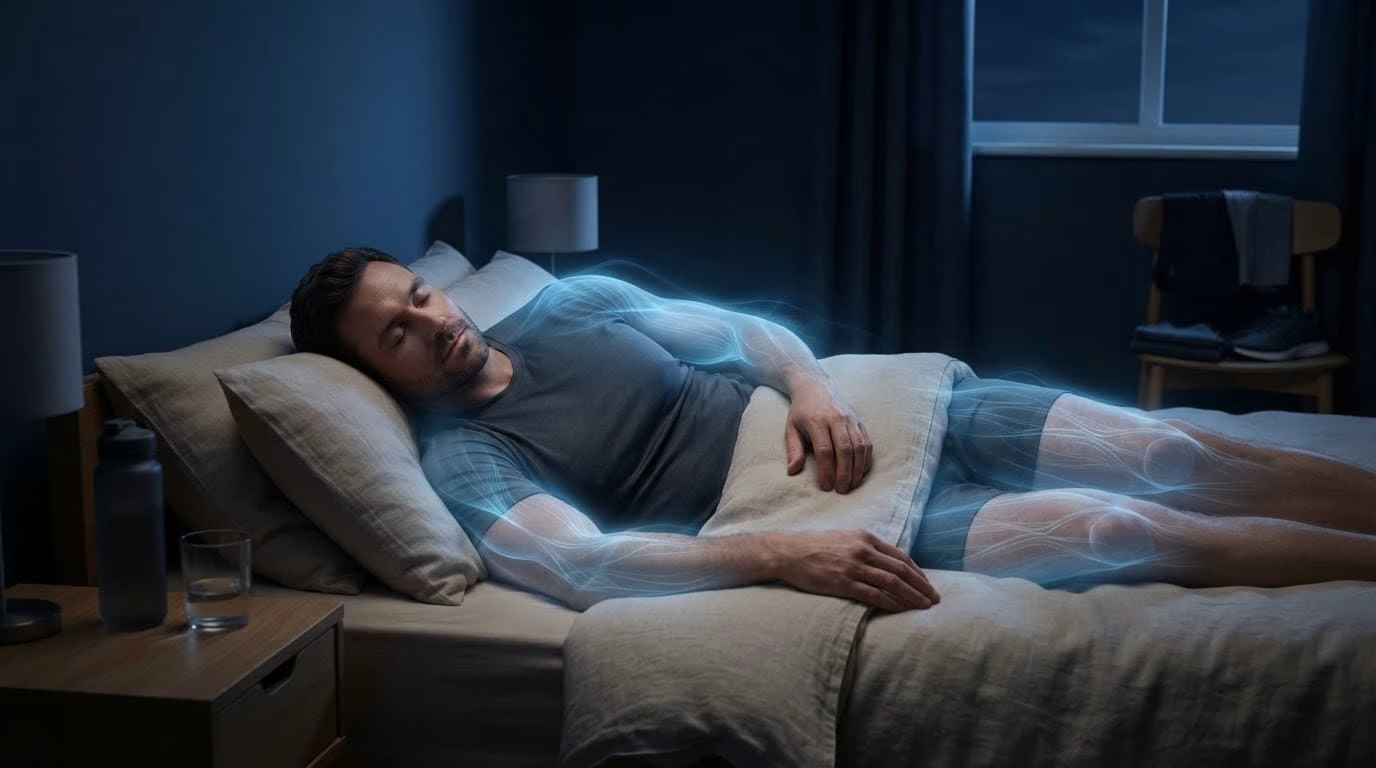
During recovery, muscle protein turnover rises. Your body breaks down and rebuilds proteins, then adapts to the training signal if food, rest, and future training are appropriate. Sleep gives this process a protected period with lower activity demands.
Hormones Need The Right Conditions
Growth hormone secretion is closely linked to sleep early in the night. It supports tissue maintenance and metabolism, but neither muscle repair nor muscle growth depends on it alone.
Cortisol also has a normal role. It helps regulate energy and stress responses. Problems arise when short sleep, hard training, low calorie intake, and life stress keep cortisol high for too long. That combination can leave you feeling flat, irritable, and slow to recover.
Sleep Stages Matter, But Total Sleep Comes First
Sleep moves through non-REM and REM stages several times each night. Deep non-REM sleep, also called slow-wave sleep, tends to dominate earlier in the night. REM sleep becomes more common towards morning.
Both matter, but total sleep duration and a regular sleep schedule are more useful targets than chasing an exact stage score.
Slow-Wave Sleep Supports Physical Recovery
Slow wave sleep is linked with large pulses of growth hormone and reduced activity in the sympathetic nervous system. Your heart rate and blood pressure usually fall, while your body shifts into a calmer recovery state.
Cutting sleep short, especially by going to bed late and waking early, may reduce this early-night deep sleep period. That is one reason a 02:00 to 07:00 sleep window often provides less restorative sleep than a longer, regular night.
REM Supports More Than Dreaming
This stage supports learning, memory, and emotional processing. For lifters, that may matter when you are practising technique, building confidence under a bar, or trying to stay focused during a demanding block.
Sleep stages also change across adulthood. If you notice changes in your routine, it helps to understand how sleep stages change as you age before blaming your training plan.
Sleep Loss Changes The Recovery Environment
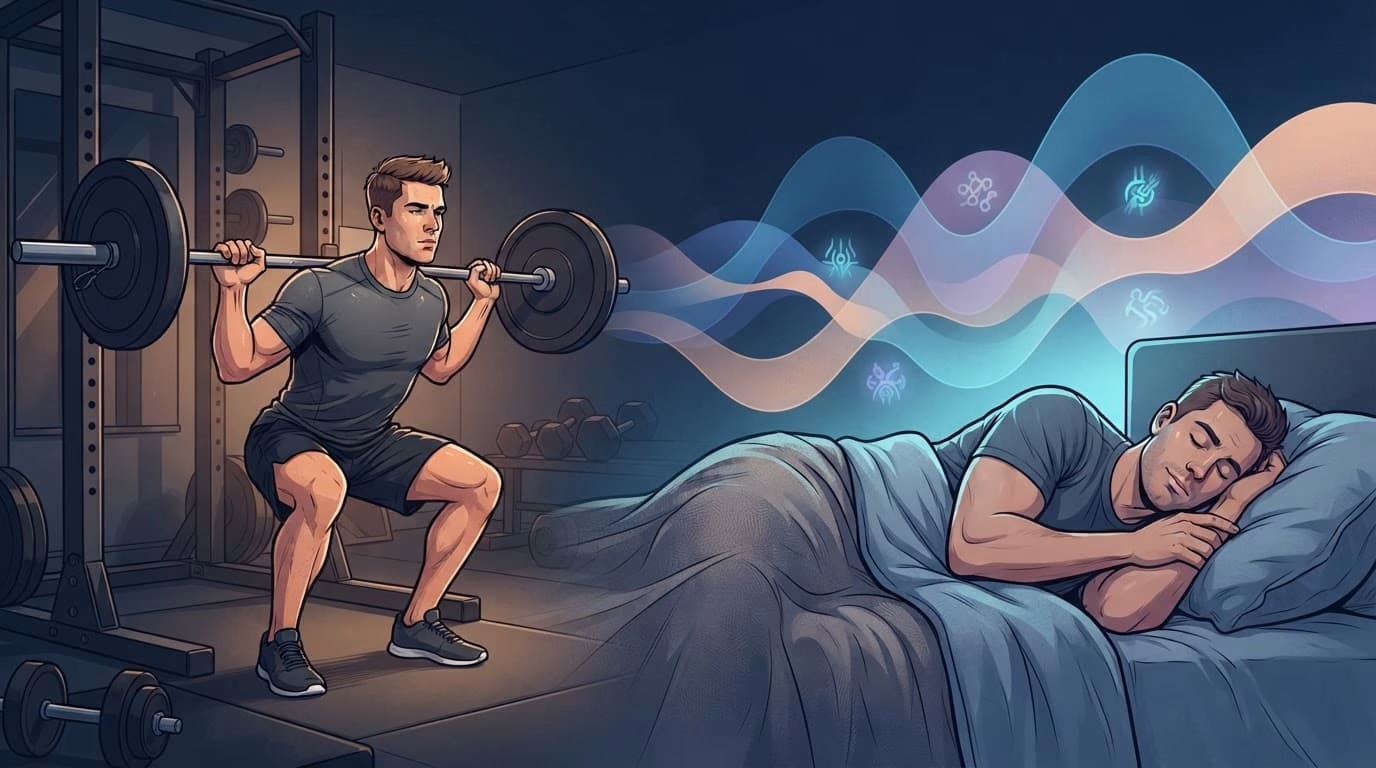
A single late night won’t make your muscles disappear. Still, the biology shifts quickly when sleep becomes short or fragmented.
The most useful response is calm adjustment. Treat a bad night as useful feedback, then protect the next few nights. Don’t punish yourself with extra caffeine or another brutal session.
One All-Nighter Has Measurable Effects
In a laboratory study led by Lamon and colleagues, one night without sleep lowered post-meal skeletal muscle protein synthesis by 18%. Cortisol levels rose by 21%, while testosterone fell by 24%.
Those figures come from healthy young adults under controlled conditions. They don’t predict the exact response of every gym-goer. Yet they show why sleep deprivation affects more than mood and motivation.
Several Short Nights Can Add Up
Research has found lower rates of myofibrillar protein building after five nights with only four hours of sleep opportunity, compared with eight hours. Short sleep can also disrupt hormone levels across several days.
Strength doesn’t always fall straight away. One study of eccentric exercise found no slower strength recovery during the first 60 hours after total sleep deprivation. However, inflammatory and hormonal changes still became less favourable. You may complete the session without an obvious drop in athletic performance, but your body is working with fewer recovery resources.
Match Training Load To Your Sleep
There is no reliable formula that converts hard sets into a precise amount of overnight rest. Training response depends on fitness, work stress, diet, illness, menstrual cycle, alcohol, hydration, and the total load of your week.
Still, sleep can guide muscle recovery in practical ways. A hard session isn’t automatically a problem. Repeated hard sessions plus repeated short nights usually are.
| Current Situation | Sleep Opportunity | Sensible Training Response |
|---|---|---|
| Regular strength training with normal life stress | Around 7.5 to 8.5 hours in bed | Follow your planned progression |
| High-volume block, calorie deficit, or early starts | Around 8 to 9 hours in bed | Protect rest days and avoid unnecessary extra work |
| Two or more short nights with low energy | Prioritise an earlier bedtime | Choose active recovery or reduce hard sets |
Adjust One Training Variable First
After several nights below six hours, skip maximum attempts and repeated sets to failure. Keep the movement pattern, but reduce one or two hard sets per exercise or leave more reps in reserve.
That approach preserves consistency without pretending fatigue doesn’t exist. If your usual warm-up weight feels unusually heavy, take it seriously. An easier session can still maintain skill and routine.
Watch Patterns, Not Single Days
Look for combinations: poor sleep, high resting heart rate, low motivation, weaker bar speed, and lingering muscle soreness. One signal means little, while a repeated cluster suggests that training stress is exceeding recovery.
This is where heart rate variability and stress recovery can add useful context. HRV is personal, so compare it with your own usual range rather than someone else’s number.
Build A Sleep Routine That Works After Training
The best sleep schedule is boring enough to repeat. You do not need expensive gadgets, a perfect supplement stack, or a rigid bedtime down to the minute.
Start by making sleep easier to begin and harder to interrupt, so restorative sleep becomes more consistent.
Anchor Your Wake-Up Time
A steady sleep schedule anchors your circadian rhythm more effectively than a huge weekend lie-in. Keep it within roughly 30 to 60 minutes of your usual time where possible.
Morning daylight and a short walk help reinforce that rhythm. If you need extra rest after a hard week, go to bed earlier or take a brief nap before mid-afternoon. A steady wake-up time makes falling asleep more predictable over time.
Make The Bedroom Physically Easy To Sleep In
Keep the room dark, quiet, and comfortably cool. Many adults sleep well at around 16 to 18 C, although personal comfort matters more than a fixed number.
Blackout curtains, an eye mask, earplugs, or steady background noise can help if your home is bright or noisy. Put your phone out of reach, and limit screen time if phone use regularly delays bedtime.
Treat Evening Stimulants With Care
Late training does not ruin sleep for everyone. However, heavy sessions, bright gym lighting, and stimulant-heavy pre-workout can leave some people too alert for bed.
Finish with a gentle cooldown, eat a normal meal, and give yourself time to settle. For evening sessions, caffeine timing for better sleep matters more than most people expect. A useful starting point is stopping caffeine eight to ten hours before bed.
Support Sleep With Food And Smarter Rest Days
Sleep is one part of recovery, alongside training, nutrition, hydration, and stress management. A great bedtime routine cannot make up for a week of skipped meals and punishing sessions.
Keep the basics in place before spending money on recovery products.
Eat Enough To Adapt
Most people lifting regularly do well with daily protein in the region of 1.4 to 2.0 g per kilogram of body weight. Spread it across meals that you can sustain.
After a hard session, include protein and carbohydrate within the rest of your day. Carbohydrate helps replenish glycogen stores and support readiness for your next session. You do not need to panic about a narrow post-workout window. Consistent energy intake matters more, particularly when training volume is high.
Keep Active Recovery Truly Easy
A walk, gentle cycle, mobility work, or easy swim can reduce stiffness and break up a sedentary day. An active recovery session should leave you feeling better, not add another workout to recover from.
Use rest days to catch up on normal life, food preparation, and sleep. Hard conditioning sessions disguised as recovery often create the fatigue they claim to solve.
Be Careful With Night-Time Supplements
Melatonin can help with jet lag or a delayed body clock, but it is not a muscle-building supplement. In the UK, it is usually prescribed, so speak with a GP or pharmacist if you are considering it.
Tart cherry extract has mixed but promising evidence for sleep quality and perceived recovery in athletes. L-theanine may help people whose thoughts keep them awake, although its effect is usually modest. Ashwagandha can cause sedation, stomach upset, thyroid effects, and rare liver injury, so it needs more care than its marketing suggests. Correct vitamin D deficiency when it exists, but avoid casual high-dose use.
Use Wearables As Diaries, Not Judges
Apple Watch, Fitbit, Garmin, and WHOOP can help you notice bedtime drift, frequent wake-ups, or a gradual drop in total sleep. That information can be useful when you compare it with training, alcohol, illness, and stress.
Wearable data becomes less useful when you obsess over every score.
What A Tracker Can Show Well
Most devices estimate total sleep time and broad sleep-wake patterns reasonably well. Their real value lies in trends over several weeks, such as losing 45 minutes of sleep during a demanding work period.
For sleep muscle recovery, watch your weekly average sleep duration and consistency first. Those measures are more actionable than a single recovery score.
What It Cannot Diagnose
Consumer wearable devices estimate sleep stages from movement and heart-rate signals. They don’t record brain waves like a formal sleep study. A 2025 validation study found moderate stage agreement for Apple Watch Series 8, lower agreement for Fitbit devices, and weak agreement for one Garmin model.
Use the numbers as prompts, not verdicts. A wearable can’t diagnose sleep apnoea, insomnia, or overtraining, and it can’t confirm that a muscle has healed overnight.
Conclusion
Training creates the demand for change, while sleep gives your body time and conditions to meet it. The strongest habit is not chasing perfect deep-sleep scores. It is protecting enough sleep opportunity often enough.
Start with a regular wake-up time, calmer evenings, and an earlier bedtime during hard training weeks. Small changes repeated for months will do more for muscle growth and athletic performance than any one night-time product.
FAQ
How Much Sleep Does A Strength Trainee Need?
Seven hours is the minimum recommendation for healthy adults. Recreational lifters often feel and perform better with seven and a half to nine hours in bed, especially during hard blocks, calorie deficits, or stressful periods.
Can One Bad Night Ruin Muscle Growth?
No. One poor night may reduce recovery quality, but it won’t erase weeks of progressive training. Return to your usual bedtime routine and avoid turning one short night into several.
Does Deep Sleep Build Muscle Directly?
Deep sleep is linked to growth hormone release and physical recovery processes. However, muscles respond to the full picture of training, food, total sleep, and recovery over time.
Does Training Late At Night Harm Sleep?
It depends on the person and the session. Late exercise is often fine, but intense training with caffeine, bright light, and little wind-down time can delay sleep for some people.
Should I Take Melatonin After Hard Workouts?
Melatonin is better suited to jet lag or circadian timing problems than gym recovery. Speak with a GP or pharmacist before using it, particularly if you take other medicines or feel sleepy during the day.
Is Tart Cherry Worth Trying For Recovery?
Tart cherry extract may help some athletes with perceived soreness and sleep quality. Evidence is mixed, so treat it as an optional extra after sorting sleep duration, diet, and training load.
Can A Wearable Tell Me When To Skip The Gym?
A low recovery score shouldn’t make the decision on its own. Check how you slept, how your warm-up feels, your stress level, and whether fatigue has lasted for several days.
When Should I Speak To A GP About Sleep?
Speak to a GP if poor sleep lasts for weeks, you snore loudly, wake gasping, or feel dangerously sleepy during the day. Sleep disorders can affect training progress, but they also need proper medical assessment.
Leave a Reply