

More gym days don’t automatically mean more muscle. Your strength training frequency should give you enough challenging work to progress, while leaving you ready to train again.
For most healthy adults, training every major muscle group twice each week is a reliable place to start. Beginners need regular practice, while experienced lifters need a better balance between training stress and recovery.
Key takeaways
- Train all major muscle groups on at least two days each week for health and general fitness.
- Two full-body sessions suit most beginners because they build skill without making the week feel crowded.
- A third weekly session can help when workouts are becoming too long or you want more practice.
- Weekly working sets drive muscle growth more than the exact number of training days.
- Training a lift more often can improve strength because you practise the movement more regularly.
- Full-body and split routines produce similar results when weekly volume is comparable.
- More sessions only help when sleep, food, joint comfort, and performance remain steady.
- Track your lifts for two weeks before changing your schedule.
Strength Training Frequency Is About Distribution
Frequency means how often you train. It can describe gym visits, sessions for a muscle group, or practice of one lift.
For example, going to the gym four times a week does not mean your legs get four useful sessions. An upper and lower split might train legs twice and upper body twice. A full-body plan performed twice weekly also gives each major muscle group two exposures.
Count Muscle Exposures, Not Gym Visits
Track how often a muscle or lift receives demanding work. This gives a clearer picture than simply counting visits to the gym.
A Tuesday and Friday full-body routine trains quads, hamstrings, chest, back, shoulders, and arms twice. A four-day split can produce the same frequency with shorter sessions. The difference is how you divide the work.
A 2026 dose-response analysis by Pelland and colleagues, covering 67 studies and 2,058 participants, found that frequency had a clearer link with strength than muscle growth. Muscle gain depended more heavily on total weekly training volume.
Meet The UK Health Minimum
The UK Chief Medical Officers and the NHS advise adults to complete muscle-strengthening activity on at least two days a week. Those sessions should cover all the major muscle groups.
This is a useful starting point for general health, bone strength, mobility, and independence. If you want more strength or muscle, you can build from this base without turning training into a second job.
Train The Major Muscle Groups
Your plan should include a squat or leg press, a hip hinge or hip thrust, a push, and a pull. These movement patterns cover most of the body with a manageable number of exercises.
Bodyweight movements count too. Press-ups, lunges, resistance-band rows, loaded carries, and sit-to-stands can all build strength when you make them challenging over time. Add load, repetitions, or control gradually as your confidence improves.
A Beginner Plan Needs Two Full-Body Days
Two non-consecutive sessions each week allow you to learn movements, recover, and build a habit. Monday and Thursday or Tuesday and Saturday both work well.
Use weights that let you control each repetition. Stop most sets with two or three repetitions still possible. This is often called leaving reps in reserve, and it helps beginners practise good form without grinding through poor repetitions.
Prioritise Good Repetitions
For the first few weeks, repeat a small group of exercises rather than changing everything each visit. Familiar movements make it easier to see whether you are getting stronger.

A simple two-day routine could look like this:
| Session A | Working Sets And Repetitions |
|---|---|
| Goblet squat | 2 sets of 8 to 12 |
| Dumbbell bench press | 2 sets of 8 to 12 |
| Romanian deadlift | 2 sets of 8 to 12 |
| Seated cable row | 2 sets of 8 to 12 |
| Session B | Working Sets And Repetitions |
|---|---|
| Split squat or leg press | 2 sets of 8 to 12 |
| Press-up or overhead press | 2 sets of 8 to 12 |
| Hip thrust | 2 sets of 8 to 12 |
| Lat pulldown | 2 sets of 8 to 12 |
Warm-up sets prepare you for the exercise, but your challenging working sets create the training stimulus. When you reach the top of the repetition range with clean form, increase the load slightly.
When A Third Session Helps
A third session can make training feel easier, rather than harder. It spreads the same amount of work across the week, so no single workout becomes a marathon.
Move to three days when two sessions leave you rushed, when your technique needs more practice, or when you want to add a modest amount of work. Monday, Wednesday, and Friday is convenient for many people, although any schedule with recovery between sessions can work.
Add A Day For Quality, Not Punishment
Start by dividing your existing sets across three sessions. Keep that arrangement for two or three weeks before adding more exercises or sets.
For instance, a beginner could squat on Monday, use a split squat on Wednesday, and perform a leg press on Friday. Each session stays short, while the legs still receive a sensible weekly amount of work.
If life already makes two weekly sessions difficult, stay with two. A plan you complete most weeks beats a more ambitious plan that repeatedly falls apart.
Build Muscle With Enough Weekly Work
For muscle growth, strength training frequency is mostly a way to distribute your weekly working sets. More frequent training can make hard sets feel fresher, but it does not create muscle without enough total work.
A 2016 meta-analysis found that training a muscle twice weekly appeared better for growth than once weekly. Later reviews found that this gap becomes much smaller when researchers match total weekly volume between programmes.
Load Does Not Replace Volume
A 2025 network meta-analysis found that different resistance-training prescriptions could all build muscle well. Higher loads performed especially well for strength, but lighter and moderate loads can also build muscle when sets are hard enough.
Add volume slowly. You might begin with a few demanding sets for each movement pattern, then add work only after your current plan feels stable. More is useful only if you can perform it with good technique.
A new training day should first improve the quality of your existing work. Add extra sets only when recovery and performance stay reliable.
Train More Often To Build Strength Skills
Strength is partly a skill. Squatting, pressing, deadlifting, or performing a pull-up improves when you practise the movement often enough to refine coordination and confidence.
The 2026 analysis found a positive relationship between training frequency and strength gains, although the benefit got smaller as frequency rose. For most people, two or three quality exposures per week are plenty.
Practise The Lifts You Want Stronger
A barbell-focused lifter could squat twice weekly, with one harder session and one lighter technique session. The lighter day might use fewer sets, a slower lowering phase, or a more comfortable variation.
The 2025 network meta-analysis ranked higher-load, multi-set training performed three times weekly highest for strength gains. That does not mean beginners need three heavy barbell sessions. It means strength responds well to repeated, well-managed practice.
Keep hard lifting precise. Stop a set when posture, bar path, or control starts to slip.
Full-Body And Split Programmes Both Work
You do not need a body-part split to gain muscle. You also do not need full-body training forever.
A 2024 meta-analysis in the Journal of Strength and Conditioning Research found no meaningful difference in strength or hypertrophy between full-body and split routines when weekly volume matched. The included programmes generally lasted four to 12 weeks.
Let Your Diary Decide
Full-body training suits two or three weekly gym visits. It also works well for people who travel, work shifts, or need flexibility.
An upper and lower split often suits four weekly sessions. A push, pull, and legs arrangement can suit people training five or six times each week, provided recovery remains good. Pick the format that fits your available time and keeps sessions focused.
Experienced Lifters Need Better Fatigue Control
Experienced lifters often need more total work to keep progressing. However, piling that work into one session can reduce performance, raise joint irritation, and make technique less consistent.
A higher strength training frequency can help by spreading demanding sets across the week. It should solve a practical problem, such as overly long workouts or a weak lift that needs more practice.
Add Days Only If They Solve A Problem
A four-day upper and lower split gives most muscle groups two weekly sessions. You might train lower body on Monday and Thursday, then upper body on Tuesday and Friday.
Some lifters benefit from three exposures for a priority lift. One session can be heavy, another moderate, and the third lighter or more technical. This approach reduces the urge to make every session a test.
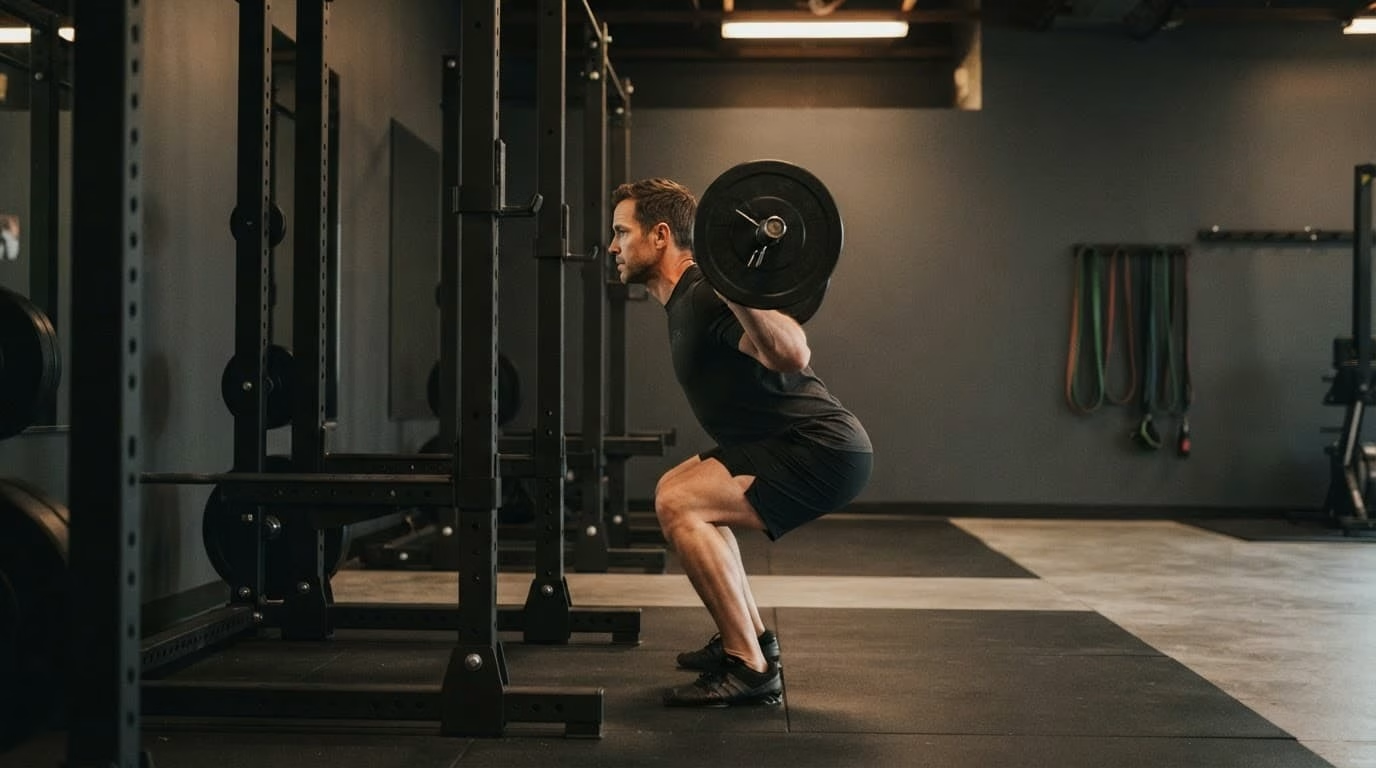
More frequent training does not mean every day needs to feel hard. Easy accessory work and lower-load practice can support progress without matching the fatigue of a heavy session.
Recovery Sets The Upper Limit
Soreness alone does not tell you whether you have recovered. A new exercise can cause soreness even when you are ready to train, while poor sleep can reduce performance with little soreness at all.
Pay attention to patterns. Falling performance, unusually low motivation, persistent tendon pain, disturbed sleep, and joint swelling are stronger reasons to reduce training stress.
Use Sleep And Food As Training Inputs
Hard sessions need enough energy, protein, fluids, and rest. Missing sleep occasionally will not erase progress, but repeated short nights make a demanding programme harder to sustain.
Build a consistent routine around sleep for muscle recovery, especially if you train several times each week. Late-day pre-workout products can also interfere with rest when caffeine keeps you alert at bedtime.
If pain changes how you move, stop the exercise and seek advice from a GP or physiotherapist. Chest pain, fainting, severe breathlessness, or sudden weakness need urgent medical assessment.
Change Frequency With A Two-Week Review
Do not alter your schedule because of one disappointing workout. Look for a pattern across at least two weeks.
Write down each exercise, load, repetitions, effort, sleep quality, and any discomfort. A basic notebook works well, and it helps separate a genuine recovery issue from one difficult day.

Use Performance And Recovery Data
Keep your current frequency if lifts are improving, you feel ready for most sessions, and aches settle quickly. Add a session if you need more time for productive work and your recovery remains steady.
Reduce frequency or take a lighter week if loads feel unusually heavy for several sessions, sleep worsens, or pain persists. Changing strength training frequency works best as a measured adjustment, not a reaction to one hard session.
Conclusion
The best weekly plan gives your muscles enough work and gives you enough recovery to repeat it. For most beginners, two full-body sessions provide the right mix of practice and progress.
Experienced lifters can add frequency when it improves session quality or helps them practise a priority lift. Start with two reliable days, track your response, and let consistent training guide the next change.
FAQ
Can I Build Muscle Training Once A Week?
You can make progress with one weekly session, especially if you are new to lifting. However, two sessions usually make it easier to build enough quality work and practise movements well.
Should Beginners Lift Weights Two Or Three Days A Week?
Two days are enough to start building strength and confidence. Add a third day when two sessions feel routine and you want shorter workouts or more practice.
Is Lifting Weights Five Days A Week Too Much?
Five days can work for experienced lifters with a sensible split and strong recovery habits. It is usually unnecessary for beginners, who often progress well with two or three sessions.
How Long Should I Rest Before Training The Same Muscle Again?
Many people find one or two rest days between hard sessions for the same muscle comfortable. Your actual recovery needs depend on exercise choice, load, set count, sleep, and how close you train to failure.
Should I Train To Failure In Every Set?
No. Training to failure can be useful on some safer exercises, but doing it constantly adds fatigue. Leave a few repetitions in reserve for most compound lifts.
How Do I Know When To Take A Lighter Week?
Take a lighter week when performance declines for several sessions, soreness lingers, sleep deteriorates, or motivation drops. Reduce load, sets, or both for a short period before building back up.
Leave a Reply