
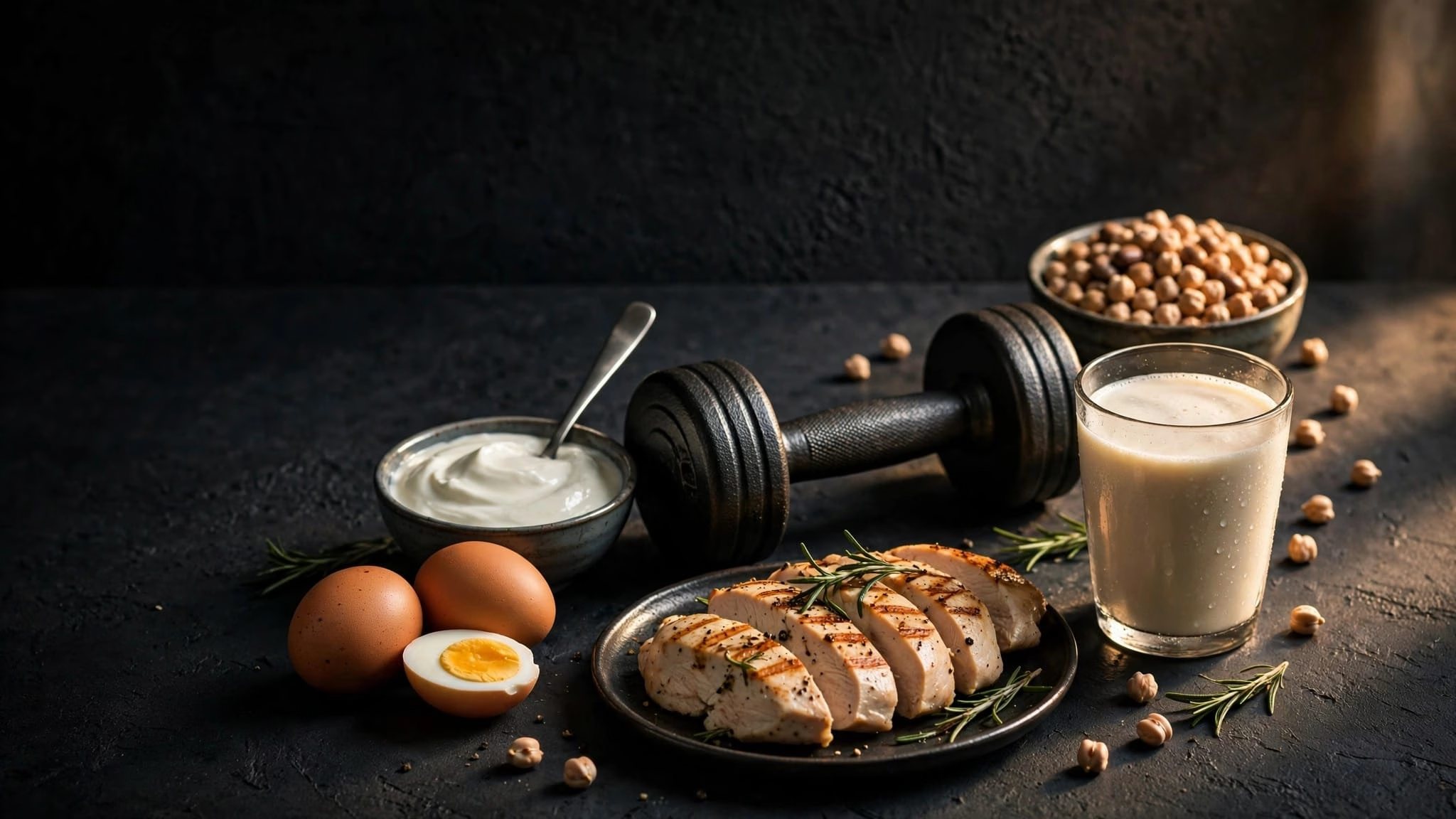
Muscle gains from extra protein began to flatten at about 1.6 g per kilogram of body weight in a major 2018 review of resistance-training studies. For protein intake muscle growth, this is a practical average target, not a universal cut-off for every lifter.
Resistance exercise provides the stimulus, while food supplies amino acids from dietary protein and energy for repair and growth. A sensible daily protein intake, regular meals, enough energy, and decent sleep will take you much further than obsessing over one shake.
Key takeaways
- Most adults who lift weights can aim for 1.6 g of protein per kilogram of body weight each day.
- A practical working range is 1.6 to 2.2 g per kilogram. An energy deficit may justify moving towards the upper end.
- The UK recommended intake of roughly 0.8 g per kilogram prevents deficiency, but it is not designed to maximise muscle gain.
- Spread protein across three or four meals rather than eating nearly all of it at dinner.
- A post-workout meal helps, but your daily total matters more than a narrow timing window.
- Eggs, dairy, fish, meat, soy, beans, lentils, and grains can all contribute to meals that support muscle growth, recovery, and physical function.
- Plant-based lifters can build muscle, though larger portions and careful food choices often help.
- Healthy adults have no good evidence that a higher-protein diet harms kidney or bone health.
- People with kidney disease, pregnancy, or a medical condition should get individual advice from a GP or dietitian.
Protein Intake Muscle Growth: Calculate Your Daily Target
Start with your body weight in kilograms, then multiply it by your chosen protein target to estimate your protein requirements. For most beginners and intermediate lifters, 1.6 g per kilogram is a strong place to begin.
The worked examples below show how that formula sets your daily protein intake:
| Body Weight | Daily Target At 1.6 g/kg | Higher Target At 2.2 g/kg |
|---|---|---|
| 60 kg | 96 g | 132 g |
| 70 kg | 112 g | 154 g |
| 80 kg | 128 g | 176 g |
| 90 kg | 144 g | 198 g |
The lower figure is enough for most people making steady progress. Choose the higher end during an energy deficit, hard training blocks, or when you have a larger appetite.
Use Your Usual Or Goal Weight
If you are close to a healthy weight, use your current body weight. However, if you carry substantial extra body fat, a realistic goal weight can provide a more practical number, provided it reflects a sensible target.
For example, a person aiming to reach 75 kg could start with 120 g daily. Track food for a week, then adjust meals until that target feels routine.

Why The Recommended Intake Falls Short For Lifters
The recommended dietary allowance of around 0.8 g per kilogram is designed to prevent inadequacy and support nitrogen balance. It isn’t a muscle-building prescription for someone doing resistance exercise several times each week.
A 2018 meta-analysis by Morton and colleagues reviewed randomized controlled trials. It found that dietary protein supported resistance-training gains up to about 1.62 g per kilogram daily. Average benefits levelled off beyond that point, although the upper confidence range reached 2.2 g per kilogram.
The International Society of Sports Nutrition gives active people a broader range of 1.4 to 2.0 g per kilogram. Findings across randomized controlled trials are broadly consistent. Muscle hypertrophy targets therefore need context, not a single magic number.
Resistance Training Creates The Need For Protein
Protein does not build visible muscle without a training stimulus. Your muscles need repeated resistance exercise that becomes gradually more challenging through load, repetitions, sets, or better control. This progression builds muscle strength and supports physical function.
After lifting, muscle protein synthesis rises as your body repairs and adapts to the session. Dietary amino acids support that process, but they cannot replace a consistent training stimulus.
A consistent weekly strength training plan matters as much as your meals. If sessions are irregular or always far from effort, adding another scoop of powder will not fix the missing stimulus.
Raise Protein Slightly When Calories Are Low
Building muscle is easier when you eat enough total energy. A modest calorie surplus can support performance and recovery, while a large surplus often adds more body fat than needed.
During fat loss, an energy deficit leaves less energy available for recovery. A negative energy balance can reduce lean tissue, including skeletal muscle mass, which supports physical function. Moving towards 1.8 to 2.2 g per kilogram may help protect lean body mass when the energy deficit is larger, especially if you’re already lean or training hard.
Keep the deficit moderate and continue lifting. Resistance exercise helps retain lean body mass, but higher protein alone can’t prevent muscle loss. Severe restriction and poor training performance make muscle retention far harder.
Spread Protein Across Your Day
One huge evening meal can meet a daily protein number, but protein distribution across three or four meals is often more practical. This repeatable pattern gives your muscles repeated access to essential amino acids and helps maintain adequate intake for training and everyday physical function.
The International Society of Sports Nutrition suggests around 20 to 40 g of high-quality dietary protein per serving for many active adults. Body size matters too, so a useful range is roughly 0.25 to 0.4 g per kilogram per meal.
Build Meals Around A Protein Anchor
A 70 kg lifter targeting 112 g daily might have 30 g at breakfast, 30 g at lunch, 25 g after training, and 27 g at dinner. That is simpler than trying to make up 80 g late at night.
Protein anchors can be Greek yoghurt, eggs, tofu, chicken, fish, cottage cheese, lentils, or a whey or soy drink. Add carbohydrates, fruit, vegetables, and fats around them for a satisfying meal.
There Is No 25 g Absorption Limit
Your body digests and absorbs much more than 25 g of protein in one sitting. The confusion comes from muscle protein synthesis, which has a temporary ceiling after a meal.
Extra amino acids still have uses throughout the body. Larger meals aren’t wasted, although spreading your intake often gives a more reliable routine.
A daily total you can repeat for months matters more than hitting a perfect number at every meal.
Post-Workout Protein Does Not Need A Stopwatch
Eating protein after training is sensible because you are likely hungry, and it supports muscle protein synthesis. A protein-containing meal within a few hours is convenient, but it is not a stopwatch requirement.
You do not need to panic if dinner is later, particularly if you ate protein before training. Total daily intake and regular distribution have a bigger effect than racing to drink a shake in the changing room.
Carbohydrate can also help after long or demanding sessions because it restores glycogen. Pair protein with normal food, such as yoghurt and fruit, eggs on toast, or rice with tofu. Consistent recovery and adequate food support training outcomes and physical function.
Choose Foods You Will Eat Regularly
Whole foods bring more than protein, and protein quality can differ with a food’s amino-acid profile and wider nutritional value. Dairy provides calcium, oily fish provides omega-3 fats, and beans add fibre and carbohydrates that support training.

Useful approximate portions of dietary protein include both animal protein and plant-based choices:
- Two large eggs provide about 13 g of protein.
- A 120 g cooked chicken breast provides roughly 35 g.
- A 200 g serving of Greek yoghurt often provides around 20 g, though labels vary.
- A 150 g serving of firm tofu provides about 18 g.
- Cooked lentils can provide around 18 g per generous bowl.
Check labels on yoghurts, meat substitutes, and ready meals because recipes vary. A protein intake muscle growth plan works best when it includes foods you genuinely enjoy.
Plant-Based Diets Can Support Muscle Gain
A vegan or vegetarian diet can meet your protein requirements for muscle gain and physical function. Protein quality varies across options because amino acid density and digestibility differ. Some plant foods provide less leucine and fewer essential amino acids per serving than whey, dairy, eggs, fish, or meat.
Choose substantial servings of plant-based protein from soy foods, such as tofu, tempeh, edamame, and soy yoghurt. Lentils, chickpeas, beans, seitan, pea protein, wholegrains, nuts, seeds, and suitable supplements can help you reach your dietary protein target.
You don’t need to combine every plant protein in one meal. However, variety across the day and adequate portions make it easier to reach your total.
Older Adults Benefit From Larger Meals
Muscle becomes less responsive to small protein doses with age, a pattern called anabolic resistance. As skeletal muscle mass declines, protein and resistance training help preserve physical function and independence.
Resistance training remains effective, but meals may need more deliberate planning. Older adults often do well with around 25 to 30 g of protein per meal, or close to 0.4 g per kilogram. Meals containing roughly 2.8 to 3 g of leucine may stimulate muscle protein synthesis more strongly.

Dairy, eggs, fish, lean meat, soy, and protein powders can make this easier where appetite is low. Strength work supports muscle strength, while balance training, walking, and enough food also protect physical function.
Protein Powders Are Useful, Not Required
Whey protein, casein, soy, pea, and blended plant protein powders are convenient. They can make protein supplementation practical when work, travel, poor appetite, or a busy training schedule makes food difficult.
A powder does not have special muscle-building powers over an equivalent amount of dietary protein. Whey protein is simply convenient for filling gaps, not a requirement for muscle growth.
Competitive athletes should look for third-party testing, such as Informed-Sport certification. This reduces, but cannot remove, the risk of banned-substance contamination.
Protect Recovery, Health, And Sleep
Higher dietary protein intake has not been shown to damage kidney function or bone mineral density in otherwise healthy adults. The British Association of Sport and Exercise Sciences makes this distinction clear.
Existing kidney disease changes the picture. If you have kidney disease, reduced kidney function, uncontrolled diabetes, are pregnant, or have a medical condition affecting diet, speak to your GP, renal specialist, or registered dietitian before increasing protein.
Do Not Forget Total Food Intake
Protein can’t cover chronic under-eating or a prolonged energy deficit. Include enough carbohydrates and fats to fuel training, support hormones, maintain lean body mass, and keep meals enjoyable.
Drink to thirst and pay attention to energy, digestion, strength, and body weight trends. A target that leaves you constantly stuffed or cuts out fibre-rich foods needs adjustment.
Sleep Helps Turn Training Into Progress
Recovery is not only about macros. Poor sleep can reduce training quality, physical function, appetite control, and the muscle-building response to food.
Regular sleep for muscle recovery helps your training and nutrition support skeletal muscle mass. Aim for steady bedtimes alongside a protein target you can maintain.
Conclusion
A daily protein intake of about 1.6 g of protein per kilogram gives most strength trainees a solid foundation for muscle hypertrophy alongside progressive training. Higher intakes may help during an energy deficit, but protein cannot replace resistance exercise, enough food, or recovery.
Calculate your starting number, divide it across ordinary meals, and review it after several consistent weeks. Assess muscle mass gain, stronger sessions, recovery, and physical function without making eating feel like another full-time job.
FAQ
How Much Protein Do I Need To Build Muscle?
A daily dietary protein target of 1.6 g per kilogram suits most people who resistance train. Protein requirements may range from 1.6 to 2.2 g per kilogram for those dieting, training hard, or preferring a higher target.
Can Your Body Only Absorb 25 g Of Protein At Once?
No. Your body can digest and absorb much more than 25 g in a meal. The muscle-building response does not keep rising indefinitely after one serving, which is why spreading protein is still useful.
Should I Drink A Protein Shake Straight After Training?
A shake is convenient, but it is not compulsory. Eat a protein-rich meal within a few hours, then focus on meeting your daily total.
Can I Build Muscle On A Vegan Diet?
Yes. Soy foods, legumes, grains, seitan, nuts, seeds, and plant protein powders can provide enough protein. Larger servings and varied choices make it easier to get enough leucine and essential amino acids.
Will A High-Protein Diet Damage My Kidneys?
Current evidence does not show harm in healthy adults. However, people with kidney disease or reduced kidney function need personal guidance from their GP or dietitian.
Is Protein More Important During A Fat-Loss Phase?
Protein becomes more useful during an energy deficit because it supports muscle retention. Keep lifting weights and consider moving towards the upper end of your target range.
How Long Does Protein Take To Build Muscle?
Protein supports recovery from each training session, but visible muscle gain takes time. Most people need several months of consistent training, food intake, and sleep to see clear changes in muscle strength and physical function.
Leave a Reply