

Two hearts can beat at the same average rate and still show very different recovery states.
That hidden layer is heart rate variability, often shortened to HRV. If your watch or ring gives you a daily number, it’s easy to treat it like a score. Most of the time, it works better as context.
HRV won’t tell you everything, but it can show how well your body is handling stress, training, sleep, and daily load. Once you read it as a trend, the data becomes far more useful.
Key Takeaways
- HRV measures the small changes in time between heartbeats, not how fast your heart is beating.
- In general, a higher HRV suggests better recovery and nervous system flexibility.
- A lower HRV often points to strain from stress, poor sleep, hard training, alcohol, illness, or travel.
- Your own baseline matters more than anyone else’s number.
- Single-day readings can mislead, so watch weekly trends instead.
- Good sleep, steady routines, and lighter stress usually help HRV recover.
- Slow breathing can raise HRV in the short term because it shifts your body towards a calmer state.
- HRV is useful data, but it isn’t a diagnosis.
Table of Contents
- Key Takeaways
- What Heart Rate Variability Actually Measures
- Why Stress And Recovery Change HRV
- Habits That Help HRV Recover
- How To Read HRV Without Overthinking It
- Conclusion
- FAQ
What Heart Rate Variability Actually Measures
Heart rate variability is the gap between beats, measured in milliseconds. Even when your pulse looks steady, the spacing changes from beat to beat. That variation is normal, and in many cases it’s a good sign.
A higher HRV often means your nervous system can shift gears well. It can respond to demand, then settle again. A lower HRV often means your body is under more strain and has less room to adapt.

Most wearables estimate HRV during sleep or during a quiet morning reading. That’s useful, but the number still needs context. Age, fitness, medication, menstrual cycle, and genetics all affect it, so your baseline matters more than somebody else’s screenshot.
HRV is better treated as a trend than a daily report card.
Why Stress And Recovery Change HRV
HRV reflects the push and pull between your stress response and your recovery response. When life feels heavy, your body often stays in a more alert state. That usually pulls HRV down.
The trigger doesn’t have to be dramatic. A poor night’s sleep, a hard gym session, too much alcohol, long travel, or a stressful work week can all move the number. Sometimes mental stress hits HRV as hard as physical training.
That said, a low reading isn’t always bad news. If you’ve done a demanding run or lifted hard the day before, lower HRV can simply mean your body is doing the work of recovery. The pattern matters more than the dip.
Breathing can help in the short term because it tells the nervous system that the threat has eased. If you want a practical routine, try shifting from stress to focus, especially on tense days.
Habits That Help HRV Recover
Sleep usually has the biggest effect. When sleep is short, broken, or pushed too late, HRV often drops the next day. A solid routine, with a fairly steady bedtime and wake time, gives your body a better chance to reset.
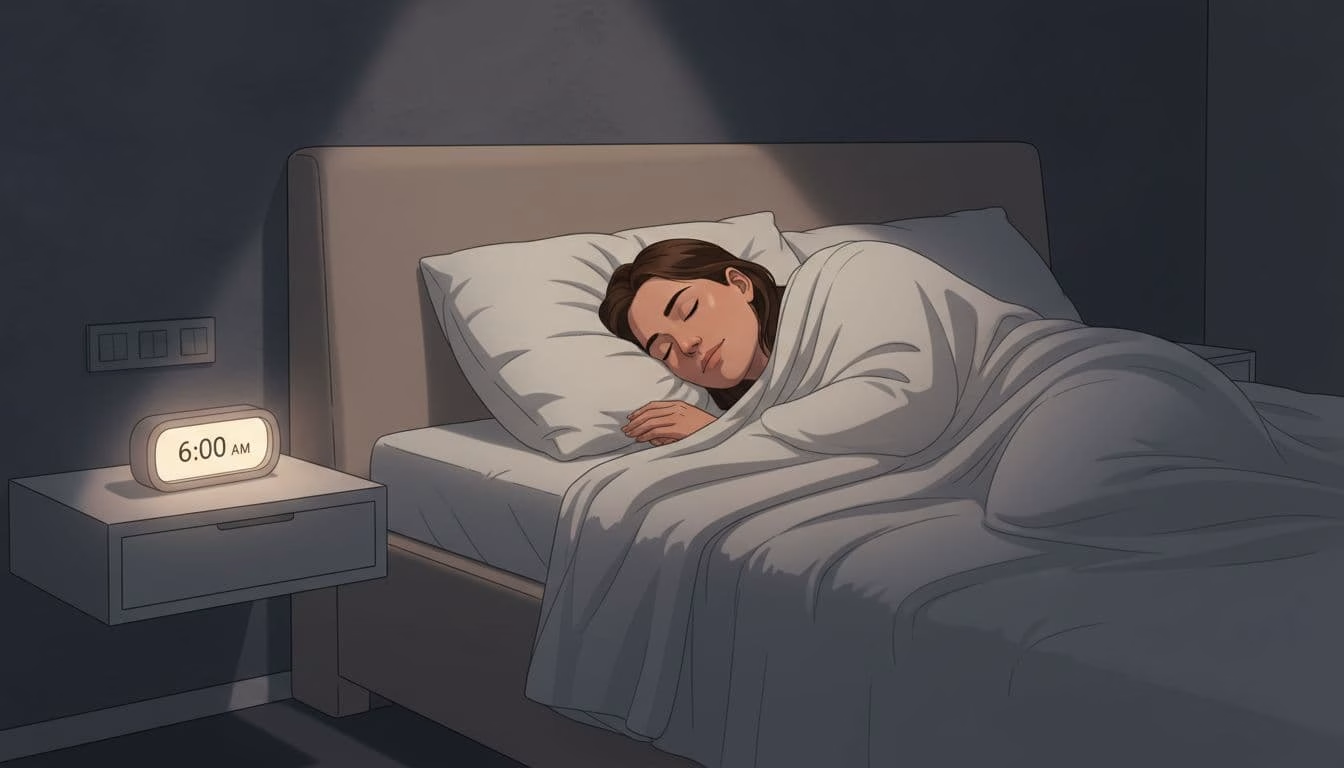
Food, hydration, and training load matter too. Under-fuelling, dehydration, and stacking intense sessions can keep your system on edge. On the other hand, easy walks, light aerobic work, and rest days often help HRV climb back towards baseline.
Caffeine and alcohol can both cloud the picture, mostly through sleep and nervous system strain. If your recovery data looks messy, caffeine timing for better sleep is a simple place to start. Small changes often show up in your trend within days.
How To Read HRV Without Overthinking It
The best way to use heart rate variability is to collect it in consistent conditions. Overnight readings or the same calm morning window work well. Random readings taken after coffee, stress, or movement are less helpful.
Then zoom out. A seven-day pattern tells you more than one odd number. Pair HRV with how you feel, your resting heart rate, sleep quality, soreness, and motivation. When several signals line up, the picture gets clearer.
If HRV stays low for days and you also feel run down, it may be smart to lower training load, sleep more, and trim extra stress. If the number is low but you feel good, don’t panic. Data should support your judgement, not replace it.
Persistent fatigue, chest symptoms, dizziness, or palpitations need proper medical advice. HRV can flag that something is off, but it can’t tell you what the cause is.
Conclusion
Heart rate variability is useful because it shows how well your body adapts, not how “good” you are on any one day. Read it as a pattern, compare it to your own baseline, and match it with sleep, stress, and training.
The calm next step is simple: check your trend for a week or two, then make one recovery change at a time. That’s usually when HRV stops feeling confusing and starts becoming practical.
FAQ
What is a good HRV score?
There isn’t one universal “good” number. A healthy HRV range varies a lot between people, so your own normal pattern matters most.
Does a higher HRV always mean better health?
Not always. In general it’s a positive sign, but sudden swings can happen with illness, heavy training, or poor data quality.
Can stress lower HRV even if I don’t feel anxious?
Yes. Your body can carry stress from work, lack of sleep, travel, or overtraining even when your mood feels fairly normal.
How quickly can HRV improve?
Sometimes it changes overnight after better sleep or less alcohol. Longer trends often take a week or more to settle.
Should I train when my HRV is low?
One low reading doesn’t always mean stop. If HRV is low for several days and you also feel tired or sore, an easier session is often smarter.
Which matters more, resting heart rate or HRV?
Both help, because they show different parts of recovery. HRV often gives a fuller picture when you read it alongside resting heart rate, sleep, and energy.
Leave a Reply