
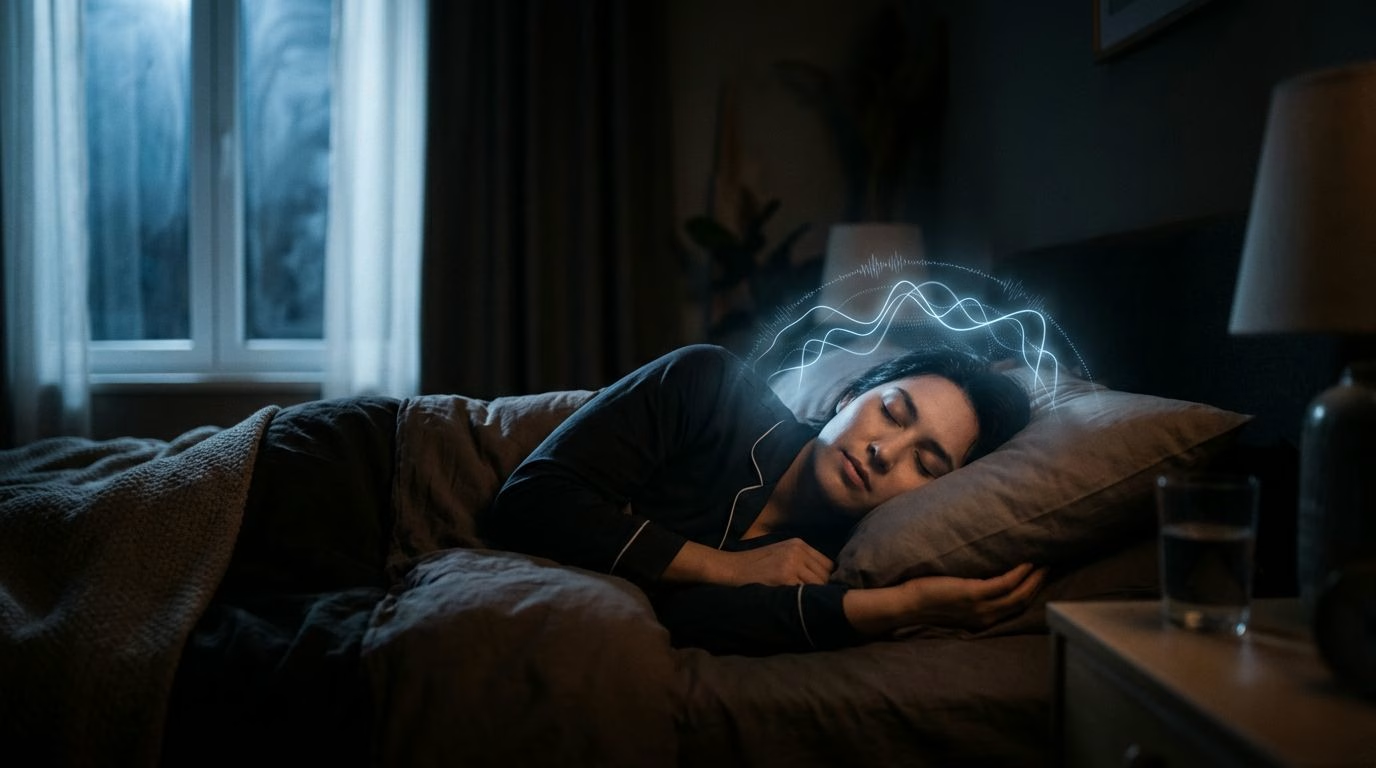
For most adults, NREM stage 2 takes up the biggest share of the night. Yet many people glance at a sleep tracker, see lots of light sleep, and assume something went wrong.
That reading often means the opposite. Light sleep includes a stage that helps protect sleep, supports memory, and keeps your night moving in the right order. Once you understand the importance of stage N2, those charts start to make far more sense.
Key Takeaways
- NREM stage 2 is an essential form of light sleep, yet it is far from being low-quality or empty time spent in bed.
- Most adults spend more time in N2 than in any other single sleep stage throughout the night.
- During this phase of light sleep, your brain filters out background noise to help you remain less responsive to minor disturbances.
- The presence of sleep spindles and K-complexes during this stage is strongly linked to memory processing and the maintenance of sleep stability.
- A high reading on your sleep tracker is often normal, as these devices estimate stages rather than recording brain waves directly.
- Excessive or fragmented light sleep can sometimes point to underlying issues like high stress, alcohol consumption, caffeine intake, physical pain, sleep apnea, or an irregular schedule.
- Achieving better rest usually comes from improving your overall habits rather than focusing on a single metric within your sleep cycle.
What Light Sleep Really Means
Light sleep often sounds flimsy, as if your brain is only half-completing its duties. In formal sleep science, the term is used more precisely to describe NREM stage 1 and NREM stage 2, which are the early phases of non-REM sleep before you transition into deep sleep. While many consider light sleep to be merely a precursor to more restorative rest, these stages are essential for a healthy sleep cycle.
NREM stage 1 is the brief drifting-off phase, while NREM stage 2 follows and lasts for a significantly longer duration. It is important to recognise that these stages are not just a meaningless pause between being awake and falling into deep sleep, which is also known as slow-wave sleep. Many people mistakenly believe that time spent in light sleep is wasted, but it is actually a vital, active part of your night.
You can usually wake more easily from NREM stage 2 than from deep sleep. However, being easier to wake does not mean the process is less useful. Your body has already slowed down, your muscles are more relaxed, and your brain has shifted away from the alert, outward-facing mode you use during the day. In plain terms, light sleep has a distinct purpose. It provides your night with necessary structure and keeps the door open for the deeper recovery that follows.
Where Stage N2 Fits In Your Sleep Cycle
Your sleep follows a pattern where you move through different sleep stages throughout the night. Each sleep cycle typically lasts about 90 minutes, though this varies from person to person. Early in the night, your body prioritises deep sleep, while REM sleep becomes more prominent as the morning approaches. Throughout this entire process, N2 serves as the glue that connects these periods. It appears consistently across every sleep cycle, which is why it often makes up the largest portion of your overall sleep architecture.
This quick comparison helps place NREM stage 2 in context alongside the other sleep stages.
| Stage | What Tends To Happen | Usual Pattern Across The Night |
|---|---|---|
| N1 | You drift off and can wake easily | Brief, mainly at sleep onset |
| N2 | Body functions slow, brain shows sleep spindles and K-complexes | Repeats in every cycle, often the biggest share |
| N3 | Deep non-REM sleep, hardest stage to wake from | More common earlier in the night |
| REM | Active brain, vivid dreams, muscle paralysis | Longer periods later in the night |
The key point is simple. N2 is not a failed attempt at deep sleep. It is a vital, repeated stage that helps stabilise the transition between REM sleep and other phases. Without enough time in N2, your night becomes less consistent, and the transitions between these essential sleep stages can become disjointed.
Why Stage N2 Is Doing More Than You Think
Stage N2, also known as NREM stage 2, is characterised by two distinct brain waves: sleep spindles and K-complexes. While these terms sound technical, their functions are quite straightforward. Sleep spindles are brief, rhythmic bursts of brain waves that signal a transition into deeper relaxation. K-complexes are larger, singular brain waves that typically appear when the brain registers an external sound or tactile stimulus without the need to wake you up fully.
Together, these features serve two primary purposes. First, they support sleep stability. Your brain constantly monitors the outside world, but it does not always need to pull you back to wakefulness. Whether it is a distant car door, a partner shifting position, or a radiator clicking, N2 often helps you stay asleep despite these minor disturbances.
Second, these patterns assist the brain in sorting and strengthening information. This is why researchers take such a strong interest in this stage. Although you may appear calm from the outside, your brain is far from idling. It is busy organising, filtering, and preparing for the restorative stages that follow. If deep sleep acts as the heavy-repair shift, N2 serves as the essential phase that keeps the entire operation steady throughout the night.
How N2 Supports Memory, Learning And Skill Practice
When you learn something new, your brain does not file it away perfectly on the spot. Fresh information first sits in a more temporary system, often linked to the hippocampus, where it undergoes memory consolidation to begin the sorting process. Later, during sleep, the brain starts deciding what matters and what does not. Stage N2 appears to be essential for this memory consolidation, especially through the activity of sleep spindles.
Researchers often connect N2 with fact learning, language acquisition, and the refinement of motor skills. That can mean remembering vocabulary, perfecting a piano passage, or improving your form on a tennis serve. It does not mean N2 works in isolation. While it plays a key role in the handover, where short-term traces become more durable, it is part of a larger, integrated system.
This is also why naps can be more effective than people expect. A very short nap may improve alertness, but a slightly longer one that reaches NREM stage 2 can provide a significant boost to your cognitive processing. If you use naps for recovery or revision, the ideal nap duration for memory consolidation depends on whether you want a quick lift or a fuller cycle. Ultimately, light sleep is not second-rate sleep. In the right amount, it works alongside deep sleep and REM sleep to help yesterday’s effort stick.
What Your Body Is Doing During This Stage
Your body changes pace during N2, even if it does not feel dramatic. Your heart rate slows, breathing becomes more regular, and your core temperature starts to dip. These shifts help the body move away from daytime alertness and toward a state of physical restoration. In other words, N2 is an essential part of the glide path into more restorative sleep.
This stage also helps reduce your response to small disturbances. That matters for recovery, because broken sleep often harms how rested you feel more than people expect. You do not need to reach deep sleep every minute to feel better the next day. You need a night that holds together, with normal movement between sleep stages and fewer full awakenings.
That wider picture is why sleep quality is more than one metric on a wearable. Stage balance, total sleep time, regular timing, and how often you wake all matter together. If you want a broader view of that bigger picture, the site’s sleep and recovery guidance connects stage patterns with daily function, sleep debt, and recovery habits.
Why Wearables Often Make Light Sleep Look Worse
Consumer sleep tracker devices can be useful, but they do not monitor brain waves the way a professional sleep lab does. Popular gadgets from brands like Apple, Oura, Fitbit, and Garmin estimate your sleep stages by analysing movement and heart rate data. While this provides a helpful trend, a wearable cannot confirm NREM stage 2 with the same clinical precision as full polysomnography.
Because of this, seeing a large amount of light sleep on a graph is often less dramatic than it appears. If your sleep tracker labels half your night as light sleep, that may actually be perfectly normal. Most adults spend around half the night in N2 alone, with additional time spent in N1, so a chart can look alarming even when your sleep architecture is entirely standard.
Single-night readings are also notoriously noisy. A late meal, alcohol consumption, a warm bedroom, travel, or stress can all influence what your device detects. Instead of worrying about one odd Tuesday, focus on your patterns over a few weeks. If your energy, mood, and concentration levels are good, a large block of light sleep is not a red flag. It is often just your body cycling through natural, healthy sleep stages.
When A High Light Sleep Reading Can Point To A Problem
Light sleep becomes more concerning when it is paired with persistent symptoms. If you wake often, feel unrefreshed most mornings, struggle with daytime sleepiness, or notice snoring and breathing pauses, the issue may be fragmented sleep rather than N2 itself. In that case, more time in lighter stages often reflects frequent interruptions that can eventually lead to chronic sleep deprivation.
Several common factors can push the night in that direction. Late caffeine, alcohol, chronic stress, pain, reflux, a room that is too warm, and an irregular sleep schedule all make sleep easier to disturb. Hormonal changes can do the same, especially during perimenopause and menopause. Age also shifts your sleep architecture, as older adults often get less deep sleep and more time in lighter stages, even without underlying illness.
Some medical issues matter too. Obstructive sleep apnea can break up sleep over and over throughout the night. Restless legs syndrome and periodic limb movements can cause similar disruptions. If you often feel exhausted despite having enough time in bed, or if a partner notices loud snoring, gasping, or repeated limb jerks, speak to your GP. If you are not sure where to start, NHS 111 can help you decide what level of support makes sense.
How To Support Healthy Stage N2 Every Night
You cannot micromanage N2 directly, but you can make the whole night more stable. A consistent sleep and wake time is the biggest lever for most people, because the brain craves predictability. Morning daylight helps too. Get outside soon after waking, even if the weather is miserable, as this helps anchor your circadian rhythm and improves sleep timing later on. By managing morning light, you help regulate the natural suppression of melatonin and the release of cortisol, setting a healthier tone for your internal clock.
Caffeine timing matters more than many people think. For sensitive sleepers, coffee or energy drinks in the afternoon can hang around long enough to keep sleep lighter and more broken. Alcohol may make you nod off faster, yet it often fragments the second half of the night. Creating a consistent wind-down routine is vital for a restful environment; keep your bedroom cool, dark, and quiet where possible. Many people sleep better around 16 to 19C, though comfort varies.
Regular exercise also helps, especially earlier in the day or late afternoon. Hard training right before bed does not suit everyone. Finally, stop judging your night by a single stage score. If alarms leave you foggy, sleep inertia explained shows why wake-up timing matters as much as your total sleep cycle duration. Better sleep usually comes from steadier routines, fewer disruptions, and less obsession with the graph.
Conclusion
A night full of NREM stage 2 sleep is not a cause for concern. For most adults, it is a perfectly normal part of a healthy sleep cycle, often accounting for the largest portion of your time spent in bed.
That matters because this stage helps protect your overall rest, supports memory consolidation, and acts as the essential bridge between deep sleep and REM sleep. If your wearable device indicates that you had a significant amount of light sleep, remember to read that result in context. Always start by evaluating your daily habits, any physical symptoms, and most importantly, how refreshed you feel during the day.
FAQ
Is Stage N2 The Same As Light Sleep?
Stage N2 is the primary component of light sleep, which also includes NREM stage 1. While light sleep as a category encompasses both, N2 is more substantial and makes up a much larger share of your total rest each night.
How Much Light Sleep Is Normal?
It varies between individuals, but a significant amount is perfectly normal. For many adults, N2 alone can account for around half of total sleep time. Age, stress, alcohol consumption, illness, and your bedtime routine can all shift the balance of your various sleep stages.
Why Does My Watch Say I Get Too Much Light Sleep?
Wearables estimate your rest patterns rather than measuring brain waves directly. This means they can sometimes mislabel certain periods or struggle to identify the exact boundaries between sleep stages. The data from your device is useful for tracking long-term trends, but it is not a perfect tool for a clinical diagnosis.
Is Light Sleep Less Restorative Than Deep Sleep?
Deep sleep and REM sleep have their own unique roles in body repair and cognitive function, but light sleep remains an essential part of restorative sleep. N2 helps to stabilise your rest and supports memory processing. Overall health depends on the quality of your entire sleep cycle rather than the duration of one stage in isolation.
Can Naps Include Stage N2?
Yes, longer naps often reach the N2 stage. This is one reason why some naps help with memory or skill learning, rather than simply improving your alertness. Shorter naps are less likely to include much N2, although the exact timing can vary from person to person.
Does Alcohol Affect Stage N2?
Alcohol can change your sleep architecture and fragment the night. Some people fall asleep faster after drinking, but the second half of the night often becomes lighter and more broken. That can leave you with more awakenings and lower quality rest.
When Should I Speak To A GP About Light Sleep?
Speak to a GP if you feel tired most days despite spending enough time in bed, or if your sleep is broken for several weeks. Loud snoring, gasping, morning headaches, repeated limb movements, or severe daytime sleepiness also deserve a proper check with a professional.
Can I Increase Stage N2 On Purpose?
You cannot target N2 in the same way you might target your daily step count or protein intake. What helps is improving the conditions that support normal cycles, such as keeping regular timing, getting morning light, consuming less caffeine late in the day, and reducing disturbances at night. Over time, a steadier routine usually promotes a healthier balance of all sleep stages.
Leave a Reply