

A smartwatch cannot sample the oxygen in your breath. Yet an at-home estimate can still reveal useful fitness trends when you treat the number with care.
At-home estimates are quick and affordable. Laboratory tests cost more and feel harder, but they measure the gases your body uses during exercise. The right choice depends on what you want to improve and how precise you need the result to be.
Key Takeaways
- Home VO2 max scores are estimates based on heart rate, pace, power, and personal profile data.
- A laboratory test uses a mask and metabolic cart to analyse expired gases during increasing exercise.
- Laboratory testing is the gold-standard method for measuring cardiorespiratory fitness.
- Wearable scores work best when you compare trends in similar training and weather conditions.
- A lab report can include heart-rate, pace, power, and ventilatory threshold data alongside VO2 max.
- Private UK laboratory tests often cost around £100 to £250, although prices vary by provider and report detail.
- Avoid hard training for 24 hours before a maximal test, and follow the clinic’s guidance on food and caffeine.
- A changing score matters less than whether your training, recovery, and performance are improving together.
What VO2 Max Measures
VO2 max is the highest rate at which your body can take in, transport, and use oxygen during intense exercise. It is usually reported as millilitres of oxygen per kilogram of body mass per minute, written as ml/kg/min.
The figure brings together work from your lungs, heart, blood vessels, and working muscles. It is a useful measure of aerobic capacity, but it does not capture every part of fitness.
Oxygen Uptake Is Relative to Body Mass
A score of 40 ml/kg/min means your body used 40 millilitres of oxygen per kilogram each minute at peak effort. Because the common score is relative to body mass, changes in body composition can alter it even when absolute oxygen use stays stable.
Absolute VO2 is measured in litres per minute. This may matter for some sports, such as rowing or cycling. However, runners often focus on relative VO2 max because they move their body mass over distance.
It Tracks Capacity, Not Character
A higher score usually supports stronger endurance performance. Still, it cannot tell you how well you pace a 10 km race, tolerate heat, fuel a long ride, or recover between sessions.
Age, sex, body mass, altitude, recent training, and test type can all affect the result. Cycling values can also differ from treadmill values, especially if you are more practised in one mode. Compare results from the same mode whenever possible.
Higher cardiorespiratory fitness is associated with a lower risk of cardiovascular disease and all-cause mortality in population studies. Cardiovascular fitness is still only one aspect of health. VO2 max does not diagnose illness or predict an individual’s future. It is a training marker, not a verdict on your health.
How Home VO2 Max Estimates Work
Home testing includes wearable estimates and self-guided field tests. Neither method measures the oxygen in your breath, so each relies on an equation to predict maximal oxygen consumption.
The strongest home results come from repeatable efforts. A score gathered during an easy, steady run is more useful than one taken after poor sleep, hot weather, and a week of missed training.
What Wearables Infer From Exercise Data
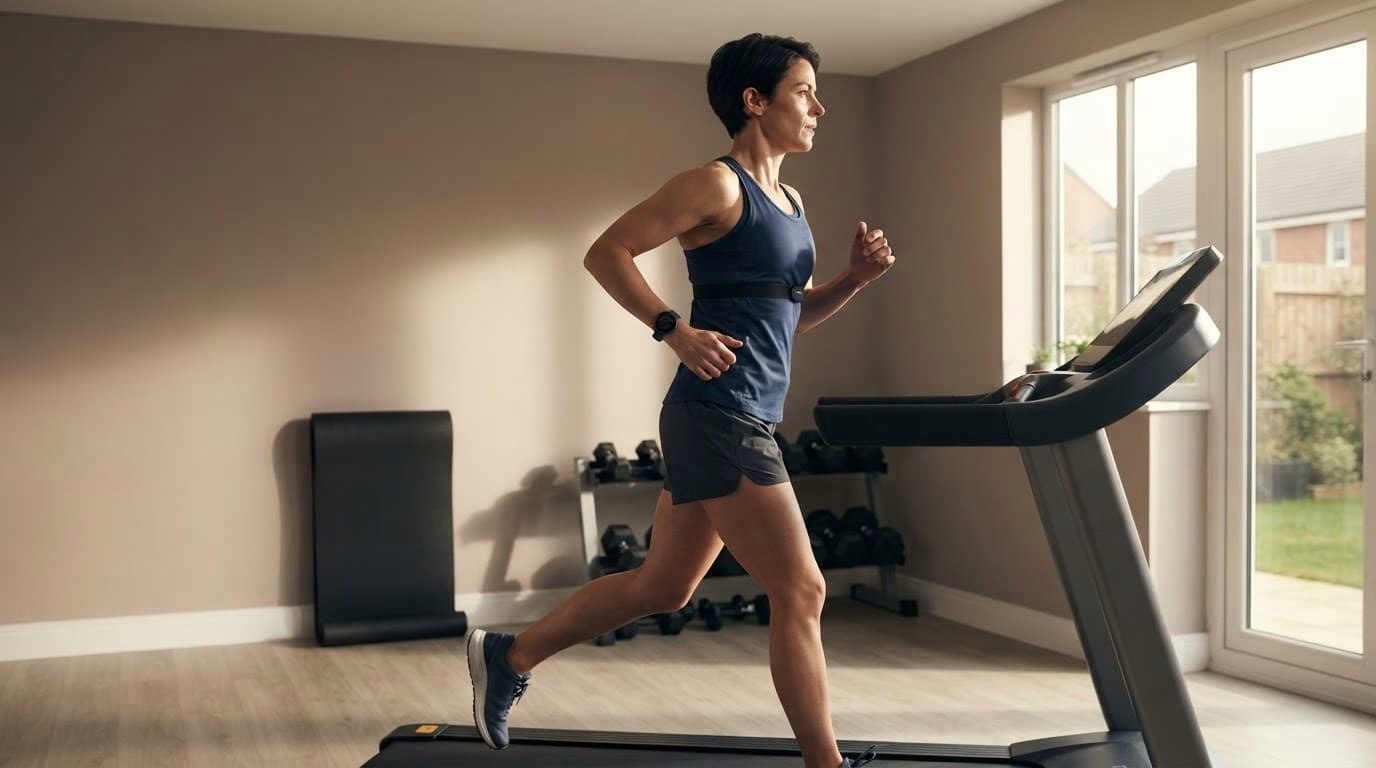
Garmin, Apple Watch, COROS, Polar, and similar devices compare your heart rate with your speed, power, elevation, and profile details. Check that your device uses a realistic maximal heart rate, since an incorrect value can distort the estimate.
The software estimates your aerobic fitness from the relationship between effort and output. A lower heart rate at the same pace may lift the estimate. Equally, a higher heart rate on a humid day may pull it down.
Wrist-based heart-rate sensors can also struggle in cold conditions, during fast intervals, or when the watch moves on the skin. A chest strap improves heart-rate quality for running and cycling, but it cannot make a wearable measure oxygen directly.
Field Tests Can Offer a Clearer Baseline
A simple field test uses your performance in a fixed effort to estimate aerobic capacity. The Cooper 12-minute run, the Chester Step Test, and timed walking protocols are common examples.
These tests can work well if you use the same route, footwear, warm-up, and pacing approach each time. A flat track is usually better than a hilly route with changing wind.
Field tests demand honest pacing. Starting too fast and fading badly can produce an unhelpful score. They also cannot show how your breathing changes at different intensities.
How Laboratory Testing Measures Breath
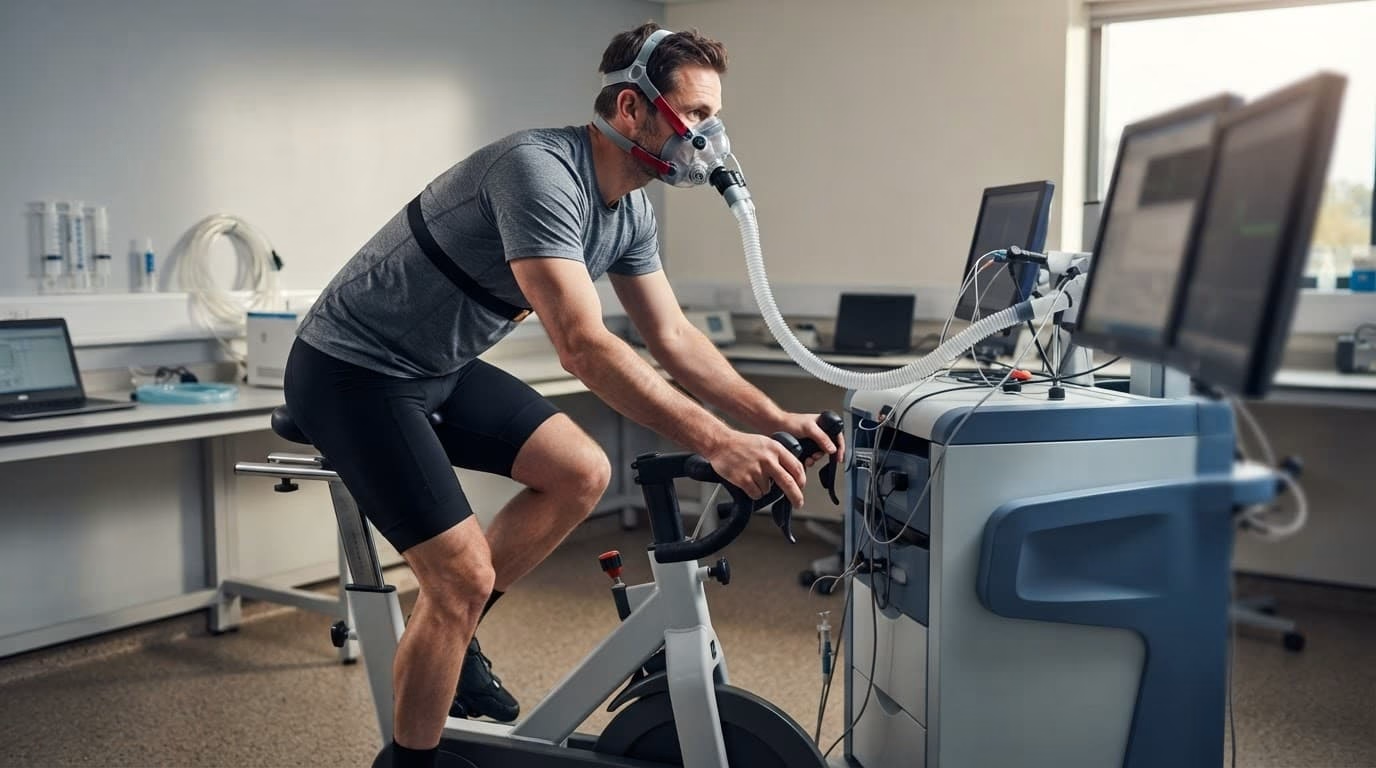
A laboratory test uses indirect calorimetry. You wear a close-fitting mask that channels inhaled and exhaled air to a metabolic cart, which analyses oxygen and carbon dioxide levels.
During VO2 max testing, a team with sports medicine and exercise physiology expertise measures gas exchange at each workload. The equipment can quantify energy expenditure as well as gas exchange. This makes the result more accurate than a wearable estimate, provided you give a strong enough effort.
Breath-by-Breath Gas Analysis
Most tests use a treadmill or cycle ergometer. An incremental exercise protocol raises the workload every minute or every few minutes. It continues until you reach voluntary exhaustion, or the tester stops the assessment for safety.
The metabolic cart measures airflow and gas concentrations breath by breath. The operator tracks peak heart rate, workload, symptoms, and perceived effort. That peak isn’t automatically your maximal heart rate.
Some clinics also offer a separate resting metabolic rate assessment. It measures resting energy needs and shouldn’t be confused with the exercise test.
A proper lab will calibrate its indirect calorimetry equipment before testing. That matters because small errors in airflow or gas readings can affect the final result.
Thresholds Make the Report More Useful
A lab may also estimate your ventilatory thresholds. These are points where breathing patterns change as exercise becomes harder, and your body relies more on carbohydrate for energy. An anaerobic threshold is a related label, but it may not match every ventilatory threshold, so check the provider’s definition.
The first threshold often marks a sustainable aerobic effort. The second usually sits nearer the intensity you could only hold for a shorter period. A report may pair each threshold with heart rate, running pace, or cycling power.
Some reports show VO2 peak rather than VO2 max. VO2 peak is the highest oxygen uptake reached in that test. It is still useful, especially when a clear maximum cannot be confirmed.
A home score earns trust through repeatable conditions, while a lab score earns it through measured gas exchange.
Comparing Accuracy, Cost, and Convenience
The most accurate option is not always the most useful one. A dependable home trend may guide a recreational runner better than a single lab score they never revisit.
| Method | How It Produces a Score | Typical Cost | Best Use | Main Limitation |
|---|---|---|---|---|
| Wearable estimate | Algorithm using heart rate and exercise data | Included with device | Tracking long-term trends | Sensitive to data quality |
| Field test | Equation based on distance, time, or heart rate | Free to low cost | Setting a repeatable baseline | Pacing affects the result |
| Private laboratory test | Metabolic cart and respiratory mask | Around £100 to £250 | Thresholds and precise training data | Higher cost and effort |
| NHS CPET | Clinical exercise assessment | Referral-based | Medical investigation | Not a performance service |
Private prices vary by city, equipment, staff qualifications, and report detail. Check whether a provider includes body composition data or a resting metabolic rate assessment. These may be add-ons or separate measurements, rather than standard parts of every VO2 max test.
NHS cardiopulmonary exercise testing, often called CPET, is for clinical decisions rather than race preparation. Private insurance may cover medically indicated testing, but it rarely covers a performance-focused session without clear policy approval.
When a Laboratory VO2 Max Assessment Is Worth the Cost
A laboratory assessment makes most sense when the detail will change a training decision. It can help when training feels stuck, when you’re preparing for a demanding event, or when watch data and real-world performance don’t match.
The findings can inform an exercise prescription, including marathon pace, cycling power targets, and target heart rates.
Pay for Detail When Your Training Needs It
Endurance athletes may benefit from threshold guidance. A runner aiming for a first marathon may use threshold pace data, while a cyclist with a power meter may structure longer climbs and interval sessions.
A relative score is expressed per kilogram of body mass, so changing body composition can affect its interpretation, particularly when weight is changing.
Lab assessment is also useful after a block of consistent training. Testing before and after a 12-week programme can show whether your pace or power improved at the same heart rate.
A qualified sports medicine service can help with specialist questions, but it doesn’t replace your GP. If symptoms such as chest pain, unexplained fainting, or severe breathlessness concern you, speak with a GP rather than booking a hard exercise test.
An Estimate Is Enough for Many People
Home estimates are often enough if your main goal is to become more active, improve aerobic endurance, or monitor your fitness level. The number does not need to be perfect to show whether your routine is moving in the right direction.
Use one device and one preferred activity type. Then look at the trend every few weeks rather than reacting to each small change.
If you run regularly, an improving pace at the same heart rate often matters more than a one-point shift in a watch score.
Prepare Properly and Put Safety First
A maximal test requires a hard effort. Proper preparation helps produce a fair result and makes the appointment more comfortable.
Follow the clinic’s instructions if they differ from this general advice. Labs may have specific guidance on caffeine, medication, and warm-up routines.
The Day Before Your Test
Avoid strenuous training for about 24 hours before your appointment. Hard intervals, long rides, and heavy leg sessions can cause fatigue and affect your heart-rate response.
Eat normally during the day, then have a light meal two to three hours before testing. Drink water as usual, but avoid arriving overfull or dehydrated.
Avoid heavy drinking the evening before. Do not try a new supplement, energy drink, or caffeine dose on test day. Bring comfortable kit and the trainers or cycling shoes you normally use.
Health Checks Matter Before Maximal Effort
Tell the provider about diagnosed heart or lung conditions, uncontrolled high blood pressure, arrhythmias, diabetes medication, recent illness, or any history of fainting during exercise. They may ask for GP clearance before a maximal protocol.
New chest pain, collapse, or severe unexplained breathlessness needs urgent medical care, not a home fitness test. NHS 111 can help with urgent but non-emergency symptoms.
Never stop prescribed medication before testing unless your clinician tells you to. Some medicines affect heart rate, so the lab needs to know about them to interpret your result properly.
Use Results to Build Better Training
Write down the test date, exercise type, body mass, conditions, and device used. This makes later comparisons much more reliable.
A lab report can guide your sessions, but it shouldn’t turn every workout into a target chase. Your body still responds to sleep, work stress, weather, and total training load.
Pair the Score With Performance Clues
Track your easy running pace, cycling power, resting heart rate, perceived effort, and heart rate recovery alongside VO2 max. These clues often provide more context than one number alone.
Heart rate recovery is useful context, not a standalone verdict.
For example, a stable VO2 max with a faster comfortable pace is still progress. The same applies if you can ride longer without fatigue at a familiar power output.
Recovery data can add context too. Understanding how HRV reflects recovery can help you spot when stress, poor sleep, or a hard training block is affecting your normal heart-rate response.

Build Aerobic Fitness With Consistent Work
The NHS recommends at least 150 minutes of moderate physical activity or 75 minutes of vigorous activity each week, plus muscle-strengthening work on two days. Start there if your routine is inconsistent.
Once you have a steady base, one weekly session of high-intensity interval training can help. Short, hard repetitions of two to five minutes, separated by easy recovery, are common for improving aerobic power.
Keep most endurance work easy enough to control your breathing. Hard sessions work better when they sit among genuinely easy days, regular meals, and enough sleep.
Genetics affects your ceiling, but it doesn’t decide whether you improve. Consistent training can raise maximal oxygen consumption, improve threshold pace, or make the same effort feel easier.
Conclusion
Home estimates are practical for tracking direction, especially when you use the same device and conditions. A laboratory assessment gives a more precise view of oxygen use, thresholds, and training intensity.
Choose lab testing when the added detail will change your decisions. Otherwise, use VO2 max testing at home as one useful signal alongside pace, power, recovery, and how you feel during training.
FAQ
Are At-Home VO2 Max Estimates Accurate?
They can be accurate enough for spotting personal trends. However, watches and field tests estimate oxygen use rather than measuring respiratory gases.
How Much Does a Lab VO2 Max Test Cost in the UK?
Private assessments often cost roughly £100 to £250. Prices can rise when a consultation, detailed report, or training advice is included.
Does a Laboratory VO2 Max Test Hurt?
The test should not hurt, but it becomes uncomfortable near the end because you exercise close to your limit. The mask can feel unusual at first, and staff should stop if concerning symptoms develop.
Why Did My Watch VO2 Max Score Drop?
Heat, hills, fatigue, poor sleep, illness, dehydration, and faulty heart-rate readings can all lower an estimate. Check several similar workouts before treating a small change as meaningful.
How Often Should I Repeat a VO2 Max Test?
A home trend can be reviewed every few weeks. For laboratory testing, every three to six months is usually enough to assess a structured training block.
Can I Improve VO2 Max After 40?
Yes. Regular aerobic training, well-paced intervals, strength work, and steady recovery can improve fitness at many ages. The size of change differs between people.
Should I Test on a Treadmill or Exercise Bike?
Use the mode closest to your main sport. Runners usually get the most relevant data from a treadmill, while cyclists benefit most from a cycle ergometer.
Leave a Reply