

You can feel jet-lagged without leaving home. That’s what social jet lag does when your work alarm and your weekend lie-in pull your biological clock in opposite directions.
If Monday morning feels like a red-eye flight, circadian misalignment between your inner clock and societal expectations may be the issue with your sleep schedule, not your willpower. The good news is that small changes often help more than big ones.
Key Takeaways
- Social jet lag happens when your sleep timing shifts between workdays and free days.
- It’s not only about sleep length, it’s also about when you sleep, tied to your individual chronotype.
- A big weekend lie-in can make Monday feel worse, even if you got more rest.
- Morning light and a steadier wake-up time help reset your circadian rhythm.
- Consistency stabilizes sleep-wake cycles.
- Moving bedtime in small steps works better than forcing an early night.
- Late caffeine, bright screens, and late meals can keep the mismatch going.
- The aim isn’t perfection, it’s keeping your schedule within a narrower range.
What Social Jet Lag Actually Means
Social jet lag is the conflict between your internal body clock and your social obligations. Your chronotype, as measured by the Munich Chronotype Questionnaire (the standard tool used by researchers), determines your natural sleep window; your body may want sleep from midnight to 08:00, but work may demand sleep from 22:30 to 06:30. That mismatch can leave you tired, foggy, and oddly hungry, even if you spend enough hours in bed.
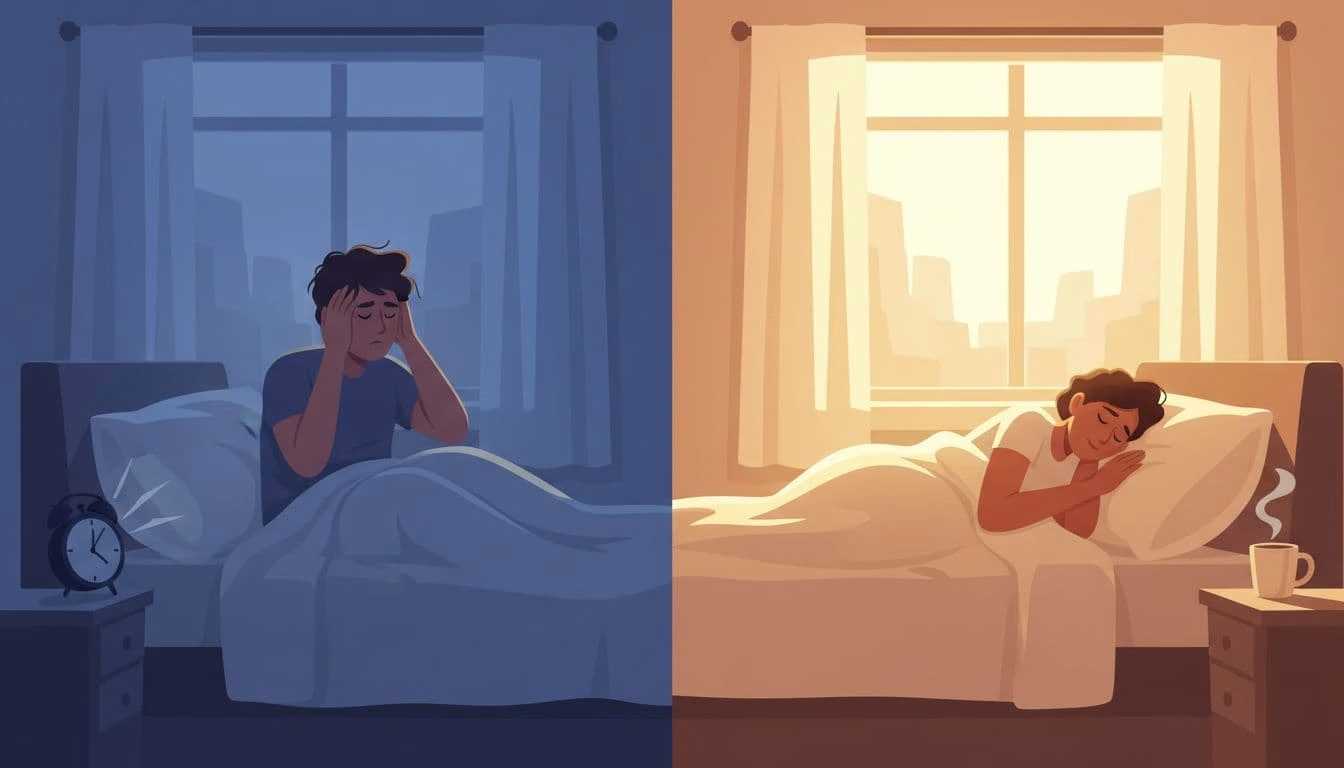
Think of social jet lag like moving between two time zones every week. On weekdays, you live by the alarm. On weekends, you drift back to your natural rhythm. Then Monday arrives, and your brain has to “travel” again. Students, parents, office workers, and people with late-night habits often know this feeling well.
Why Your Weekend Sleep Can Make Monday Worse
Extra sleep isn’t the enemy. The real problem is social jet lag, a big shift in timing called midsleep on free days. If you wake at 06:30 on weekdays but 09:30 on weekends, your clock swings by three hours. That’s enough to cause circadian misalignment, disrupting sleep-wake cycles so Sunday night feels too early for sleep and Monday morning feels brutal.
Light plays a big part. Late nights, bright screens, social plans, and slower mornings all tell your brain to stay on a later schedule. In other words, your weekends can train your body for one life, while your job demands another. The wider the gap, the rougher the reset.
Your body clock likes boring routines, even when your social life doesn’t.
What Social Jet Lag Does To Energy, Mood And Health
In the short term, social jet lag often shows up as brain fog, low patience, and a stronger pull towards sugar and caffeine. You may feel flat in the morning, wired at night, and hungry at odd times. That pattern can chip away at cognitive performance and mood through the week.
Over time, research has linked bigger schedule swings with poorer sleep quality, worse daytime function, and negative mental health outcomes. Some studies also connect high levels of social jet lag with an increased risk of obesity, metabolic syndrome, type 2 diabetes, and cardiovascular disease, along with elevated body mass index, although those links are messy and shaped by diet, stress, and routine. If late coffee is part of the cycle, this guide on caffeine timing for better sleep can help you set a smarter cut-off.
How To Fix Social Jet Lag Without Becoming Rigid
You don’t need a military schedule. Most people do better with a steady rhythm and a bit of flexibility. A good target is to keep your wake-up time within about 60 to 90 minutes across the whole week. That still leaves room for real life.
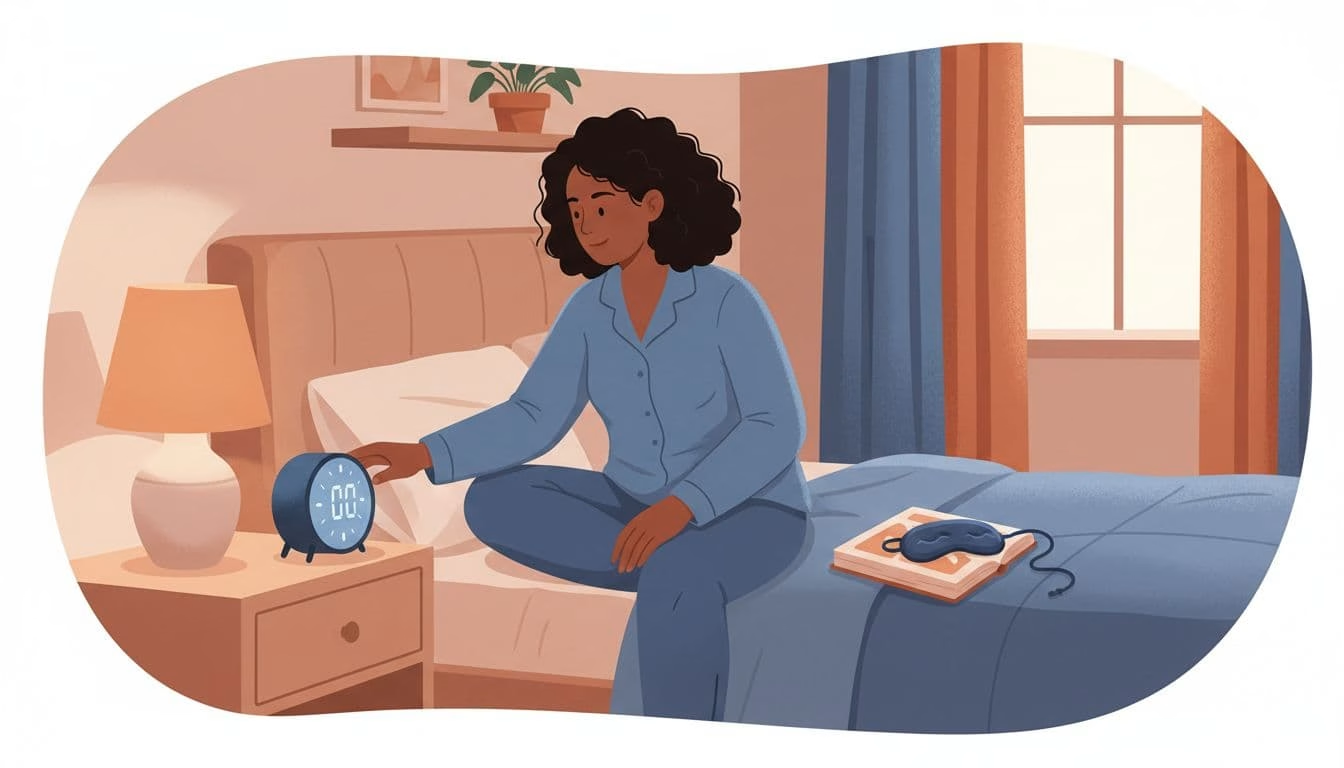
A few essential sleep hygiene habits usually make the biggest difference:
- Keep your wake-up time steadier than your bedtime. Morning anchors the clock more strongly.
- Get outside light soon after waking, even on cloudy days. Daylight tells your brain it’s time to be alert.
- Shift bedtime in small steps, around 15 to 30 minutes every few nights, if you want earlier sleep.
- Make evenings quieter. Cut late caffeine, reduce blue light and artificial light exposure to avoid melatonin suppression, and don’t push heavy meals too close to bed.
While timing is key to tackling social jet lag, maintaining adequate sleep duration is also necessary for recovery.
If you’re a parent, student, or shift-adjacent worker, don’t chase perfection. Aim for less swing, not zero swing. Even trimming a three-hour weekend gap down to one hour can make mornings feel calmer.
Conclusion
Social jet lag is what happens when your calendar keeps arguing with your internal body clock. That argument often shows up as tired mornings, late nights, and a week that never feels fully settled.
The best place to start is simple, keep your wake-up time more consistent and get morning light as early as you can. Give it a week, then notice whether your energy, mood, and sleep start to feel more even. Aligning your routine with your circadian rhythm supports long-term health.
FAQ
Is social jet lag the same as insomnia?
No. With insomnia, you may struggle to fall asleep or stay asleep even when the timing is right. With social jet lag, the main issue is that your schedule keeps shifting.
How many hours count as social jet lag?
There isn’t one hard rule. In practice, even a one to two-hour gap between weekday and weekend sleep timing can be enough to notice. Shift work and daylight saving time can create similar symptoms with abrupt changes.
Can I have social jet lag if I sleep for eight hours?
Yes. Sleep duration matters, but timing matters too. You can get enough sleep on paper and still feel rough if your schedule swings a lot. Poor timing from social jet lag can even disrupt heart rate variability.
How long does it take to fix?
Some people feel better within a few days. For others, it takes two to three weeks of steadier wake times and better light habits.
Should I catch up on sleep at weekends?
A little extra sleep can help if you’re short on rest and building sleep debt. Still, it’s better to keep the timing close to your weekday routine than to sleep far later.
Does social jet lag affect teenagers more?
Often, yes. Many teens are night owls or evening types genetically, so their body clocks tend to run later, while school start times force early mornings. That clash can disrupt adolescent brain development, weekday sleep loss, and weekend lie-ins.
Leave a Reply