
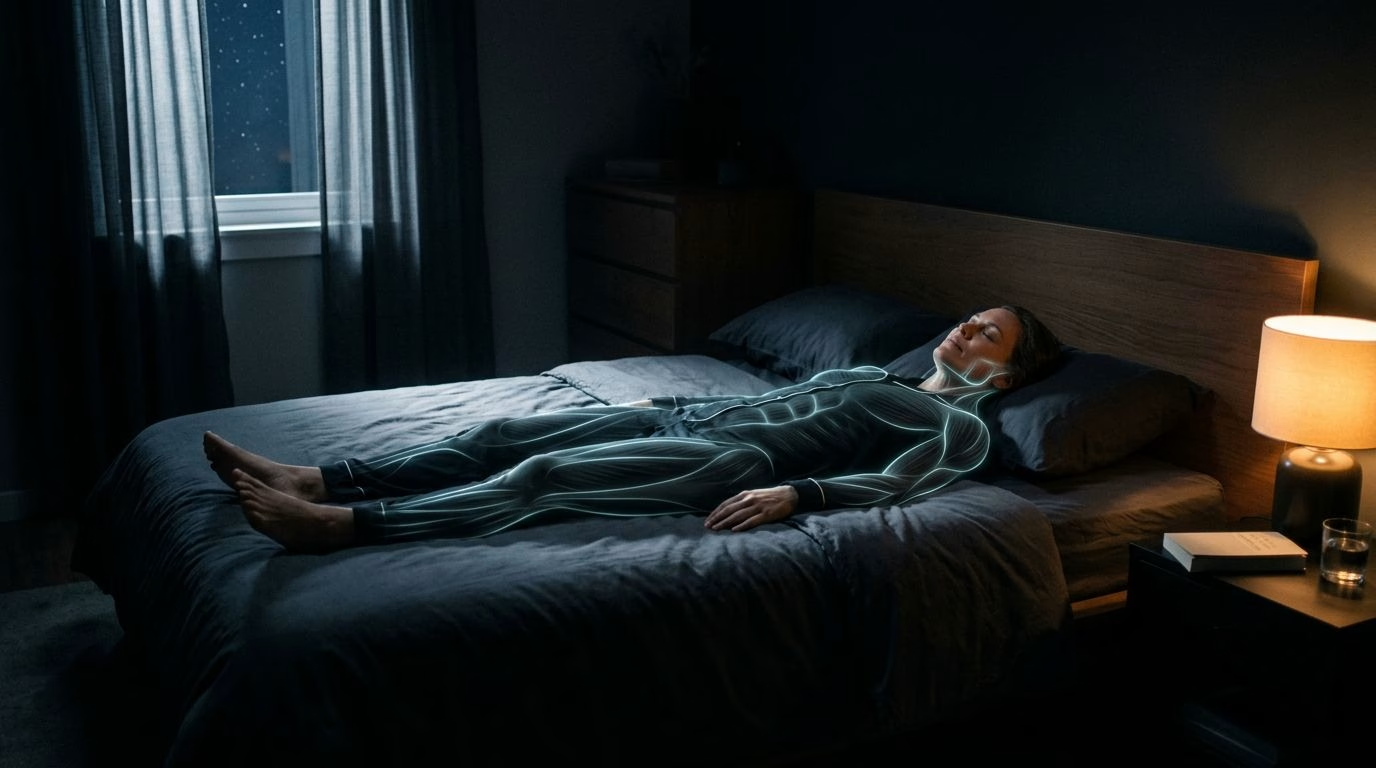
You can feel exhausted and still go to bed with your muscles braced for danger. That mismatch is one reason bedtime anxiety feels so draining.
When your jaw is tight, your shoulders are lifted, and your stomach is clenched, your brain reads those signals as a signal to stay alert. This relaxation technique helps transition the body from a fight or flight state toward restorative sleep by shifting those physiological signals. Progressive muscle relaxation changes that message by giving your mind a simple task and giving your body a chance to stand down.
You don’t need equipment, perfect focus, or a long routine. Once you learn the pattern, the last few minutes before sleep can feel less like a test and more like a landing.
Key Takeaways
- Progressive muscle relaxation works by systematically tensing and relaxing major muscle groups in a slow, planned order.
- It can help with sleep because it lowers physical tension and gives racing thoughts less room to roam.
- Gentle effort works better than hard squeezing, and about half-strength is plenty.
- A full bedtime round often takes between 5 and 15 minutes.
- You don’t need to wait until you’re in bed, because practising earlier can reduce sleep pressure-related worry.
- The technique helps most when you use it regularly, not only on your worst nights.
- If tensing a muscle feels painful, skip that area and focus on softening it instead.
- If you experience ongoing insomnia, panic, trauma symptoms, loud snoring, or low mood, you may need support beyond a relaxation exercise that focuses on relieving physical tension.
What Progressive Muscle Relaxation Does To Your Body
Progressive muscle relaxation is a simple technique developed by physician Edmund Jacobson. The practice involves tensing one muscle group for a few seconds, then letting it go to notice the sensation of release. By repeating this process from your feet to your face, you help your body activate the parasympathetic nervous system, also known as the rest and digest mode. This shift effectively lowers muscle tension and encourages better blood flow throughout the body. Over time, progressive relaxation helps you get better at spotting physical stress before it builds into a full body alarm.
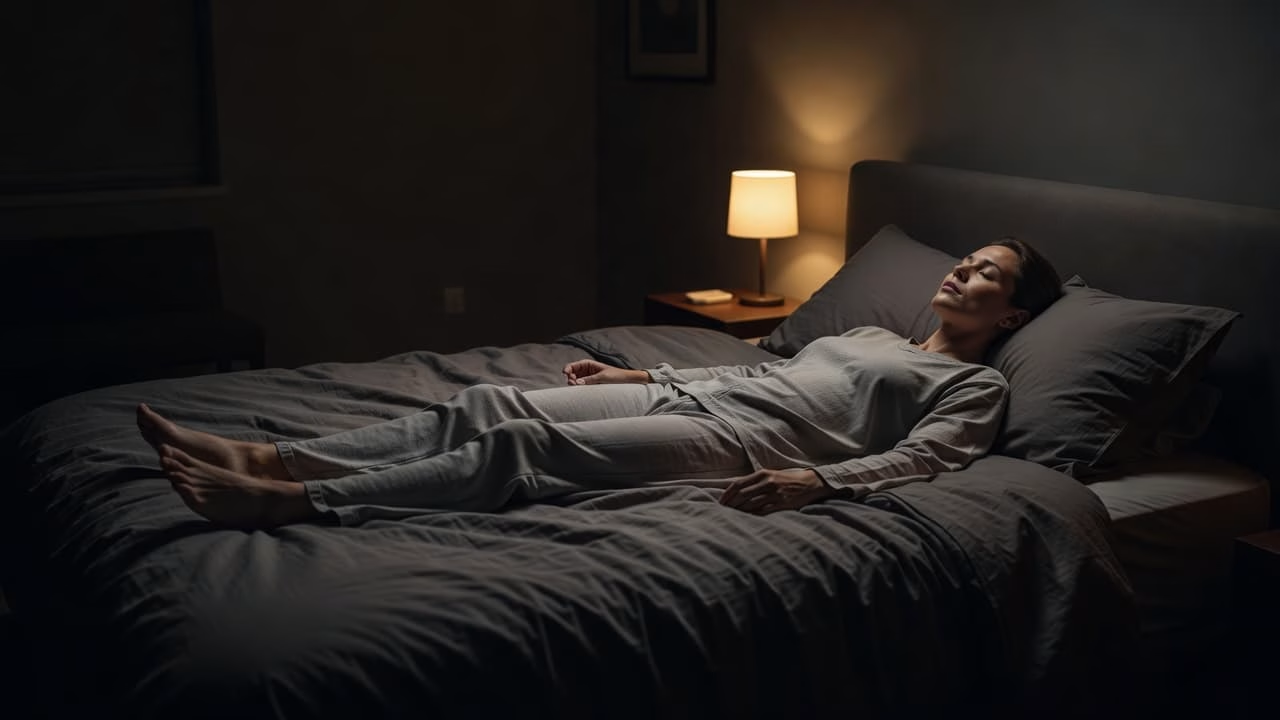
Many people carry low level muscle tension all day without noticing it. A stressful email can tighten the jaw, while late night scrolling can lift the shoulders and strain the eyes. By bedtime, the body may still act like the day is not over.
That matters because sleep does not begin in the mind alone. Your nervous system also looks for signs of safety, stillness, and reduced effort. If your muscles stay guarded, your brain often stays more watchful as well.
Muscle relaxation for sleep works because it creates contrast. You feel tight, then soft; you hold, then release. That clear change is easier to notice than vague advice like just relax, which rarely helps when you are wound up.
It also gives your attention a place to land. Instead of checking the clock, replaying conversations, or testing whether you are sleepy yet, you follow a short physical sequence. That does not force sleep, but it often makes sleep more welcome.
Why It Helps When Bedtime Anxiety Takes Over
Bedtime anxiety often grows in quiet rooms. As the lights go down and distractions fade, your brain may begin to dwell on unfinished tasks or tomorrow’s plans, creating a breeding ground for stress and anxiety. If you have experienced several difficult nights, the bed itself can start to feel like a source of tension.
At that point, the problem is no longer just that you cannot sleep; it becomes a worry about whether it will happen again. This cycle of thought triggers your autonomic nervous system, causing your heart rate to rise and your breathing to become shallow. Every small twitch or sensation can then feel magnified as your body remains on high alert.
Sleep comes more easily when your body stops waiting for the next problem.
Progressive relaxation helps because it interrupts that loop with intentional action. Instead of trying to argue with your worries, you are giving your body a direct instruction it can follow, one muscle group at a time. By focusing on physical relaxation, you effectively signal to your nervous system that it is safe to power down, which often helps the mind lose some of its fuel.
This is why using progressive muscle relaxation for sleep is often more practical than vague calming advice. It is structured, short, and concrete. For someone with racing thoughts, that structure provides a necessary anchor.
Still, it is not magic. If you lie there judging each step or constantly asking whether it is working, the exercise can turn into another sleep test. The aim is to reduce arousal, not to demand instant unconsciousness. If bedtime fear has become a habit, support beyond one exercise can help. The guide on recovering from sleep anxiety fits well alongside this technique because it tackles the wider cycle that keeps your nights tense.
How To Do Progressive Muscle Relaxation For Sleep
A basic bedtime round usually takes 5 to 15 minutes. You can lie on your back, rest on your side, or sit in a chair if the bed feels too charged. Keep the lights low, loosen anything tight, and let your hands rest somewhere easy.
Use light effort. You are not doing a workout. About 30 to 50 per cent effort is enough, and less is often better for anxious sleepers. This practice relies on a consistent tensing and relaxing cycle to signal your nervous system that it is time to wind down.
- Settle first with deep breathing or diaphragmatic breathing to center your attention. Take one slow breath in and a longer breath out. Don’t try to breathe perfectly, just let the out-breath be easy.
- Start with your feet. Curl the toes or tighten the feet gently for about 5 seconds, then release for 10 to 15 seconds.
- Move to the calves and thighs. These major muscle groups should be tightened, held briefly, and then allowed to drop fully into the bed or chair.
- Shift to your hands and arms. Clench your fist lightly, tense the forearms, then release and notice the warmth or heaviness that follows.
- Lift the shoulders a little towards the ears, hold, and then let them fall. After that, tighten these specific muscle groups in the neck only if it feels safe, or skip straight to release.
- Finish with the jaw, face, and forehead. Press the lips together lightly or squeeze the eyes gently, then soften everything, including the tongue.
- Rest for a minute at the end. Let the body feel uneven if it does, because some muscle groups often relax before others.
If you prefer fewer steps, use a short version. Feet, legs, hands, shoulders, jaw, then done. That works well when you’re tired or when detailed routines feel annoying.
Some people feel more anxious when they tense muscles, especially if they are prone to panic or body scanning. In that case, use a release-only version. Bring attention to the area, notice the tightness, and soften it on the out-breath without the squeeze first.
For sleep, the goal is not full-body bliss. The goal is “less switched on than five minutes ago”. That is enough.
Common Mistakes That Make It Harder To Relax
The most common mistake is pushing too hard. If you squeeze with all your strength, you may end up more alert. Gentle tension is enough to create contrast, and contrast is what teaches your body the difference between bracing and letting go. Remember that this is not a high-effort workout; the goal is achieving physical relaxation.
Another problem is rushing. When the release lasts only a second, your brain does not get much time to register it. Hold briefly, then stay with the softening for longer than the squeeze. That is where most of the benefit sits.
Holding your breath can also backfire. A lot of people tense a muscle and accidentally strain their breathing at the same time. If that happens, the exercise starts to feel like effort. Instead, focus on deep breathing to keep your system calm, even if the rhythm is not perfectly smooth.
Judging the result is another trap. If every few seconds you check whether you are sleepy yet, you pull yourself back into performance mode. Sleep usually arrives after the checking fades.
Practising only on awful nights can limit the effect as well. If you use the technique once you are already at a 9 out of 10 for stress, it has a harder job. Short, low-pressure practice on calmer evenings helps you release stored muscle tension and teaches the body the pattern faster.
Phone use can spoil the mood too. Messages, news, and bright light pull attention back outwards. If you can, finish your screen time before you start the exercise and let the room stay boring.
How To Build It Into Your Bedtime Routine
Progressive muscle relaxation works best when it becomes a familiar habit. Consistency reduces mental effort, and by performing the same sequence at the same time each evening, your body learns to associate the practice with your bedtime routine. This signals to your nervous system that it is time to wind down, ultimately leading to better sleep quality over time.
Pick a cue you already have, such as brushing your teeth or the moment after you switch off the bedside lamp. Keep the order of your muscle groups the same for at least a week, even if you choose to shorten the duration.
You do not have to perform this relaxation technique only in bed. In fact, if your bed has become a place associated with worry, practice in a chair for a few nights first. This removes the pressure to fall asleep immediately and allows the exercise to stand on its own as a helpful tool.
Maintaining a steady sleep schedule is also a vital component of good sleep hygiene. Relaxation is much easier when your body clock is not swinging wildly from one night to the next. If you want a simple next step beyond this technique, read why your wake time matters most.
Daytime stress also plays a significant role in your ability to wind down. If your system remains tense from breakfast onwards, your evening practice has a bigger hill to climb. Short breaks, light movement, and simple mental reset tools during the day make your nighttime routine much more effective. The article on calming your brain to reduce stress pairs well with that approach.
If you share a bed, keep the movements small and quiet. No one needs to see the routine for it to work; a slight foot curl, a soft fist, and a gentle jaw release are enough to engage the muscles and begin the shift toward rest.
When To Get More Support
Progressive muscle relaxation is a helpful technique for managing common bedtime tension, stress-related wakefulness, and mild sleep anxiety. While many people turn to this method to soothe their stress and anxiety at the end of a long day, it is not a cure-all for every sleep struggle.
Consult your GP if you are experiencing persistent insomnia, if your anxiety feels unmanageable, or if your nights are frequently disrupted by panic, traumatic memories, or low mood. It is also important to seek professional medical advice if you suffer from chronic pain, snore heavily, experience pauses in your breathing, or wake up gasping for air. In these cases, a relaxation exercise may provide some comfort, but it will not address the underlying clinical cause of your sleep issues.
If you need advice quickly and are not sure where to start, NHS 111 is a sensible first step. If you are in emotional distress and need someone to talk to, Samaritans is available at any time on 116 123. You can also text Shout to 85258 in the UK for urgent mental health support via text message.
Stop the exercise immediately if it causes physical pain, dizziness, or a strong surge of panic. If this happens, you can switch to slower, rhythmic breathing, grounding techniques, or a gentle seated wind-down instead. The right tool is the one your body can accept without a fight.
Conclusion
Exhaustion does not always switch off an alert body. When bedtime anxiety tightens your muscles, your brain often reads that tension as a reason to stay awake.
Using progressive muscle relaxation for sleep provides your body with a calmer physiological script. By making progressive relaxation a regular habit, you foster a sense of mental calmness that makes it easier to drift off. Over time, this consistent practice encourages the restorative sleep your body needs to recover.
It works best when you keep the process gentle, repeat it often, and treat the technique as a form of practice rather than a high-stakes sleep exam. Tonight, start small. Relax your feet, legs, shoulders, and jaw, then let the rest of the night take care of itself.
FAQ
How Long Does It Take Before Bed?
A short round can take 5 minutes, and a fuller version often takes 10 to 15. If you are new to it, start short. A brief routine you repeat is more useful than a longer one you avoid.
How Hard Should I Tense Each Muscle?
Use light to moderate effort. About half-strength is plenty, and some people do better with even less. If your face strains or your breathing gets tight, you are pushing too hard.
Can I Do It If I Have Pain Or An Injury?
Yes, but skip any specific muscle groups that hurt when you tense them. You can also use a release-only version by noticing the area and softening it without the squeeze. If pain often affects your sleep, speak to your GP rather than relying on relaxation alone.
Can I Use It If I Wake In The Night?
Yes. In fact, a short version often works well at 3 am because it gives your attention a quiet task. Keep the lights off if you can, avoid checking the time, and use only a few muscle groups if you feel groggy.
Is It Better Than Deep Breathing For Sleep?
Neither is always better. Some people settle faster with deep breathing, guided meditation, or mindfulness meditation, while others do better with a physical sequence because it feels more concrete. You can also pair them by using one easy out-breath after each muscle release.
How Soon Will I Notice A Difference?
Some people feel looser on the first night. Others need a week or two of regular practice before the routine feels natural. The main early win is often less physical tension, not perfect sleep straight away.
Do I Need An App Or Recording?
No. It is free, and you can learn the basic pattern quickly. A simple audio guide can help at first, but many people prefer to memorize this relaxation technique by using a short sequence while keeping the room quiet.
When Should I Get Extra Help For Sleep Anxiety?
Get support if sleep worry keeps building, if you dread bedtime most nights, or if poor sleep is affecting work, mood, or safety. Reach out sooner if you have panic, trauma symptoms, depression, or thoughts of self-harm. A relaxation exercise can help, but those signs call for wider care.
Leave a Reply