
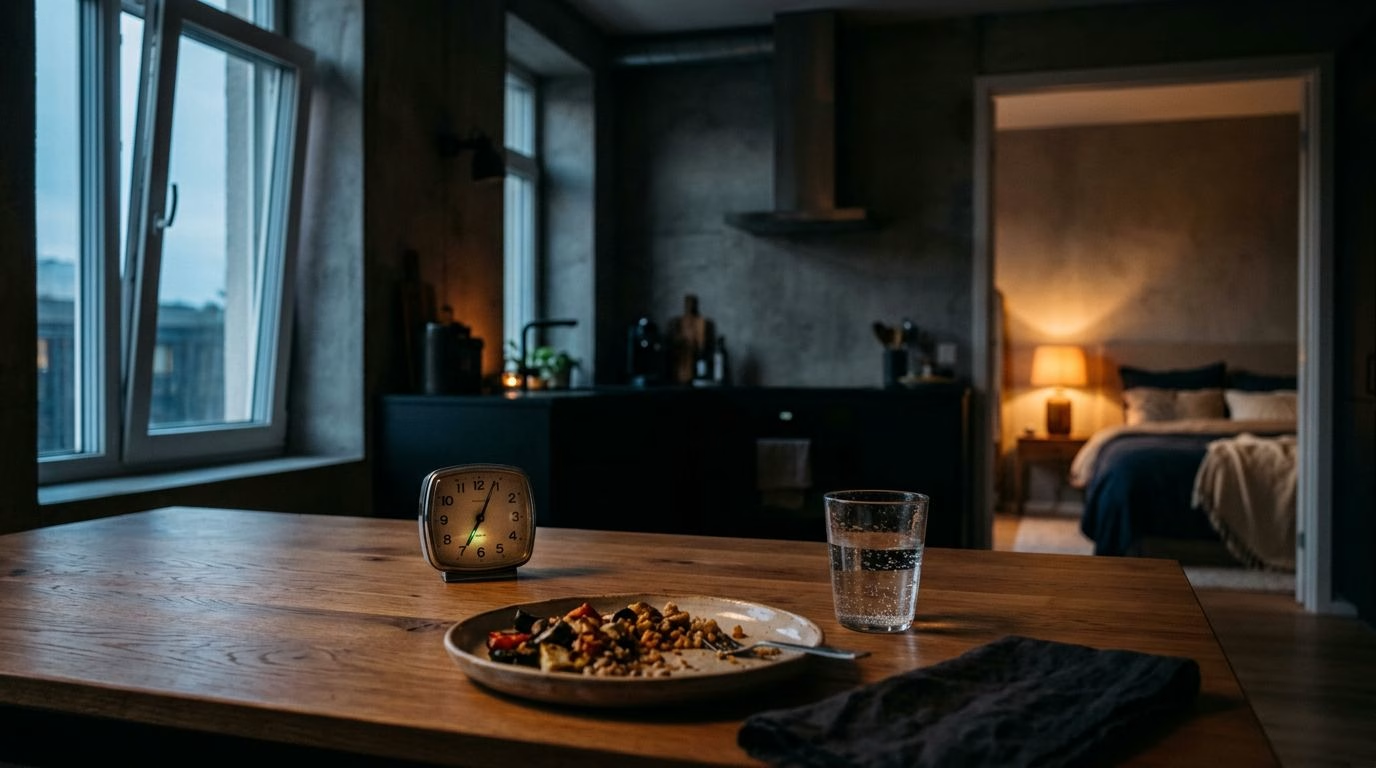
Your body clock does not stop at bedtime, as it also regulates hunger and digestion.
If you eat late, snack throughout the evening, or shift your meal schedule every day, your sleep can suffer in quiet ways. You might fall asleep later, wake up feeling heavy, or notice more reflux, restlessness, and decreased sleep quality that leaves you tired the next day. That is why the link between time restricted eating sleep is an important conversation to have.
The good news is that your daily habits do not need to be perfect. Maintaining a steady time-restricted eating window, set at sensible hours, can support better nights without turning food into a complex math problem.
Key Takeaways
- Your body clock, or circadian rhythm, helps regulate sleep quality, hunger, digestion, and energy levels throughout the day.
- Late meals can disrupt your internal clock, making it harder to fall asleep while potentially worsening reflux or overnight discomfort.
- An earlier eating window, often associated with intermittent fasting, typically aligns better with your natural biology than a late one.
- Most people find success starting with a 10 to 12-hour eating window to improve their daily rhythm.
- Finishing your last main meal 2 to 3 hours before bed is a practical rule for better digestion and rest.
- Time-restricted eating habits can support healthy weight loss, appetite regulation, and energy levels when the routine feels sustainable.
- Managing health conditions such as overweight and obesity may be supported by consistent meal timing habits.
- Shift workers, people on diabetes medication, and anyone with a history of disordered eating should approach these changes with extra care or medical supervision.
- Consistency is more important than chasing a perfect fasting number, as your wake time, morning light exposure, and chronotype all shape how well meal timing works for you.
Your Body Clock Times More Than Sleep
Sleep is the part you notice most, but the circadian rhythm runs a much bigger timetable. It helps set when you feel alert, when hormones rise and fall, and when your gut handles food best to support optimal metabolic health. Therefore, meal timing is not only about calories. It is also about sending the right biological signals at the right time.
That matters because your organs do not all work on the same schedule at all hours. During the day, your body is usually better prepared for food. As evening moves on, alertness should fall and melatonin should rise. Digestion does not switch off at night, but it often becomes less efficient.
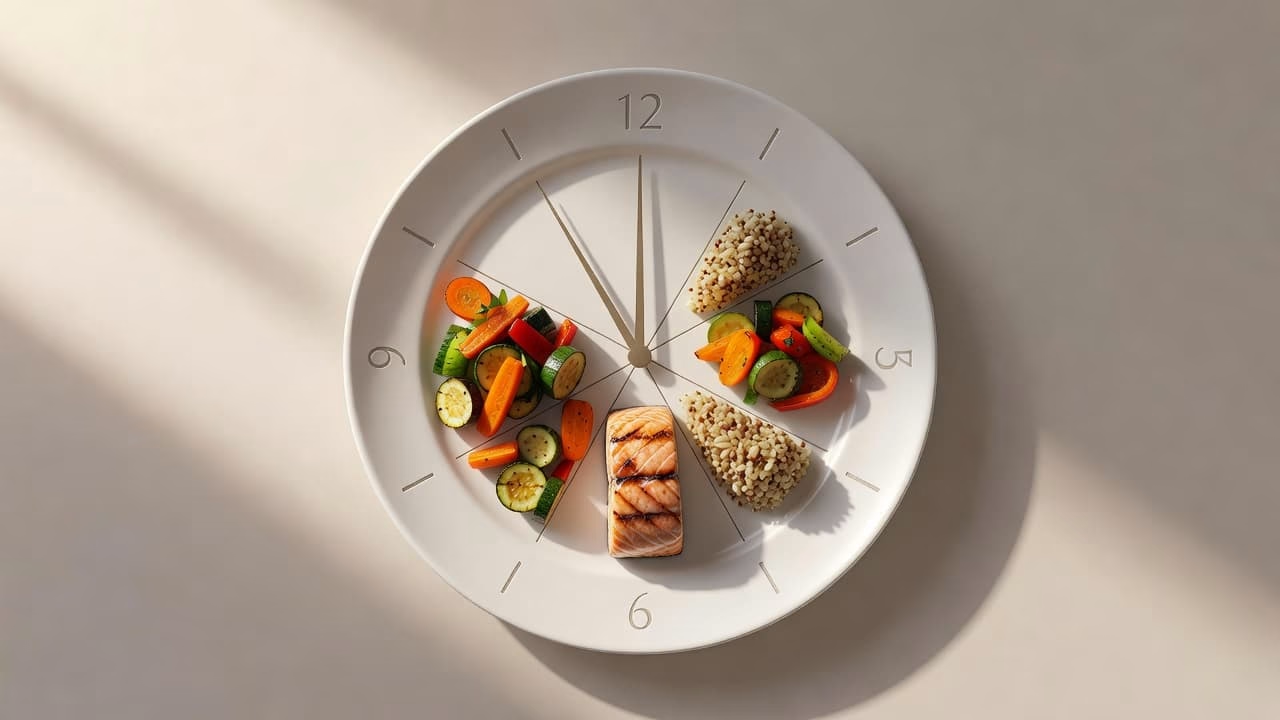
A consistent eating window, often utilized in time-restricted eating, can help line up those systems. If breakfast, lunch, and dinner arrive at roughly similar times, your body receives a repeated cue. Over time, this consistent meal timing can support steadier hunger and a clearer circadian rhythm.
This is one reason why synchronizing your intake often works best alongside anchoring your body clock with morning light. Light tells your brain that the day has started, while food tells the rest of the body when energy is arriving. When both signals point in the same direction, you can improve insulin sensitivity, and sleep tends to feel less chaotic.
Late Eating Can Push Sleep Off Course
A heavy meal close to bedtime asks your body to do two jobs at once. It has to settle into sleep while also handling digestion. That can raise discomfort, body temperature, and sometimes heart rate, which often leads to reduced sleep quality. If you are prone to reflux, late eating can be even more disruptive.
The issue is not only the size of the meal. Proper meal timing matters too. A modest snack at 20:30 may sit fine for one person, while a large takeaway at 22:00 may increase your sleep latency, making it harder to drift off. Alcohol makes this worse because it can increase sleepiness at first, then fragment your rest. Consequently, many people report lower subjective sleep quality after consuming heavy, late-night meals.
There is also a behavioural side. Evening eating often happens with screens, low movement, and less awareness of hunger. As a result, it is easy to keep grazing long after your body needed fuel. That blurs the line between dinner and bedtime, ultimately damaging your overall sleep quality.
For most adults, the smoothest sleep routine starts by finishing the last substantial meal 2 to 3 hours before bed.
You do not have to fear every evening bite. If you train late, work odd hours, or need a light snack, a small option can fit. Yoghurt, oats, fruit, or toast may be easier than a rich meal. The point is to lower friction. Sleep usually improves when digestion is not the main event at night.
An Earlier Eating Window Usually Fits Biology Better
When people hear about time-restricted eating, they often picture skipping breakfast and eating late into the evening. While that can work for some schedules, it is not always the best match for sleep quality. In many cases, early time-restricted eating fits human biology much better.
During daylight hours, your insulin sensitivity is usually at its peak. Appetite hormones also follow a natural rhythm that aligns with the sun. Many people feel hungry earlier in the day, even if modern habits have taught them to ignore those signals. By contrast, late-night hunger is often mixed with tiredness, boredom, or stress rather than a genuine need for fuel.
A randomized controlled trial on this topic found improvements in blood sugar control, appetite, and blood pressure, even without major weight loss. While sleep findings remain a developing area of research, the pattern makes sense. When most of your food intake happens earlier, the evening becomes calmer and less metabolically active. This approach to time-restricted eating is often associated with better cardiometabolic health and improved overall wellness.
That does not mean everyone should eat breakfast at 06:30. It simply means your eating window should not drift too far into the night if deep sleep is a goal. An early time-restricted eating schedule, such as 08:00 to 18:00 or 09:00 to 19:00, often aligns better with your natural circadian rhythm than a window that ends at 22:00.
For many people, earlier timing also reduces decision fatigue. Dinner becomes simpler, late-night snacking drops, and bedtime feels more distinct from eating. That cleaner boundary between your last meal and your head hitting the pillow can make winding down significantly easier.
What A Realistic Eating Window Looks Like
A workable plan always beats an ideal one that only lasts four days. Most beginners find that a 10 to 12-hour eating window provides enough structure to create a healthy metabolic rhythm, yet it is not so strict that it ruins your social life or training. By choosing a sustainable fasting duration, you can maintain consistency over the long term.
The following table compares how different approaches to time-restricted eating tend to feel in real life. While these windows serve as a general guide, those struggling with weight management, including overweight and obesity, may find that shifting their eating window toward earlier hours helps improve both hunger regulation and sleep quality.
| Eating Window | Example Hours | Best Fit | Likely Effect On Sleep |
|---|---|---|---|
| Early | 08:00 to 18:00 | Early risers, home workers, people with reflux | Often the easiest for sleep |
| Mid-range | 09:00 to 19:00 | Most people with standard work hours | Usually a good balance |
| Late | 12:00 to 22:00 | Night owls, late social meals | Can clash with sleep if dinners are large |
The sweet spot for many adults is a mid-range window that ends well before bed. If you sleep at 23:00, a final meal around 19:00 to 20:00 often feels reasonable. If your bedtime is earlier, simply pull your dinner forward to ensure your digestive system can rest.
Meal quality still matters. A tidy eating window filled with ultra-processed food will not perform like one built around protein, fibre, fruit, vegetables, and steady carbohydrates. Timing shapes the metabolic rhythm, while food quality shapes the internal signals.
Consistency also matters more than heroic fasting on weekdays followed by chaos at weekends. A one-hour shift now and then is normal. However, a four-hour swing every Friday and Saturday is more like social jet lag for your gut, which can disrupt the benefits you gain from your regular eating window.
Weight, Energy, And Hunger Often Shift With Timing
Many people try time-restricted eating to manage weight, especially those struggling with overweight and obesity, and they often notice sleep changes along the way. That overlap is not random. Sleep affects hunger, and hunger affects sleep. When one slips, the other often follows.
Short or poor sleep can raise cravings for high-calorie foods, which is a common hurdle for those addressing overweight and obesity. It can also make portion control harder the next day. Then late eating, heavier dinners, and evening snacking creep in. A clearer eating window can interrupt that cycle by reducing random food decisions. Monitoring your body mass index over time can help you see if these timing shifts lead to meaningful changes.
Energy often feels more stable too, though the first week can be mixed. If you usually snack all evening, the body may protest at first. That does not always mean the routine is wrong. It often means your cues were built around habit, not need. Most people settle after several days if the window is not too tight. Improving your energy levels significantly boosts your quality of life, even if your body mass index does not change immediately.
Weight loss is possible through these habits, but it is not guaranteed. Some people naturally eat less within a shorter window, which can be an effective tool for managing overweight and obesity. Others simply pack the same intake into fewer hours. The results depend on food choices, stress, sleep, alcohol, and how sustainable the plan feels. Because weight loss requires a long term approach, consistency is key.
The strongest short-term win is often predictability. Hunger becomes easier to read, which helps those managing overweight and obesity make more deliberate food choices. Meals feel more planned, and bedtime is less likely to sit on top of a full stomach. Because time-restricted eating helps regulate these daily patterns, it can provide a substantial boost to your overall quality of life. Even for individuals dealing with overweight and obesity, these small shifts in timing can make a day run much better.
Your Schedule And Chronotype Still Matter
Timing advice falls apart if it ignores real life. Someone who starts work at 07:00 has a different day from someone who finishes at 22:00. Your natural preference for early or late hours is influenced by your circadian rhythm, which is why working with your natural biological biology can make meal timing feel far less forced.
A good rule is to place the eating window where it supports your routine, not where it wins points online. If you are an early type, breakfast and an earlier dinner may feel easy. If you are a later type, a slightly later start may work better, but the end of your time-restricted eating window should still stay clear of bedtime when possible.
Sleep timing matters here as much as food timing. A steady meal pattern will help more when it sits alongside why your wake time matters for sleep. If your wake time shifts by three hours across the week, your appetite cues and meal timing will drift too.
Exercise can change the picture. Some people train before breakfast and feel fine. Others notice lower sleep quality if they go to bed underfed after an evening session. In that case, a light post-workout meal may be worth more than a perfectly strict fasting window. The body likes rhythm, but it also likes enough fuel.
Common Mistakes That Make Time-Restricted Eating Harder
The first mistake is choosing a window that is too narrow. An 8 hour plan sounds neat, but it can backfire if it makes you overhungry, irritable, or obsessed with the clock. A 10 to 12 hour window is usually easier to live with and easier to repeat when practicing time-restricted eating.
Another problem is keeping the window but ignoring the evening meal. If dinner is huge, greasy, or washed down with several drinks, sleep can still suffer. Intermittent fasting is not a free pass for late night overload.
Some people also forget that coffee counts as a timing cue. A large caffeine hit late in the day can blur hunger and push bedtime later. Then the eating window drifts with it. In the same way, poor sleep one night often makes fasting feel harder the next day. That is normal, so flexibility helps.
The biggest trap is forcing a plan that does not fit your specific health needs. If you are pregnant, underweight, or recovering from an eating disorder, strict time-restricted eating may be a poor choice without clinical advice. For those managing overweight and obesity, it is vital to consult a professional, as rigid schedules can sometimes complicate nutritional balance. While intermittent fasting is often used as a tool for those struggling with overweight and obesity, it should not replace medical guidance. Individuals dealing with overweight and obesity who are taking medication that lowers blood sugar must be particularly careful. Furthermore, those affected by overweight and obesity should prioritize long term sustainability over rapid, restrictive changes. The same caution applies to shift workers, because their circadian rhythm is already under strain.
A Simple Way To Test It For Two Weeks
Start with the least dramatic change. Pick a 10 or 11-hour window that suits your work and home life. Then, commit to this time-restricted eating schedule for 14 days, including weekends as much as you can.
Most people do well by moving dinner earlier first. That single change often improves sleep more than delaying breakfast. If your bedtime is 22:30 or 23:00, try finishing dinner by 19:30 or 20:00. Keep late snacks small or skip them if you are comfortable.
Track a few simple signs during this trial. Notice your sleep onset, overnight waking, total sleep duration, morning hunger, afternoon energy, and digestive comfort. Beyond these subjective feelings, consider using objective sleep measures to see if your data aligns with how you feel. If your sleep quality improves, along with a reduction in reflux, bloating, or early waking, the time-restricted eating window is likely working for you. If you feel cold, flat, distracted, or ravenous every evening, widen the window slightly.
Food quality and routine still matter during the test. Aim for protein at each meal, enough fibre, and regular hydration. Keep your wake time fairly stable, get outside early if you can, and do not judge the whole plan after one messy social meal. Patterns count more than isolated days.
Conclusion
Meal timing can either support your body clock or pull against it. When your eating window aligns with daylight, digestion, and your bedtime, your sleep quality often feels much smoother.
For most people, the practical answer is simple. Eat within a steady 10 to 12 hour window, finish your last main meal a few hours before bed, and keep the schedule regular enough so that your body knows what to expect.
The best version of time-restricted eating is the one that improves your sleep, energy, and appetite without making daily life harder. By sticking to a consistent time-restricted eating schedule, you provide your body the stability it needs to support long-term metabolic health. Start small, watch how you feel, and let consistency do the work.
FAQ
What Is Time-Restricted Eating?
Time-restricted eating, often categorized as a form of intermittent fasting, means you eat all meals within a set number of hours each day. Unlike many traditional diets, this approach focuses on when you eat, rather than just what you consume. A common starting point for those looking to manage weight or address issues related to overweight and obesity is a 10 to 12-hour eating window.
Can Time-Restricted Eating Improve Sleep?
It can, especially if it reduces late-night snacking and gives digestion time to settle before bed. When researchers evaluate participants using the Pittsburgh Sleep Quality Index, they often find that better timing leads to improved rest. If you see higher scores on the Pittsburgh Sleep Quality Index, it is a good sign that your habits are supporting your recovery. Many people report they fall asleep more easily and notice better sleep efficiency, which means they wake less during the night. However, some people notice little change if their sleep problems stem mainly from stress, light exposure, or caffeine.
How Long Before Bed Should I Stop Eating?
A useful target is 2 to 3 hours before bedtime for your last substantial meal. That gap often lowers reflux, fullness, and restlessness, which can boost your overall sleep efficiency. Research from a recent clinical trial suggests that this window is particularly helpful for individuals struggling with overweight and obesity, as it allows the body to prioritize repair over digestion during the overnight hours. A small snack may still be fine if you need it, especially after exercise.
Is Skipping Breakfast Bad For Sleep?
Not always, but it depends on your overall schedule and intermittent fasting goals. If skipping breakfast pushes your eating window late into the evening, sleep quality may suffer. Conversely, if your window ends early and you feel well, it may work for your biology. Evidence from a clinical trial indicates that consistency is often more important than the specific time you break your fast, especially for those managing overweight and obesity.
What Is The Best Eating Window For Most Adults?
There is no single best plan, but 09:00 to 19:00 or 08:00 to 18:00 suits many people. Those windows are wide enough to feel realistic and early enough to protect sleep. For those managing overweight and obesity, these windows can help regulate hunger hormones. The best choice is the one you can keep most days.
Can I Do Time-Restricted Eating If I Exercise In The Evening?
Yes, but you may need a flexible approach. A light post-workout meal can support muscle recovery and may feel better than going to bed hungry. If training finishes late, keep the meal simple and not too heavy. This is a common point of discussion for those with overweight and obesity who are trying to balance fitness goals with better sleep hygiene.
Who Should Be Careful With Time-Restricted Eating?
Anyone who is pregnant, underweight, has a history of disordered eating, or takes medication that affects blood sugar should be cautious. Shift workers may also struggle because their sleep and hunger cues already clash with the clock. If you have been diagnosed with conditions related to overweight and obesity, speak with a GP or dietitian before trying a strict window to ensure it is appropriate for your health profile.
How Soon Do People Notice A Difference?
Some people feel lighter at night within a few days. Appetite and energy may take one to two weeks to settle. Weight changes, if they occur, usually take longer and depend on food intake as well as timing. For many, the focus remains on the long-term management of overweight and obesity rather than overnight results.
Does Coffee Break The Fast?
Plain black coffee has little energy, but it can still affect appetite and sleep timing. If coffee late in the day delays bedtime, it may weaken the whole routine. In practice, the sleep effect matters more than the fasting label.
Is A Longer Fast Always Better?
No. A longer fast is only better if it still fits your health, sleep, and daily life. Many people get useful results from a moderate window without pushing into a plan that feels stressful or hard to maintain. Focusing on sustainable habits is usually the best strategy for long-term wellness.
Leave a Reply