

In one study, cancer patients felt less anxious after only 30 minutes under a weighted blanket.
That sounds simple, but the evidence is more mixed than many product pages suggest. While weighted blankets may help some adults feel calmer and sleep better, the effect is not the same for everyone.
If you are comparing weighted blankets for sleep and anxiety before buying one, the most useful answer sits somewhere between marketing hype and scientific skepticism.
Key Takeaways
- Research suggests weighted blankets can reduce self-reported anxiety for some adults.
- Sleep studies often show people feel they sleep better using weighted blankets, even when trackers show only small changes.
- The likely mechanism is deep pressure stimulation, which can feel grounding and calming.
- Evidence is promising, but many studies are still small and short-term.
- These tools seem most helpful when bedtime problems involve tension, restlessness, or sleep anxiety.
- They are also widely used by individuals with autism spectrum disorder to help manage sensory needs.
- They are less likely to fix sleep issues caused by late caffeine, poor routine, or a shifted body clock.
- Comfort matters more than a perfect formula, because a blanket that feels restrictive can backfire.
- Adults with sleep apnoea, asthma, claustrophobia, or mobility limits should take extra care.
- A weighted blanket can be a useful tool, but it is not a stand-alone treatment for serious anxiety or insomnia.
What A Weighted Blanket Actually Does
Weighted blankets look simple, but they function quite differently from an ordinary duvet. Inside, they typically feature glass beads or another dense fill that distributes weight evenly across your body. This creates steady, grounding pressure, a process known as deep pressure stimulation.
The primary effect is not simply providing warmth. While a traditional duvet can feel cozy, weighted blankets add a firmer and more consistent hold. Many adults describe this sensation as a gentle anchor, which helps when their mind is racing or their body will not settle at night.
This physical sensation is important because poor sleep and anxiety do not live only in your thoughts. They also manifest as tight shoulders, shallow breathing, constant fidgeting, and that persistent wired feeling in bed. Even pressure from weighted blankets can reduce some of that physical noise. Still, remember that a heavy blanket is only one piece of the puzzle. It will not undo the negative effects of late-night scrolling, bright light, an overly warm bedroom, or a chaotic sleep schedule.
Why Deep Pressure Can Feel Calming
Researchers believe the calming effect begins with how the nervous system processes firm, even touch. This concept, known as deep touch pressure, can shift the body toward a quieter state by activating the parasympathetic nervous system, which encourages slower breathing, reduced physical restlessness, and a heightened sense of safety. Small clinical studies suggest this sensory input helps regulate stress reduction by influencing key hormones; specifically, it is linked to lower levels of cortisol and positive shifts in serotonin activity.
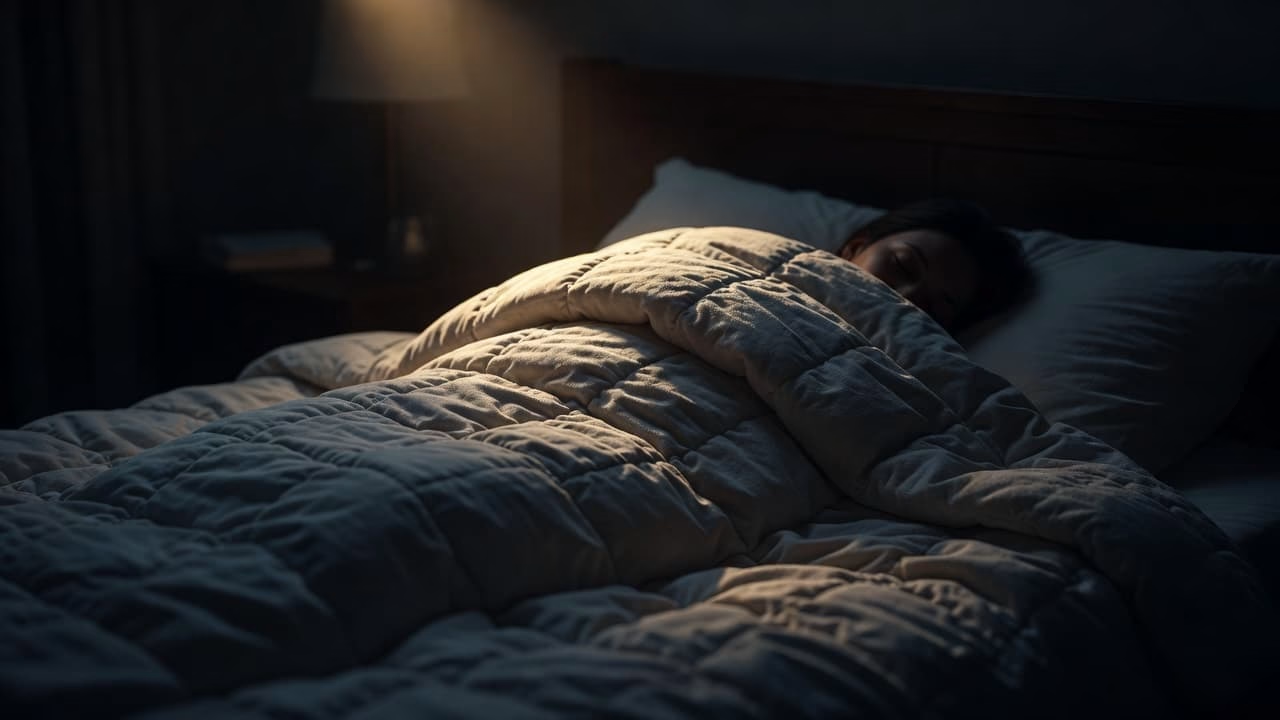
It is important to remember that a weighted blanket does not alter your body chemistry like a switch. Every individual responds differently, and applying pressure alone does not address the root cause of anxiety. Even so, the calming effect becomes more clear when you understand the neurochemistry of touch. By providing a steady, consistent sensory signal, the blanket can effectively compete with the scattered, overwhelming signals of anxious arousal.
For some people, this physical cue provides more relief at bedtime than listening to a podcast, drinking herbal tea, or using a breathing app. For others, the sensation may feel too warm, distracting, or simply neutral.
What Research Shows For Anxiety
As of 2026, research regarding the use of weighted blankets for anxiety points in a hopeful direction. Several small studies have found that users report feeling calmer, less stressed, and less anxious while using them. For instance, one short study observed lower anxiety levels in cancer patients after just 30 minutes under a weighted blanket.
That pattern matters because anxiety often spikes when the day finally gets quiet. Work stops, messages slow down, and the mind tends to get louder. If a blanket helps you feel grounded during that window, it may stop the climb from mild tension to full bedtime dread.
Still, the evidence requires a degree of scientific caution. Many studies were small, and some looked at brief sessions rather than long-term nightly use. A calmer half-hour in a clinical setting does not always guarantee better sleep every night at home. Early work suggests potential therapeutic benefits for those managing various psychiatric disorders, including ADHD, autism spectrum disorder, and depression, but the quality and size of that evidence vary significantly. The fairest reading is this: these tools can help ease anxiety for some adults, but they do not help everyone and they should not be viewed as a replacement for professional care.
What Research Shows For Sleep
Sleep research provides a similar answer. Many users report that they sleep better, wake up less frequently, and feel more settled throughout the night. Several clinical studies involving people with insomnia have also found notable gains in overall sleep quality and a reduction in stress levels leading up to bedtime.
One recurring theme appears in the data. When researchers use devices like actigraphs to track physical movement and rest patterns, the numbers do not always show significant improvements. In other words, many individuals report an improved sleep quality even when their tracking device detects only modest changes in their rest cycles. This does not make the benefit any less real. Feeling safe and rested at night directly shapes your productivity and mood the following day, which is why subjective experience is a vital component of recovery for those dealing with insomnia.
This table highlights the split between felt benefits and measured data.
| Outcome | What Studies Often Find | What It Means In Practice |
|---|---|---|
| Anxiety before bed | Lower self-reported anxiety | The blanket may help you settle |
| Sleep quality | Better self-reported sleep | You may feel more rested or less tense |
| Night waking | Some people report fewer disruptions | Restlessness may drop for some users |
| Tracker data | Mixed or modest change | Devices may not capture the full effect |
The broad takeaway is clear. Weighted blankets seem more effective at improving the personal experience of rest than at transforming every single metric on a digital tracker. If your bedtime routine feels less like a struggle, that is a meaningful achievement, even if your sleep data looks ordinary.
Where The Evidence Is Still Thin
The weak spot in this research is consistency. Studies often use different blanket weights, fabrics, age groups, and health conditions, making it difficult to draw universal conclusions. Some research compares a weighted blanket with a light blanket, while other studies lack a strong comparison group entirely. Because of this, it remains challenging to identify exactly who benefits most and why.
For instance, while researchers are actively exploring how weighted blankets might help individuals living with chronic pain or dementia, the current data remains inconclusive. These are promising areas of study, but more rigorous, large-scale clinical trials are needed to determine effectiveness.
Expectation can also shape results. If you spend money on a high-quality product and hope it will help, part of the benefit may come from that positive belief. Yet, placebo effects are not the whole story because a genuine feeling of calm remains valuable regardless of the underlying mechanism.
For now, weighted blankets are best seen as promising but not settled science. They are not a first-line treatment in the same way as cognitive behavioral therapy for insomnia or formal anxiety care. A blanket can still have real value if it lowers arousal and makes sleep feel more approachable, but it should not be expected to carry the burden of care on its own.
Who May Notice The Biggest Difference
The adults most likely to notice a benefit often share one physical trait. Their nights feel physically on, rather than just mentally busy. They may clench their jaw, keep shifting positions, feel jumpy in bed, or simply want a stronger sense of containment when they try to rest.
That is one reason weighted blankets often come up in discussions about insomnia, general anxiety, ADHD, and autism. For individuals managing ADHD or various psychiatric disorders, sensory input can play a significant role in their nightly experience. For these groups, pressure may feel organizing rather than irritating. By contrast, someone whose primary sleep problem stems from excessive caffeine, a late body clock, or noisy neighbors may find little relief from the blanket alone.
If the bedtime experience itself has become a source of distress, it helps to understand why sleep anxiety occurs rather than just focusing on making the bed feel more comfortable. A weighted blanket may help lower physiological arousal, but it will not fix clock-watching, panic about the next day, or a nightly routine that trains your brain to treat bed like a test. The better the match between the tool and the underlying problem, the better the odds of experiencing a genuine benefit.
How To Choose Weight, Size, And Fabric
Choosing the right blanket matters more than brand hype. Most adults find that weighted blankets provide a snug and secure feeling, rather than a sensation of being pinned or unable to move. A common retail guide suggests choosing about 10% of body weight, but keep in mind that this is only a rough starting point, not a medical rule.
Size matters too. The blanket should mostly cover you, not spill far over the bed like a standard duvet. If too much fabric hangs off the sides, some of the weight pulls away and the feel becomes awkward. Couples often do better with individual weighted blankets for the person using them, while keeping normal bedding alongside.
Fabric can make or break the whole experience. If you already sleep hot, opt for a breathable cover such as cotton. Modern designs often feature glass beads as a fill because they provide a smoother, less bulky experience than chunkier alternatives. Washability is also essential, because a heavy blanket that is a pain to clean often ends up relegated to a cupboard.
Comfort matters more than hitting an exact number.
If the blanket traps heat, makes turning over a chore, or feels like a restraint rather than support, go lighter or skip it.
Safety Points You Shouldn’t Ignore
Safety is where the sales talk often gets vague. Weighted blankets are usually low-risk for healthy adults, but they are not right for everyone. Breathing problems, sleep apnea, severe asthma, claustrophobia, and major mobility limits are the cautions most often raised.
The practical rule is simple. If you might struggle to remove the blanket on your own, do not use it. The same goes if the pressure makes you feel trapped, breathless, overheated, or panicky. Stop early rather than trying to get used to it. The wrong blanket can make sleep worse.
It is also important to remember that weighted blankets are a physical comfort tool and are distinct from sleep aids or supplements like melatonin, which work on a biological level to influence your sleep-wake cycle.
Mental health matters here too. A blanket may soothe mild anxiety, yet it will not treat panic disorder, trauma, depression, or suicidal thoughts. If anxiety is frequent, severe, or getting in the way of daily life, speak to a GP. In the UK, you can also call Samaritans on 116 123 or text Shout to 85258 if you need support.
How To Try One Without Disrupting Your Sleep
The best way to test weighted blankets is not on a high-stakes night before an early start. Try the blanket while reading, resting on the sofa, or winding down for 15 to 30 minutes. That lets your body react without the extra pressure of feeling like you must sleep immediately.
After that, use it for part of the night rather than all night from day one. Notice heat, ease of movement, and how quickly your breathing settles. A simple note in your phone, whether you feel calmer, the same, or worse, is enough to spot a pattern over a week. Do not judge the experience on a single night, because sleep quality varies for all sorts of reasons.
A blanket also works better when the rest of your routine is not fighting it. Keep the room cool, lower the light to support natural melatonin production, and give your mind a quieter runway into bed. These steps help activate your parasympathetic nervous system, allowing you to settle into rest more effectively. If you need more than pressure alone, sensory techniques for relaxation can pair well with a weighted blanket, especially on evenings when your nervous system feels noisy.
Conclusion
Research on weighted blankets for sleep and anxiety is encouraging, but it is not absolute. Many adults find that these tools assist with stress reduction and contribute to better sleep quality. While many users report feeling calmer, the strongest evidence still leans towards perceived comfort rather than dramatic changes on a sleep tracker.
That makes a weighted blanket a reasonable tool, not a miracle fix. If deep pressure helps your body settle and the blanket feels comfortable, it may earn a permanent place in your evening routine.
Start with a breathable option, use it in short trials, and pay close attention to heat and ease of movement. The best sign that weighted blankets are working for you is simple: bedtime feels less like a struggle.
FAQ
Can A Weighted Blanket Help With Panic Attacks?
It may help some people feel more grounded during rising anxiety, but these weighted blankets are not a medical treatment for panic attacks. If pressure makes you feel trapped, it can do the opposite. Use care if panic is intense or unpredictable.
How Heavy Should A Weighted Blanket Be?
Many retailers use 10% of body weight as a rough guide. Treat that as a starting point, not a rule. You should be able to move under the blanket easily and remove it without effort.
Do Weighted Blankets Help Insomnia?
They can help when insomnia comes with tension, restlessness, or bedtime anxiety. Research suggests some people report better sleep quality and less stress when using weighted blankets. However, they are less likely to help if your main issue is timing, noise, or poor sleep habits related to chronic insomnia.
Can A Weighted Blanket Make Sleep Worse?
Yes, it can. Some people get too hot, feel restricted, or find the pressure irritating. If you wake more, feel trapped, or dread using it, the product is likely not improving your sleep quality.
Are Weighted Blankets Safe With Sleep Apnea Or Asthma?
Caution is sensible. Because both conditions can involve breathing issues, a heavy blanket may not be a good fit for some people. If you have sleep apnea or asthma, ask your GP before using weighted blankets regularly.
How Long Does It Take To Notice A Difference?
Some people feel calmer within minutes, while others need several nights to judge it fairly. Give it a short trial over a week rather than deciding after one bedtime. Watch how you feel, not only what a tracker says.
Are Expensive Weighted Blankets Better?
Not always. Price often reflects fabric, stitching, removable covers, and how evenly the weight is spread. Many UK adult options sit roughly between £40 and £150, so comfort and practicality matter more than buying the priciest one.
When Should I Speak To A GP Instead Of Buying Another Sleep Product?
Speak to a GP if anxiety is severe, sleep problems last for weeks, or your mood is getting worse. Get help sooner if you have panic, trauma symptoms, depression, or any concern about self-harm. A blanket can be a support, but it is not a substitute for proper assessment.
Leave a Reply