

A reported 117-year-old woman had unusually short telomeres, yet other signs suggested her cells were not simply “worn out”. That’s a useful reality check, because telomeres matter, but they don’t act like a single countdown timer for lifespan.
Telomeres are the little protective tips on the ends of your chromosomes, a bit like the plastic ends on shoelaces. Each time a cell copies its DNA, those tips tend to get a little shorter. Over decades, that wear and tear links to slower repair, more inflammation, and higher disease risk in many studies.
Still, “shorter” doesn’t automatically mean “short life”, and “longer” doesn’t guarantee anything either. This guide explains what telomeres do, what research really supports about slowing telomere loss, where medicine is using telomere science today (mostly for rare disorders), and whether consumer telomere tests are worth paying for in 2026.
Key Takeaways
- Telomeres protect chromosome ends, and they usually shorten as cells divide.
- Short telomeres can push cells into senescence, which can raise inflammation.
- Telomerase can rebuild telomeres, but boosting it isn’t automatically safe.
- Most lifestyle evidence suggests you can slow telomere shortening, not reliably lengthen telomeres on demand.
- Supplements that claim to “activate telomerase” often overpromise and may carry risks.
- Clinical work on telomeres mainly targets rare short-telomere disorders, not general longevity.
- Consumer telomere tests often have high noise and low actionability for healthy people.
- If a result wouldn’t change your choices, skip the test and track proven health markers instead.
What Telomeres Do In Your Cells, And Why They Shorten Over Time

Two chromosomes with highlighted telomere end caps, created with AI.
Think of telomeres as protective end caps for DNA. Without them, chromosomes can fray, stick to each other, or trigger DNA damage alarms. Your body avoids that by putting repeating DNA “padding” at each end.
So why do telomeres shorten? Part of it is basic biology. DNA copying is not perfect at the very ends of chromosomes, so each cell division tends to leave a tiny bit behind. In addition, oxidative stress and long-term inflammation can damage telomeres and speed up shortening.
This is where the Hayflick limit comes in. Many body cells can only divide a limited number of times before they stop. Telomere shortening is one reason. When telomeres become too short, a cell often shuts down division to reduce the risk of errors.
One more wrinkle matters for anyone reading a test report. Telomere length varies a lot between people, and even within one person. Different chromosomes can have different telomere lengths, and different cell types can look different too. That’s why a single “average telomere length” number can hide what’s happening at the shortest, most stressed telomeres.
Senescent Cells, Inflammation, And The Ageing Connection
When telomeres get critically short, cells often enter senescence. A senescent cell is alive, but it stops dividing. It can also start releasing inflammatory signals and enzymes that affect nearby tissue.
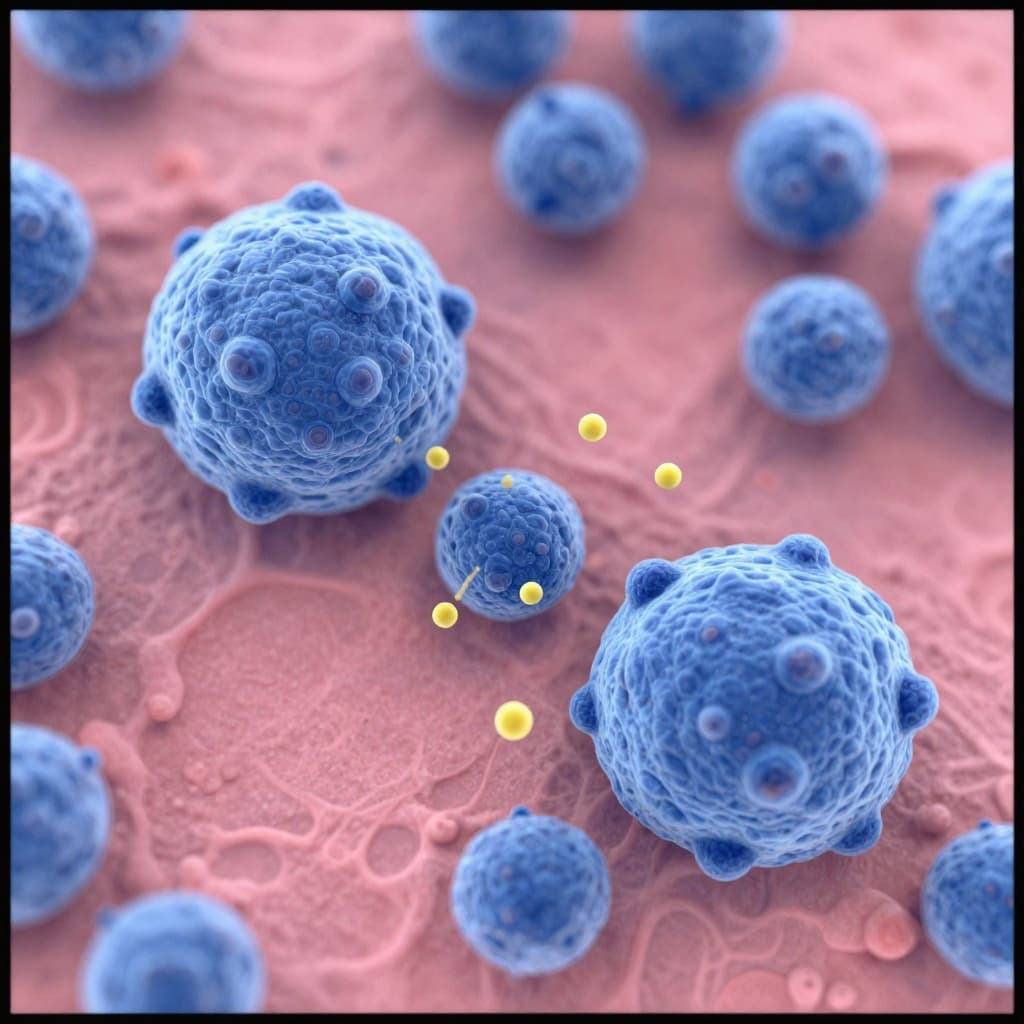
An illustration of a senescent cell sending signals to nearby cells, created with AI.
Researchers sometimes call this the “bad neighbour” effect. One cell’s stress can make surrounding cells function worse. Over time, that can mean slower healing, weaker tissue repair, and a higher background level of inflammation. As a result, organs and blood vessels may cope less well with everyday strain.
That said, senescence is not purely “bad”. It also helps prevent damaged cells from dividing. The problem tends to be accumulation. If the immune system doesn’t clear senescent cells efficiently, they can build up.
A useful mental model: short telomeres can be one spark for chronic inflammation, and inflammation can also accelerate telomere loss.
Telomerase: The Enzyme That Rebuilds Telomeres, With A Catch
Your body does have a repair tool for telomeres. It’s called telomerase, an enzyme that can add telomere repeats back on. It’s more active in stem cells and reproductive cells, and it can switch on during immune responses.
Here’s the catch. Keeping telomeres long can help cells divide longer. However, cancer cells also benefit from avoiding the normal “stop dividing” signals. Many cancers find ways to maintain telomeres, either by activating telomerase or by other mechanisms.
So “activate telomerase” is not a simple wellness goal. It’s a trade-off. In medicine, that trade-off gets handled with careful diagnosis, close monitoring, and clear reasons to treat. In the supplement aisle, it often becomes marketing.
Can You Lengthen Telomeres In Real Life, Or Just Slow The Shrink?
For most healthy people, the realistic aim is maintenance, not dramatic lengthening. A lot of the best human evidence is observational, which means it can show links but not prove cause. Even in trials, telomere measurement is hard, and effects can be small.
Still, the pattern is consistent: habits that lower inflammation and oxidative stress tend to associate with longer telomeres, or slower shortening. That includes regular movement, good sleep, and a diet based on minimally processed foods.
A well-known example often discussed in this area is a small lifestyle study in men on active surveillance for early prostate cancer. The group that adopted broad changes (diet, activity, stress reduction, social support) showed telomere lengthening over years, while controls shortened. That’s encouraging, but it doesn’t prove telomeres were the reason health changed, and it doesn’t mean everyone will see the same shift.
Also, a few interventions get headlines. Hyperbaric oxygen therapy, for instance, has been reported in small studies to increase telomere length and reduce markers linked to senescent cells in older adults. However, that’s not the same as “live longer”, and it’s not a routine longevity treatment.
Lifestyle Habits That Probably Help, Even If Telomeres Are Not The Reason
If you want to act on telomere science without chasing hype, focus on basics that already lower your risk of heart disease, diabetes, and frailty. These are “boring”, yet they work.
- Move most days: brisk walking, cycling, swimming, anything you’ll repeat.
- Keep strength training: aim for twice weekly, because muscle protects ageing bodies.
- Protect sleep: keep a steady wake time, and aim for 7 to 9 hours if you can.
- Don’t smoke: it’s one of the clearest accelerators of biological wear.
- Keep alcohol moderate: frequent heavy drinking tends to worsen health markers over time.
- Eat fibre-rich meals: vegetables, beans, wholegrains, nuts, and fruit support metabolism.
- Treat the big numbers: blood pressure, blood sugar, and cholesterol matter more than any telomere score.
The honest benefit is simple. These choices reduce inflammation, improve insulin sensitivity, and support cardiovascular health. If telomeres benefit too, that’s a bonus.
Supplements And “Telomerase Boosters”: What To Watch Out For
A lot of anti-ageing products claim they can “turn back time” by lengthening telomeres. That’s a strong claim, and it rarely comes with strong proof in humans.
A few red flags help you filter quickly:
- Big promises: “reverse ageing” or “add years to your life” claims.
- No good human evidence: no peer-reviewed trials, or only tiny short studies.
- Outcome based on one test: “it worked” because a telomere kit changed.
- No safety framing: no serious discussion of cancer risk or long-term follow-up.
The risk logic is plain. If you push cells to divide for longer, you may also help damaged cells survive. That doesn’t mean every supplement causes cancer. It means long-term safety matters, and most consumer products can’t show it.
If you have a personal or strong family history of cancer, bone marrow failure, or unusual lung scarring, talk to a clinician before taking anything that claims to boost telomerase.
What The Strongest Science Is Actually Doing, And Who It Might Help
Telomere “lengthening” is most real in one place: specialist medicine for telomere biology disorders (often called TBDs). These are rare conditions where telomere maintenance fails early, sometimes due to inherited gene changes. People can develop problems like low blood counts (bone marrow failure), liver disease, or lung fibrosis at unusually young ages.
In those settings, telomere length is not a vanity metric. It can guide diagnosis, risk decisions, and treatment planning. Specialist labs may use clinical-grade methods that look beyond crude averages, because the shortest telomeres can matter most.
Researchers are also exploring advanced approaches, including gene therapy strategies in tightly controlled contexts. Early reports in small patient numbers have suggested telomere lengthening may be possible under medical supervision. Yet this work remains early, and it’s not aimed at healthy people who simply want a longer life.
Why “Longer Telomeres” Is Not A Free Pass To A Longer Life
It’s tempting to treat telomeres like a fuel gauge. If “longer is better”, then lengthen them and you win. Biology rarely works like that.
Very short telomeres can harm tissue repair and immune function. On the other hand, overly permissive telomere maintenance can let risky cells keep dividing. In other words, your body balances repair against cancer protection.
Health outcomes also depend on many systems at once. Your heart, blood vessels, immune system, brain, and metabolism all age on their own tracks. Telomeres influence parts of that story, but they don’t control the whole plot.
New Measurement Tools Matter, Because Averages Can Mislead
Many older methods report one average telomere length from a mixed sample of cells. That’s like judging a whole class by the mean exam score. You miss the struggling students.
Newer research tools can measure telomeres with more detail, sometimes at the level of single cells and even individual chromosome ends. That matters because “critically short” telomeres may drive cell stress more than the average does.
The practical takeaway: better measurement can reduce false alarms, and it may help target future treatments. For now, it also explains why two telomere tests can disagree, even when both labs are “right” in their own method.
Are Consumer Telomere Tests Worth It In 2026? A Practical Buying Guide
For most healthy people, a consumer telomere test still lands in the “interesting but not very useful” bucket. The big issue is actionability. If the result doesn’t change what you do, it becomes an expensive curiosity.
Noise is another issue. Telomere length varies naturally, and test methods vary too. Many direct-to-consumer kits use qPCR, which tends to give an average and can be sensitive to sample handling. Even your immune cell mix can shift the result, because different white blood cells carry different telomere lengths.
Some companies offer more detailed approaches (for example, fluorescence-based methods that assess short telomeres in single cells). Those methods may offer richer biology, but they still can’t tell you how long you’ll live.
Here’s a simple comparison to make sense of common approaches:
| Method (Common Label) | What You Get | Best Use Case |
|---|---|---|
| qPCR | Average telomere signal from DNA | Broad population research, rough personal snapshot |
| Flow-FISH | Telomeres measured in specific blood cell types | Specialist clinical work, clearer cell-type context |
| Q-FISH / HT-Q-FISH style | Many single-cell measurements, can flag very short telomeres | Research, some clinical and higher-detail reports |
| Emerging long-read sequencing (not mainstream) | Potentially direct reads of telomere length | Early-stage research, not typical consumer testing |
The takeaway is not “buy the fanciest”. It’s to match the tool to the decision you need to make.
What These Tests Measure, And Why One Result Can Change Next Time
Most consumer tests use blood or saliva. Then they compare your result with a reference group and return a percentile or a “cellular age” style label. That label can feel personal, even when it’s built on broad averages.
Results can change for several boring reasons: how long the sample sat in transit, how the lab extracted DNA, batch effects, and even day-to-day shifts in immune cells. If you recently had an infection, for example, your blood cell mix can look different.
So a one-off snapshot has limits. Re-testing sounds like a solution, but trends are hard to trust if the method has high variability. In short, it’s easy to over-interpret normal measurement wobble as “I’m ageing faster”.
When A Telomere Test Might Be Useful, And What To Do Instead If You Are Healthy
Telomere testing can be useful when a clinician already suspects a telomere disorder, or when a specialist needs extra data before certain treatments. These situations include unexplained low blood counts, early lung fibrosis, or a strong family history of telomere-related illness.
If you’re healthy, you’ll usually get more value from tracking markers that come with clear next steps. Blood pressure, blood lipids, HbA1c, waist measurement, cardiorespiratory fitness, sleep quality, and mental health checks all point to actions with proven benefits.
A simple decision rule keeps you honest: if you wouldn’t change anything based on the result, skip the test.
Conclusion
Telomeres play a real role in ageing biology, because they shape how cells repair and when they shut down. Even so, telomere length isn’t a guaranteed lifespan switch, and “longer” is not the same as “safer”. The most reliable way to support telomere maintenance is still the same set of habits that protect your heart and metabolism. For most healthy people in 2026, consumer telomere tests cost a lot and rarely change decisions, because results can be noisy and hard to act on. Pick one or two practical habits to improve this month, and speak to a clinician if symptoms or family history suggest a medical reason to test.
FAQ
What Are Telomeres In Simple Terms?
Telomeres are protective DNA repeats at the ends of chromosomes. They help stop DNA ends from being mistaken for damage.
Do Telomeres Always Get Shorter As You Age?
They often shorten with cell division, but the rate varies. Stress, inflammation, and illness can speed up loss.
Can You Lengthen Telomeres Naturally?
Some studies suggest lifestyle changes can maintain, and sometimes increase, average telomere measures. Still, results vary and don’t prove longer lifespan.
Is Telomerase Activation Dangerous?
It can be, because telomerase may help damaged cells keep dividing. That’s one reason cancer biology and telomeres are closely linked.
Are Consumer Telomere Tests Accurate?
Some methods are more informative than others, but many kits have meaningful variability. A single result rarely supports big personal conclusions.
What Should I Track Instead Of Telomere Length?
Start with blood pressure, cholesterol, HbA1c, body composition, fitness, sleep, and stress. These measures link to clear actions and outcomes.
Leave a Reply