

A drug first used to stop the immune system attacking a transplanted organ is now being tested for healthy ageing.
That drug is rapamycin (also called sirolimus). It works by turning down mTOR, a cell signalling system that helps decide when to grow and when to repair. Animal lifespan results are some of the strongest we’ve seen in ageing research. Human evidence, though, is still early, and the downsides are real.
This article lays out what we know in Feb 2026, what we don’t, and how to think about the risks without getting swept along by the hype.
Key Takeaways
- Rapamycin extends lifespan in several animal species, with mice showing consistent gains across many studies.
- Human studies for “longevity” are still small and short, so they can’t prove longer life yet.
- Early human work (often with rapalogs) suggests changes in immune function and inflammation, but these are markers, not outcomes like fewer heart attacks.
- Dosing style matters, low and intermittent schedules aim to reduce side effects compared with high daily transplant dosing.
- Common issues include mouth ulcers, skin changes, slower wound healing, and changes in cholesterol or blood sugar.
- Infection risk rises if dosing suppresses immunity too much, which is the core safety worry.
- Many people should avoid it, or only consider it with specialist input, including those with active infections, upcoming surgery, pregnancy plans, or major metabolic problems.
- The safest next step is a clinician discussion with baseline labs and follow-up plans, not grey-market self-medicating.
What Rapamycin Does In The Body, Explained Without The Biochemistry
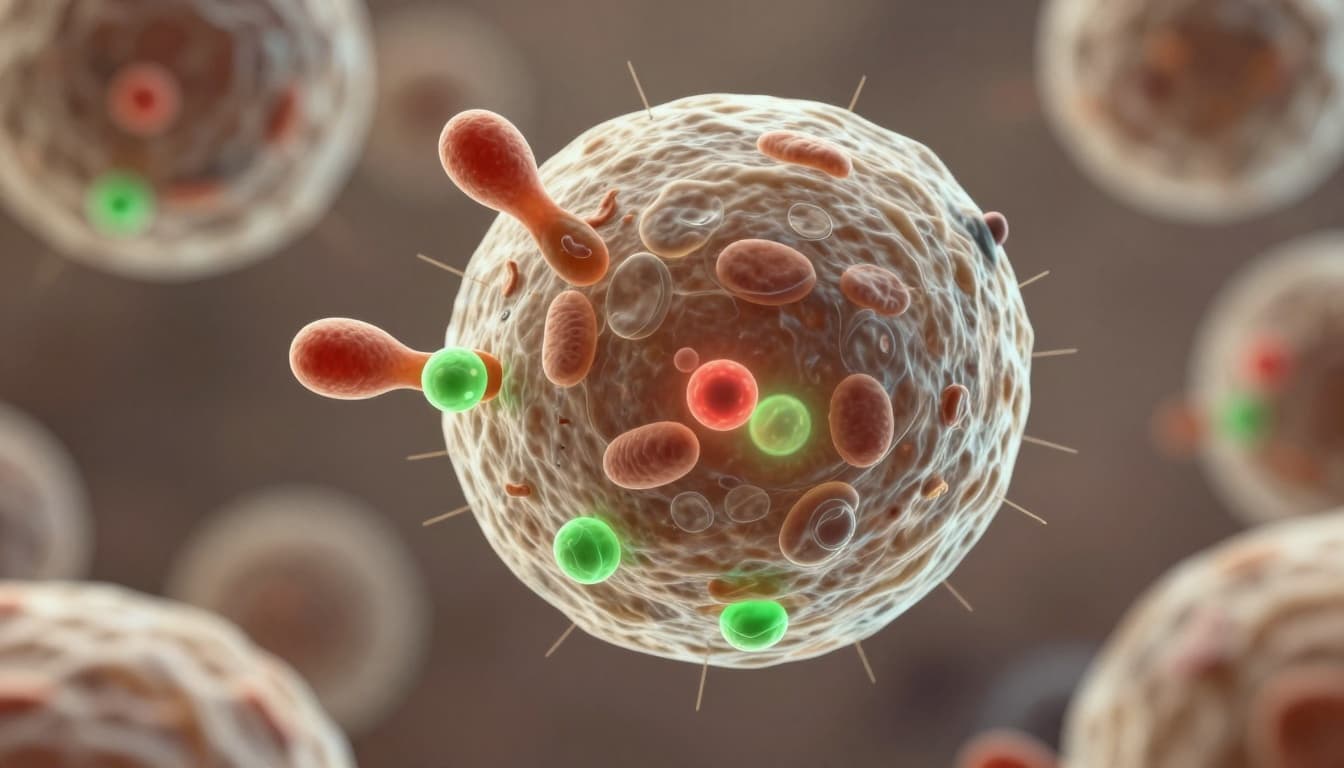
An artist’s view of cellular “clean-up” (autophagy), one process linked to mTOR signalling, created with AI.
Think of mTOR as a thermostat that nudges your cells towards growth mode or maintenance mode. When food and signals are plentiful, mTOR tends to push building and expansion. When mTOR activity drops, cells often shift towards repair jobs, like recycling worn-out parts and calming overactive inflammatory signals.
Rapamycin blocks part of the mTOR system. In medicine, that blocking effect helps prevent organ rejection and treats some rare conditions. What it does not have is approval as an “anti-ageing” treatment. Any longevity use today is off-label, which puts more weight on careful medical judgement.
One reason dosing talk gets intense is that mTOR is not one simple switch. Researchers often describe two main complexes, mTORC1 and mTORC2. In plain terms, mTORC1 is the one most linked to growth and many ageing pathways. mTORC2 links more to metabolism and some immune effects. Hitting mTORC1 without hammering mTORC2 is part of the theory behind intermittent, lower-dose schedules.
Why The mTOR Pathway Shows Up In So Many Ageing Conversations
Ageing isn’t one problem. It’s a pile-up of smaller problems that feed each other.
mTOR sits near the centre of several of them. It helps control protein building, immune activity, inflammation, and the cell’s clean-up process (autophagy). When mTOR runs too “hot” for too long, cells can spend more time building and less time maintaining. Over years, that imbalance may add to damage, inflammatory drift, and weaker stress responses.
Turning mTOR down a little, at the right times, might help older bodies cope better. That’s the hope, and it’s why rapamycin keeps coming up in longevity clinics and research meetings.
Rapamycin Versus ‘Rapalogs’, Are They The Same For Longevity?
Rapalogs are drugs related to rapamycin, such as everolimus. They target the same broad pathway, but they differ in half-life, potency, and side-effect patterns. Some human studies use rapalogs rather than rapamycin itself, partly because the drug choice fits the trial goal.
For readers, one habit helps: always check which compound a study used. “mTOR inhibitor” can hide meaningful differences. A result with everolimus does not automatically translate to weekly sirolimus, and vice versa.
Animal Longevity Results, Strong Signals With Some Big Asterisks
Rapamycin is one of the rare interventions that keeps showing lifespan benefits across many animal studies. Mice are the headline, because labs can run controlled lifespan experiments and repeat them. Across strains and study designs, rapamycin often extends life and delays age-linked diseases, especially cancer.
Still, animal results come with asterisks. Benefits change with sex, strain, dose, and the age treatment begins. Some studies show bigger gains in females, while others find more even effects. Research also shows improvements in certain functions, such as immune patterns, heart measures, brain changes in disease models, and muscle-related outcomes. Yet not every ageing feature improves in every experiment.
A useful way to hold both truths is simple: the signal is strong, but animals are not humans. Mice live in controlled conditions, with no late-night shifts, no pub lunches, and no long-term polypharmacy. That doesn’t cancel the findings, but it does limit what we can promise.
How Much Longer Do Animals Live, And When Does It Work Best?
In mice, many studies land in the rough zone of around a 10% plus lifespan increase, with some showing larger effects depending on dose and conditions. Reviews also report ranges that can stretch higher, up to the 20% to 30% area in certain setups.
One point that grabs attention is timing. Rapamycin can work even when started in mid-life, or later. That’s unusual, because lots of interventions only help if you begin early. If the same “late start still helps” pattern held in humans, it would matter for real-world ageing medicine.
Does Rapamycin Slow Ageing, Or Mainly Delay Diseases Like Cancer?
There’s an honest debate here. Some researchers argue rapamycin slows several ageing processes, because they see broad shifts in inflammation, immune function, and tissue health in animals. Others point out that extending life by delaying cancer could explain a large share of the benefit, at least in some mouse populations.
A practical way to interpret this is to focus on outcomes, not labels. If a drug delays major killers like cancer, that still counts in the real world. On the other hand, if the benefit depends on cancer patterns unique to lab mice, it may not translate cleanly. That’s why human trials need hard endpoints, not just exciting charts.
What Human Studies Actually Show So Far, And What They Cannot Prove Yet
As of Feb 2026, no large completed trial has shown that rapamycin makes healthy people live longer. That sort of proof would take many years, large sample sizes, and careful tracking of illness and death. Researchers therefore use shorter studies and “surrogate” measures.
So what do we have? A mix of small to medium trials, often using rapalogs, looking at immune ageing, inflammation signals, and other health markers over weeks or months. Some ongoing trials are testing low-dose mTOR inhibitors in areas that overlap with ageing biology, including metabolic health, reproductive ageing, and brain health. Results from several of these studies are not yet posted.
It’s also important to separate two different questions. One is whether mTOR inhibitors can improve certain age-linked functions in the short term. The other is whether long-term use increases healthy lifespan. The first looks plausible in some settings. The second remains unproven.
Early Human Signals People Get Excited About (Immune Ageing, Inflammation, DNA Damage)
The strongest “why this might work” argument in humans comes from immune ageing. With age, immune systems often become less flexible. People can respond worse to vaccines and handle infections less well.
Low-dose mTOR inhibition has been studied for immune-related outcomes in older adults, including vaccine response and infection-related measures in some research programmes. Separately, some newer work has also focused on cell stress signals, such as markers linked to senescence and DNA damage in immune cells. These markers can shift over months, which makes them attractive for trials.
Still, markers are not destiny. A better vaccine response is encouraging, but it does not equal “you’ll live longer”. The gap between promising biology and proven clinical benefit is where most longevity debates go wrong.
A simple rule helps: treat biomarker improvements as a reason to study a drug more, not as proof it works.
Why Longevity Trials In Humans Are So Hard, And What Researchers Use Instead
Ageing is slow, and humans live a long time. That sounds like a nice problem, until you try to test a longevity drug.
Researchers use surrogate endpoints because they can measure them in months, not decades. Examples include immune-cell patterns, inflammation markers, metabolic measures, and functional tests like exercise capacity. The snag is we still don’t have one agreed “ageing score” that reliably predicts lifespan for individuals.
A stronger next step would include longer follow-up and harder outcomes. For example, fewer infections in older adults, fewer hospital admissions, better frailty scores, and clearer comparisons between dosing schedules. Those studies cost more and take longer, but they answer the questions people actually care about.
Risks, Side Effects, And The Dosing Debate Behind The Hype
Rapamycin is not a harmless supplement. It’s an immune-active prescription drug with known side effects.
The loudest misunderstanding online is mixing up transplant dosing with longevity-style dosing. In transplant care, clinicians often use higher, frequent dosing and target drug blood levels to prevent rejection. That’s a different goal, with a different tolerance for immune suppression. Longevity interest tends to focus on low, intermittent dosing, trying to nudge mTOR signalling without flattening immunity.
Even at lower doses, side effects can show up. Mouth ulcers are commonly reported. Some people get acne-like rashes or stomach upset. Wound healing can slow, which matters if you have surgery planned or you heal poorly already. Labs can shift too, with lipids and glucose the classic watch-outs.
Infection risk is the line you don’t want to cross. If you push dose too high or stack it with interacting medicines, you can end up with more immune suppression than you intended.
To frame the difference, here’s a simple comparison.
| Feature | Low And Intermittent (Longevity Style) | High And Frequent (Transplant Style) |
|---|---|---|
| Main aim | Shift towards maintenance and repair | Prevent organ rejection |
| Typical schedule | Weekly or otherwise spaced dosing (varies) | Daily or near-daily dosing |
| Common concerns | Mouth ulcers, lipids, glucose, healing | Stronger immune suppression, infections, blood counts |
| Monitoring need | Still essential | Essential, often tighter targets |
The takeaway is blunt: the risk profile changes with schedule, but it never becomes zero.
Low And Intermittent Dosing Versus High Daily Dosing, Why Schedule Matters
Rapamycin has a long half-life, so its effects can linger. That’s one reason weekly dosing protocols show up in longevity discussions and some research settings. People hope that spacing doses allows mTORC1 effects while reducing unwanted spillover into mTORC2-related metabolic effects.
Some studies and clinician-led protocols use weekly dosing that can range from a few milligrams up to around 10 mg, with variation between individuals and aims. That said, the best schedule is not settled. Different bodies metabolise drugs differently, and other medicines can change levels a lot.
Who Should Avoid Rapamycin Or Get Specialist Advice First
Rapamycin calls for extra caution in several groups, because the downside risk rises fast. Pregnancy or trying to conceive is one, unless a specialist team advises otherwise. Active infections are another, because immune effects can work against you.
People with poor wound healing or upcoming surgery should take this seriously. Uncontrolled diabetes, severe high cholesterol, and liver disease also raise concerns, since rapamycin can affect glucose and lipids and relies on liver processing. Drug interactions matter too, including medicines that share the same liver enzyme pathways, and grapefruit products that can raise drug levels.
A Practical, Safer Way To Think About Rapamycin In 2026
A good decision framework starts with goals, not trends. Are you aiming for better healthspan now, or a bet on longer life later? Those are different targets, with different evidence standards.
Next, check the basics. Exercise, sleep, vaccines, blood pressure control, lipid management, and not smoking have strong human data. They are boring, but they work. If those aren’t in place, rapamycin talk is usually a distraction.
If you still want to explore it, treat it like any serious off-label drug decision. A careful clinician discussion might cover medical history, infection risk, metabolic risk, and medicine interactions. It should also include baseline labs, follow-up timing, and clear stop rules. In addition, the quality and legality of supply matter, because unverified products can turn a calculated risk into chaos.
If you can’t monitor it, don’t start it. Guesswork and immune-active drugs don’t mix.
Questions To Ask Your Clinician Before You Even Think About A Prescription
- What benefit are we targeting, and how will we measure it?
- What dose and schedule do you recommend, and why that choice?
- What side effects should make me stop or call you the same day?
- Which blood tests will we monitor, and how often?
- What should I do if I get ill, need antibiotics, or have surgery booked?
- What medicines, supplements, or foods could interact with it?
What ‘Success’ Would Look Like If Rapamycin Really Helps Humans Age Better
The best-case story is not “I feel younger”. Feelings can mislead, especially with placebo effects.
Real success looks like fewer serious infections in older adults, better vaccine responses that translate into fewer complications, and improved function measures such as walking speed or frailty scores. Over longer periods, you’d want lower rates of major age-linked diseases and fewer hospital stays. Those are outcomes families notice, not just lab printouts.
FAQ
Is Rapamycin The Same As Sirolimus?
Yes. Sirolimus is the generic name, and rapamycin is the common name. Formulations can differ, so dosing accuracy and monitoring still matter.
Can Rapamycin Make Humans Live Longer?
We don’t know yet. Animal data is strong, but human trials so far focus on markers and short-term health measures. Proving longer life would need large, long studies.
What Are The Most Common Side Effects At Lower Doses?
Mouth ulcers are a frequent complaint. Skin changes, stomach upset, and headaches also get reported. Clinicians also watch cholesterol and blood sugar, because they can rise in some people.
Does Rapamycin Weaken Your Immune System Or Improve It?
At higher or continuous doses, it can suppress immunity and raise infection risk. At lower, intermittent doses, some studies suggest it may improve parts of immune function in older adults. The balance depends on dose, schedule, and personal health risks.
How Long Would Someone Need To Take Rapamycin To See A Benefit?
Studies vary from weeks to months, depending on the outcome measured. There is no proven long-term plan for longevity use. Meaningful outcomes like fewer hospitalisations would likely need longer follow-up.
Is It Safe To Combine Rapamycin With Metformin, Statins, Or Supplements?
Interactions are possible, and they depend on the exact drugs and your liver metabolism. Some combinations may be reasonable under supervision, but others can raise side effects or drug levels. A clinician should review the full list, including herbal products and grapefruit intake.
What Tests Do Doctors Usually Monitor With Rapamycin?
Common monitoring includes a full blood count, liver and kidney function, fasting lipids, and glucose or HbA1c. Some clinicians add other markers depending on your risks and goals. Monitoring plans vary, so ask for a written schedule.
What Is The Biggest Mistake People Make With Rapamycin For Longevity?
Self-medicating and chasing higher doses. Ignoring infections, surgery timing, or medicine interactions also causes trouble. With immune-active drugs, more is rarely better.
Conclusion
Rapamycin has some of the best animal longevity evidence we have, and early human signals around immune ageing keep interest high. Still, as of Feb 2026, it’s not proven to extend human lifespan, and it carries real risks that depend on dose, schedule, and personal health.
The calm next step is simple: nail the proven basics first. If you remain interested, speak to a clinician who will monitor you properly, or consider joining a well-run clinical trial rather than taking shortcuts.
Leave a Reply