
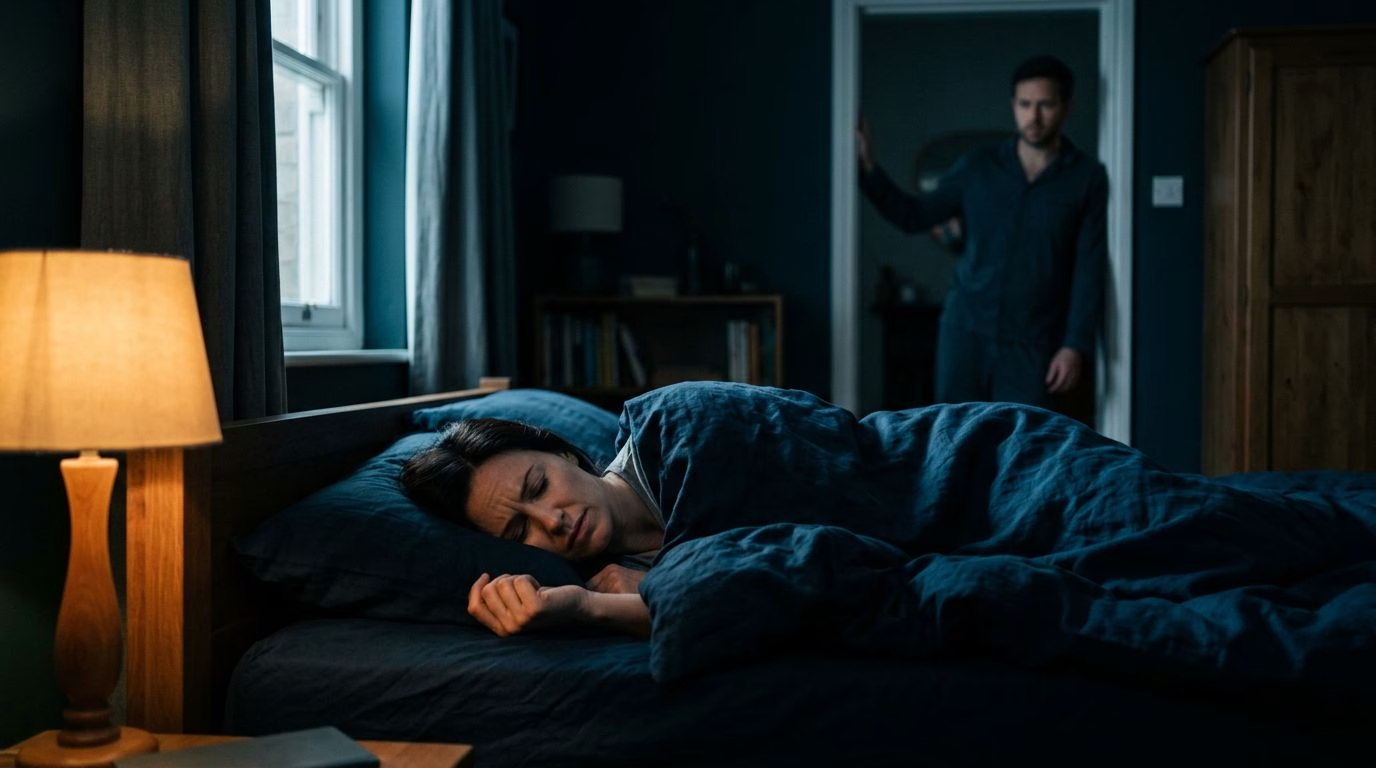
Nocturnal seizures are seizures that happen during sleep, sometimes without any memory by morning. Epilepsy is a neurological disorder that can cause them, but one unexplained overnight episode does not automatically confirm epilepsy.
A bitten tongue or cheek, unexplained soreness, or waking confused can be a clue. These signs need medical attention, particularly after a first suspected seizure or a change in an established pattern.
Key Takeaways
- Nocturnal seizures happen during sleep and may leave no clear memory of the event.
- Morning confusion after an event may indicate a postictal state. Tongue biting, urinary incontinence (wet bedding), sore muscles, and daytime fatigue (severe tiredness) can also raise concern.
- Brief, repeated episodes with stereotyped movements are more suggestive of seizures than ordinary sleep disturbances.
- Night terrors and sleepwalking are forms of parasomnias and can resemble epilepsy, so a witnessed description or video can be valuable.
- Call 999 if a seizure lasts five minutes or more, repeats without recovery, or causes breathing problems or serious injury.
- A normal routine electroencephalogram does not rule out epilepsy.
- NICE advises considering sleep-deprived or ambulatory EEG monitoring when uncertainty remains after a routine EEG, as sleep deprivation can be a seizure trigger.
- Consistent sleep, good sleep hygiene, adherence to seizure medications, and a safer bedroom can reduce avoidable risks.
- A GP or epilepsy specialist should assess any first suspected seizure urgently.
Recognising Nocturnal Seizures During Sleep
Nocturnal seizures are epileptic seizures that happen while someone sleeps or wakes. They may involve obvious shaking, but many are less dramatic. Some cause a sudden gasp, stiffening, repeated jerking, unusual vocal sounds, or a brief burst of forceful movement.
Focal seizures often begin in one area of the brain. During sleep, they may cause forceful, repetitive motor activity, such as kicking, thrashing, pelvic thrusting, bicycling leg movements, or suddenly sitting up. Episodes can look alarming, yet they may last less than two minutes.
Some people have only one event. Others have clusters on the same night, sometimes several times a week. Repeated episodes with a similar pattern are more concerning than one isolated movement.
Sleep does not cause epilepsy on its own. However, sleep deprivation can be a seizure trigger for people who are susceptible. Alcohol, missed anti-seizure medicine, illness, stress, and irregular sleep can also make seizures more likely.
Morning Signs That Should Not Be Ignored
The aftermath may provide the strongest evidence when nobody has seen the episode. A seizure can leave the body feeling as if it has run a hard race overnight.
Look out for a combination of these signs:
- A painful tongue or cheek injury, especially without another obvious cause.
- New bruises, a bumped head, or sore muscles after an otherwise ordinary night.
- Wet bedding caused by urinary incontinence.
- Intense headache, nausea, confusion, or difficulty finding words after waking.
- Bedding thrown across the room, furniture moved, or unexplained marks nearby.
- Severe daytime fatigue despite spending enough time in bed.
The period after a seizure is called the postictal state. It may involve confusion, headache, drowsiness, poor concentration, or low mood. Some people return to normal within minutes, while others need hours.
None of these signs proves that epilepsy is the cause. Tongue biting can happen with teeth grinding, and fatigue has many causes. Yet several signs occurring together, especially after a sudden change in sleep, deserve urgent clinical assessment.
Separating Seizures From Parasomnias
Parasomnias are sleep disorders that cause unusual movements or behaviours while asleep. They are common and aren’t the same as epilepsy. Still, nocturnal seizures can sometimes resemble them, which can confuse partners and families.
Night terrors often involve crying out, sweating, a frightened expression, and confusion. The person may resist comfort and have no memory of the event later. Sleepwalking can involve sitting up, wandering, or carrying out simple actions while still asleep.
No single feature gives a definite answer. Doctors look for the full pattern, including timing, frequency, behaviour during an event, recovery, and test results.
| Feature | More Suggestive Of A Seizure | More Suggestive Of A Parasomnia |
|---|---|---|
| Episode pattern | Stereotyped movements each time | Behaviour varies between events |
| Onset | Sudden and abrupt | May build from a partial awakening |
| Duration | Often seconds to about two minutes | Often lasts several minutes or longer |
| Frequency | Can occur in clusters during one night | May happen less predictably |
| Injuries | Can occur after forceful movements | Less common, but still possible |
| Testing | May show seizure activity on EEG | EEG does not show epileptic activity |
Sleep-related seizures can arise from deep non-rapid eye movement sleep, which overlaps with the sleep stages when some parasomnias occur. That overlap is why a clinical diagnosis must consider the complete pattern, rather than one symptom alone.
Repeated, brief, stereotyped episodes are a stronger warning sign than a single restless night.
When To Seek Urgent Help
A first suspected seizure needs prompt medical review, even if you feel well afterwards. Contact your GP surgery or call NHS 111 for guidance after an unexplained overnight episode, especially with an oral injury, confusion, or loss of bladder control.
Call 999 if a seizure lasts five minutes or more. Also call if seizures repeat without full recovery, the person has trouble breathing, suffers a serious injury, has a seizure in water, or is pregnant.
During a convulsive seizure, move hazards away and protect the person’s head with something soft. Time the episode if you can. Once the jerking stops, place them on their side if they are breathing and stay with them.
Do not hold someone down. Do not put anything in their mouth, including a spoon, finger, drink, or medicine.
Nocturnal seizures can carry serious risks when they are frequent or uncontrolled. Sudden unexpected death in epilepsy, known as SUDEP, is uncommon, but the risk is higher in people with ongoing generalised tonic-clonic seizures. A specialist can discuss personal risk factors and ways to reduce them.
How Doctors Investigate Suspected Night Seizures
Diagnosis starts with the account of what happened, which helps support a clinical diagnosis alongside test results. A bed partner’s description can be more useful than a vague report that someone “slept badly”. The clinician will ask about movements, sounds, breathing, injuries, sleep timing, medication, alcohol, illness, and family history.
An electroencephalogram, or EEG, records the brain’s electrical activity. A routine EEG may show patterns that support an epilepsy diagnosis. It can also be normal, especially if no seizure activity occurs during the recording.
A normal routine EEG does not rule out epilepsy, particularly when episodes happen only during sleep.
NICE advises clinicians to consider a sleep-deprived EEG when a routine EEG is normal but concern remains. If uncertainty continues, ambulatory EEG monitoring can record brain activity for up to 48 hours in everyday settings.
A sleep study with video-polysomnography can help distinguish seizures from parasomnias. It combines video, EEG, breathing, oxygen levels, heart rhythm, muscle activity, and sleep monitoring across sleep stages.
Doctors may also request an MRI scan to check for structural brain changes. In complex, drug-resistant focal epilepsy, specialist centres may use tests such as ictal SPECT with SISCOM during a surgical assessment.

Sleep-Related Hypermotor Epilepsy Explained
Sleep-related hypermotor epilepsy, or SHE, is a focal epilepsy syndrome in which focal seizures usually occur during sleep. It was once commonly called nocturnal frontal lobe epilepsy because many episodes begin in the frontal lobe.
The updated name reflects a broader picture. Some seizures that look like SHE start outside that area, yet they create the same abrupt and complex movements. People may shout, stiffen, make repeated limb movements, or get out of bed in a confused-looking way.
SHE can run in families, although many people have no known family history. Some inherited forms may follow an autosomal dominant pattern, but that does not describe every case. Genetic mutations linked with some inherited forms include CHRNA4, KCNT1, and DEPDC5. These genes affect brain signalling or pathways that regulate nerve-cell activity.
Genetic testing is not necessary for everyone with possible SHE. A neurologist may consider it when seizures begin early, run in families, or do not respond to standard treatment.
How A Bed Partner Can Record An Episode Safely
A clear record can shorten the path to diagnosis. Write down the details soon afterwards, as memories of a frightening night can fade quickly.
- Note the date, estimated start time, and how long the episode lasted.
- Describe the sequence, including sounds, eye position, breathing, stiffness, and limb movements.
- Record whether the person responded to their name or touch, then describe their recovery.
- Film a short video only if it is safe and first aid is not needed.
- Photograph injuries or unusual bedding damage when appropriate, then share the record with the GP or epilepsy team.
Don’t try to wake, restrain, or move the person during unusual movements unless there is immediate danger. Consumer sleep trackers and watches may detect disturbed sleep, but they cannot diagnose seizures or replace an EEG.
Safer Sleep And Treatment That Fits Daily Life
Treatment for nocturnal seizures depends on the seizure type, likely epilepsy syndrome, medical history, and personal circumstances. Seizure medications are usually the first option. Carbamazepine and oxcarbazepine can help some people with sleep-related focal seizures, but a neurologist must choose and monitor treatment.
Never stop or change seizure medications without medical advice. A sudden change can trigger seizures, including prolonged seizures. If side effects disturb sleep or cause daytime sedation, ask the prescriber to review the medicine, dose, and timing.
Good sleep hygiene also matters. Maintaining a steady sleep schedule can reduce large swings in sleep timing and help avoid sleep deprivation. This supports general sleep health, but it does not replace epilepsy care.
Practical bedroom changes can reduce injury risk:
- Keep the area around the bed clear of sharp furniture, glass, and loose cables.
- Consider a low bed or a mattress close to the floor if falls are likely.
- Avoid sleeping on the top bunk or near an unprotected staircase.
- Discuss bed rails, alarms, monitoring devices, and specialist safety pillows with an epilepsy nurse before buying them.
- Ask about sleep apnoea if loud snoring, choking sounds, or marked daytime sleepiness are present.

Obstructive sleep apnoea can fragment sleep and worsen seizure control. Continuous positive airway pressure, known as CPAP, is the standard treatment when sleep apnoea is confirmed. Treating both conditions can improve daytime alertness and quality of life.
The Wider Impact Of Night-Time Seizures
Uncertainty around repeated nocturnal seizures can affect far more than sleep. People may fear going to bed, avoid holidays, struggle at work, or worry about staying alone. Partners can become hyper-alert and lose sleep themselves.
Daytime fatigue may reflect seizures, medication effects, fragmented sleep, or a combination. Ask the epilepsy team about support for mood, memory concerns, work adjustments, and sleep problems. UK driving rules can also change after a seizure, so check DVLA guidance and discuss your situation promptly with your clinician.
A clear clinical diagnosis can reduce fear by replacing guesswork with a treatment and safety plan. Keeping a shared record can also help partners feel involved without making them responsible for managing epilepsy alone.
Conclusion
Night-time seizures can look like ordinary sleep disruption. Morning injuries, confusion, repeated unusual movements, or severe fatigue deserve attention.
Nocturnal seizures need proper medical assessment, even if someone feels normal by lunchtime. Record what happened, make the bedroom safer, and seek urgent help when seizure first-aid warning signs appear.
FAQ
Can Nocturnal Seizures Happen Every Night?
They can. Some people have clusters during one night or repeated events across several nights. Frequent episodes need specialist review because sleep disruption and injury risk can build over time.
Can You Have A Seizure Without Shaking During Sleep?
Yes. Some seizures cause subtle movements, sudden waking, vocal sounds, unusual sensations, or brief confusion. A person may not remember any of it.
Does A Normal Electroencephalogram Mean It Is Not Epilepsy?
No. Routine EEGs only record a short window of brain activity. Sleep-deprived EEGs, ambulatory monitoring, or video EEG studies may capture information that a routine test misses.
How Long Does A Sleep Study For Suspected Seizures Take?
A standard overnight study usually lasts one night. When events are infrequent, clinicians may recommend longer video EEG monitoring or an ambulatory EEG lasting up to 48 hours.
Can Night Terrors Or Sleepwalking Involve Tongue Biting Or Urinary Incontinence?
These events may be parasomnias and can occasionally cause injury. Seizures are more concerning when there are repeated episodes or a postictal state afterwards.
What Should A Bed Partner Do During A Suspected Seizure?
Stay calm, time the event, move hazards away, and protect the person’s head. Don’t restrain them or put anything in their mouth. Call 999 if it lasts five minutes or more, or recovery is poor.
Leave a Reply