

Simply watching someone pick up a mug can activate parts of your brain used to pick up a mug yourself. That’s odd at first glance, yet it helps explain why other people’s actions and feelings can seem to “rub off” on you.
This post is about mirror neurons, and the wider brain systems that let you simulate what you see in others. It’s also about empathy in everyday terms, feeling with someone, not just feeling sorry for them.
You’ll learn what mirror neurons are, what they can and can’t explain, and why this matters for connection at home, at work, and online. You’ll also get practical ways to build empathy without putting on an act.
Key takeaways
- Mirror neurons fire when you act and when you watch someone else act, which helps your brain “map” their behaviour onto your own.
- In humans, evidence is mostly indirect (brain scans and stimulation), so big claims need caution.
- Mirroring supports quick understanding, because it helps you predict what someone is doing next.
- Empathy needs more than mirroring, it also needs context, attention, and a sense of safety.
- Emotional contagion is real, and it can spread calm, stress, anger, or joy through a room.
- Gentle matching of tone and pace can build trust, as long as it’s respectful and not forced.
- Misreading happens easily, because the same face or tone can mean different things in different contexts.
- Small habits (listening, reflecting, reducing multitasking) improve empathy more than “copying tricks”.
- A simple loop helps in real conversations: notice, match gently, then check your guess.
Mirror Neurons, Explained Like You’re New To Neuroscience
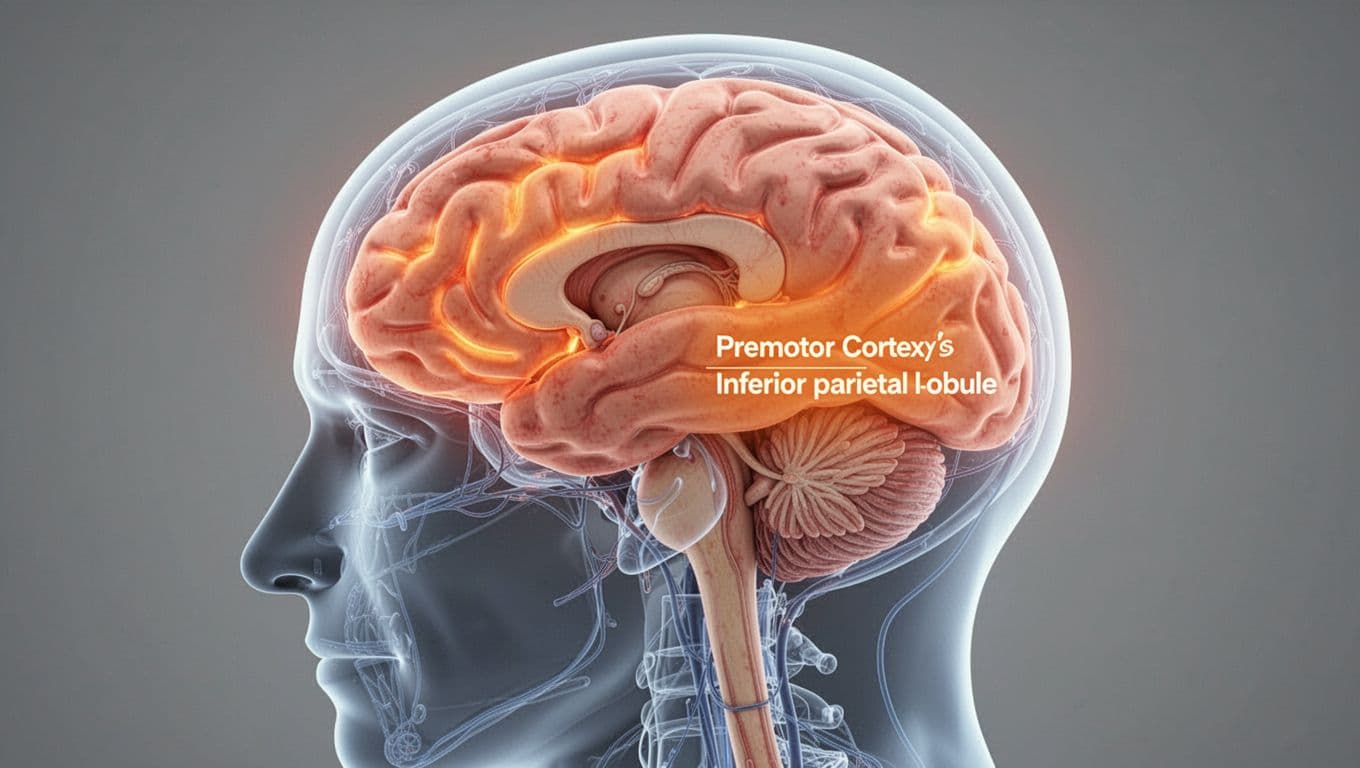
Mirror neurons are often described as brain cells that fire in two situations: when you do an action, and when you watch someone else do the same action. Think of it like your brain running a quiet “practice version” of what you’re seeing.
Researchers first found these neurons in macaque monkeys in the 1990s, in a part of the premotor cortex called area F5. The neurons fired when the monkey grabbed an object, and also when it watched a researcher grab one. That discovery mattered because it suggested the brain links seeing and doing in a direct way.
People then asked a bigger question: if the brain can mirror actions, can it also mirror feelings? The honest answer is that it might help, but it’s not the whole story.
In humans, scientists rarely record single neurons in the same way as in animal studies. So most evidence comes from indirect measures such as fMRI (blood flow changes), EEG (brain rhythms like the “mu” rhythm), and TMS (brief magnetic pulses that can test how ready a movement system is). These methods are useful, but they don’t equal “we found the exact mirror neuron for empathy”.
An everyday example makes the idea simpler. You see a friend lift a hot mug. Without thinking, you can almost feel the weight and heat. That quick, body-based sense is the sort of process people mean by “mirroring”.
Where The “Mirroring” Happens In The Brain (And What It Really Does)
When people talk about the “mirror system”, they usually mean a network. In plain language, it links what your eyes see to what your body could do.
Two regions come up often:
- The premotor cortex, which helps plan movements.
- The inferior parietal areas, which help map body positions and actions.
Another piece of the puzzle involves visual processing regions that track biological motion, often discussed with the superior temporal sulcus (STS). You can think of this as the brain’s “movement detective”, spotting how a hand moves, where a gaze points, and what action is unfolding.
What does this network do day-to-day? It helps you predict. If you see a hand reach towards a mug, your brain can guess the next step: grasp, lift, sip. That prediction makes social life smoother. You don’t have to analyse every tiny movement from scratch.
This is also why watching can support learning. A child watches how to tie laces, and their brain builds a usable plan. A new colleague watches how you greet clients, and they copy the rhythm and timing. The mirroring system isn’t magic, it’s part of how brains learn from other brains.
From Monkeys To Humans: What We Know, What We Suspect, And What’s Still Debated
The gap between monkeys and humans creates most of the debate. In macaques, researchers could measure single cells and say, “this neuron fired in both cases”. In humans, we infer similar processes from patterns across many neurons.
That doesn’t make the research worthless. It just means we should be careful about turning a helpful idea into a grand theory of everything social.
A modern way to frame mirroring is prediction and learning, not simple copying. Your brain uses what you’ve done before to model what others are doing now. Experience shapes the model. Culture shapes it too. So does your relationship with the person in front of you.
Here’s the myth-bust that matters most:
Mirror neurons aren’t an “empathy button”. They can support empathy, but they don’t guarantee kindness or understanding.
Someone can read your body language and still use it to mock you. Another person can mirror your stress without grasping why you’re stressed. Empathy needs more than shared signals, it needs meaning.
How Your Brain Simulates Other People, And How That Becomes Empathy
Empathy often starts as a fast body response, then turns into an interpretation.
A simple step-by-step story looks like this:
First, you notice an action or expression, a wince, a sigh, a tight voice. Next, your brain runs a quick internal simulation, partly through movement and perception systems. Then your body shifts a little, maybe your face tightens, your shoulders rise, your stomach drops. After that, you add context from memory and situation, and you decide what it means.
That last part is easy to miss. Empathy isn’t only feeling, it’s also making sense. Your brain asks, often without words: What happened? What does this signal mean for this person? What do they need from me?
This is also where things can go wrong. If you’re distracted, tired, or guarded, you might not simulate much at all. If you feel unsafe, your brain can focus on self-protection instead of connection. On the other hand, if you’re highly sensitive, you might simulate too much and get overwhelmed.
Emotional contagion fits here. It’s the quick spread of emotion from one person to another. It can be helpful, like catching calm from someone steady. It can also be harmful, like absorbing anxiety in a tense meeting.
Everyday “Mirroring” You Can Notice Today

You don’t need a scanner to notice mirroring. It shows up in small, everyday moments.
Yawning is the obvious one. You see a yawn, and your own face starts to copy it. Another example is wincing when someone bangs their elbow. Even if you’re not hurt, your body reacts as if it might be.
Smiles work the same way. A genuine smile can pull a smile from you before you decide to smile. Posture can spread too. Sit with someone slumped and defeated, and you may notice your own shoulders sinking. Spend time with a confident friend, and you might walk a little taller.
Learning by watching also fits. You watch someone chop vegetables, and your hands almost want to move. You watch a tennis swing, and your brain starts sketching the timing.
These examples share a theme: they’re quick, often automatic, and they don’t require a speech in your head. They show how your brain uses other people as a reference point, like tuning forks that start to vibrate together.
Why Mirroring Alone Is Not Enough For Deep Understanding
Catching a feeling isn’t the same as understanding a situation. You can mirror someone’s tension and still miss the cause.
Context changes everything. Culture affects eye contact. Family habits affect tone. Power dynamics affect what someone feels safe to show. Even the setting matters. A clipped reply at home can mean something different in a busy office.
Misreads happen because signals overlap. A person who looks annoyed might be tired. They might be in pain. They might be anxious and trying to keep it together. If you assume one meaning too quickly, you can respond in the wrong way and make things worse.
Empathy improves when you slow down enough to test your guess. That doesn’t mean psychoanalysing people. It means staying curious, and giving someone room to correct you.
Why This Matters For Real Connection In Relationships, Teams, And Mental Health

Connection often grows from tiny moments. Someone speaks, you stay present, your face shows you’re with them, and they relax a little. That’s not therapy speak, it’s a basic human signal: “I see you.”
Mirroring helps build that signal because it supports synchrony. When two people match pace and tone, conversation feels easier. When a team shares a rhythm, work feels less effortful. Even online, you can feel the difference between a thoughtful reply and a cold one.
There’s also a darker side. Stress spreads. Anger spreads. If you spend hours around tension, your nervous system can start to treat tension as normal. In caring roles, that load can become heavy.
Research into autism and social difficulty sometimes discusses mirror system differences, but it’s important to stay careful here. Social life involves many brain processes, including attention, language, sensory comfort, and learning history. Mirror neurons, if they play a role, are one part of a much larger picture.
The practical takeaway is simple: pay attention to the social “weather” you create. Calm invites calm. Respect invites openness. Constant pressure invites shutdown.
When Mirroring Helps: Trust, Learning, And Feeling Safe With Someone

Mirroring helps most when it’s natural and light. You don’t need to copy every movement. Small matches often work best, like a similar pace of speech or a calm tone.
In a couple conversation, this might mean softening your voice when your partner sounds shaky. It can also mean leaning in a little when they share something personal. The message is, “I’m with you.”
In a classroom, students often learn faster when they can watch the task first. A teacher who demonstrates slowly, and notices confusion early, makes learning feel safer. That safety matters because stress blocks attention.
In a team meeting, a leader who keeps a steady pace can reduce panic. A teammate who nods and summarises can stop people talking over each other. These are small acts, yet they build trust over time.
Shared activities also create synchrony without effort. Singing, dancing, team sport, or even walking side-by-side can help people feel connected. Your bodies match rhythm, and your brains treat it as “we’re together”.
When Mirroring Hurts: Stress Spread, Misread Signals, And Burnout
Mirroring can also drag you under. Spend time with someone angry, and your body may tense. Sit with constant anxiety, and you might start scanning for danger too. That’s emotional spillover, and it can feel like you’ve caught someone else’s mood.
Conflict-heavy workplaces make this worse. So can caring for a relative, working in health settings, or scrolling through upsetting news late at night. Even if you feel compassionate, your system still pays a price.
Boundaries don’t have to be dramatic. Simple steps can protect you:
- Pause and breathe before replying when you feel your body tighten.
- Step away for a minute if the conversation turns heated.
- Name what’s happening in plain language, such as “I’m feeling wound up, can we slow down?”
That last one matters because it shifts you from automatic reaction to choice. You don’t stop caring, you stop drowning.
Practical Ways To Build Empathy Without Faking It
Empathy grows when you improve two things: attention and accuracy. Attention helps you notice signals. Accuracy helps you interpret them with context, rather than guesswork.
A lot of “mirroring advice” online sounds like a trick. Copy their posture, use their words, and they’ll like you. People often sense that, and it backfires.
Instead, aim for respectful presence. Be warm, be steady, and be willing to check your assumptions. That’s how you support your brain’s simulation and stop it from turning into a story you made up.
The goal also isn’t to feel everything other people feel. Healthy empathy includes enough distance to stay helpful. You can care without absorbing.
The 3-Step Empathy Loop: Notice, Match Gently, Then Check
This loop is simple enough to use in real life, even when you’re tired.
- Notice: Watch face, voice, pace, and posture. Listen for what’s underneath the words.
- Match Gently: Soften your tone, slow your pace, and keep an open posture. Stay genuine, or don’t do it.
- Check: Offer a short reflection or question, such as “Sounds like that was stressful, is that right?”
The check step is the safety catch. It stops mind-reading. It also shows respect, because you let the other person define their experience.
Small Habits That Strengthen Connection Over Time
A few habits make empathy easier because they reduce noise and increase clarity:
- Active listening: Focus on their meaning, not your next reply.
- Reflecting feelings: Name the emotion you hear, and keep it tentative (“Sounds frustrating”).
- Reducing multitasking: Put the phone away when the moment matters.
- Shared activities: Cook, walk, or build something together, it creates natural synchrony.
- Watching and learning together: Learn a skill side-by-side, it builds patience and shared reference points.
- Compassion when irritated: Treat annoyance as a signal to slow down, not attack.
- Respecting consent and culture: Some people dislike eye contact or closeness, so adjust without judgement.
None of these require a perfect personality. They’re small, repeatable choices that make people feel safer with you.
Conclusion
Your brain often simulates other people, and mirror neurons are part of that system. Still, empathy isn’t automatic kindness, and it isn’t mind-reading either. Context and choice turn a shared feeling into real understanding.
Try one calm next step today: use the Notice, Match Gently, Check loop in a single conversation. Over time, that simple habit can reduce needless conflict and make relationships feel more secure.
FAQ
Are Mirror Neurons Real, Or Just A Theory?
Mirror neurons are real in the sense that scientists recorded them directly in macaque monkeys. In humans, evidence comes mostly from indirect measures like fMRI, EEG, and TMS. So the basic idea stands, but details in humans remain debated.
Do Mirror Neurons Explain Empathy Completely?
No. They can support quick simulation of actions and expressions, which may feed into empathy. However, empathy also needs attention, memory, context, and self-control.
What’s The Difference Between Empathy And Sympathy?
Empathy means feeling with someone and trying to understand their view. Sympathy is more like feeling sorry for them from the outside. Both can be kind, but empathy tends to feel more connecting.
Why Do I Feel Drained After Being Around Emotional People?
Emotional contagion can pull your body into another person’s stress or sadness. If that happens often, your nervous system gets fewer chances to reset. Pauses, boundaries, and recovery time can help.
Can You Improve Empathy, Or Are You Born With It?
You can improve it. Practice changes attention and habits, and that changes how you respond. You won’t become a different person overnight, but you can get more accurate and more steady.
Do Mirror Neurons Have A Link With Autism?
Some research discusses mirror system differences in autism, especially around action understanding. Still, autism involves many factors, including sensory processing and communication differences. Mirror neurons alone don’t explain the full picture.
Is Mirroring In Conversation Manipulative?
It can be, if someone uses it as a trick to steer you. Gentle, natural matching is usually just good social timing. The clean test is intent: are you trying to understand, or trying to control?
What Should I Say When I Don’t Know How Someone Feels?
Use a check rather than a guess. Try: “I’m not sure I’m reading this right, do you want to tell me what’s going on?” That keeps you honest and gives them control.
Leave a Reply