
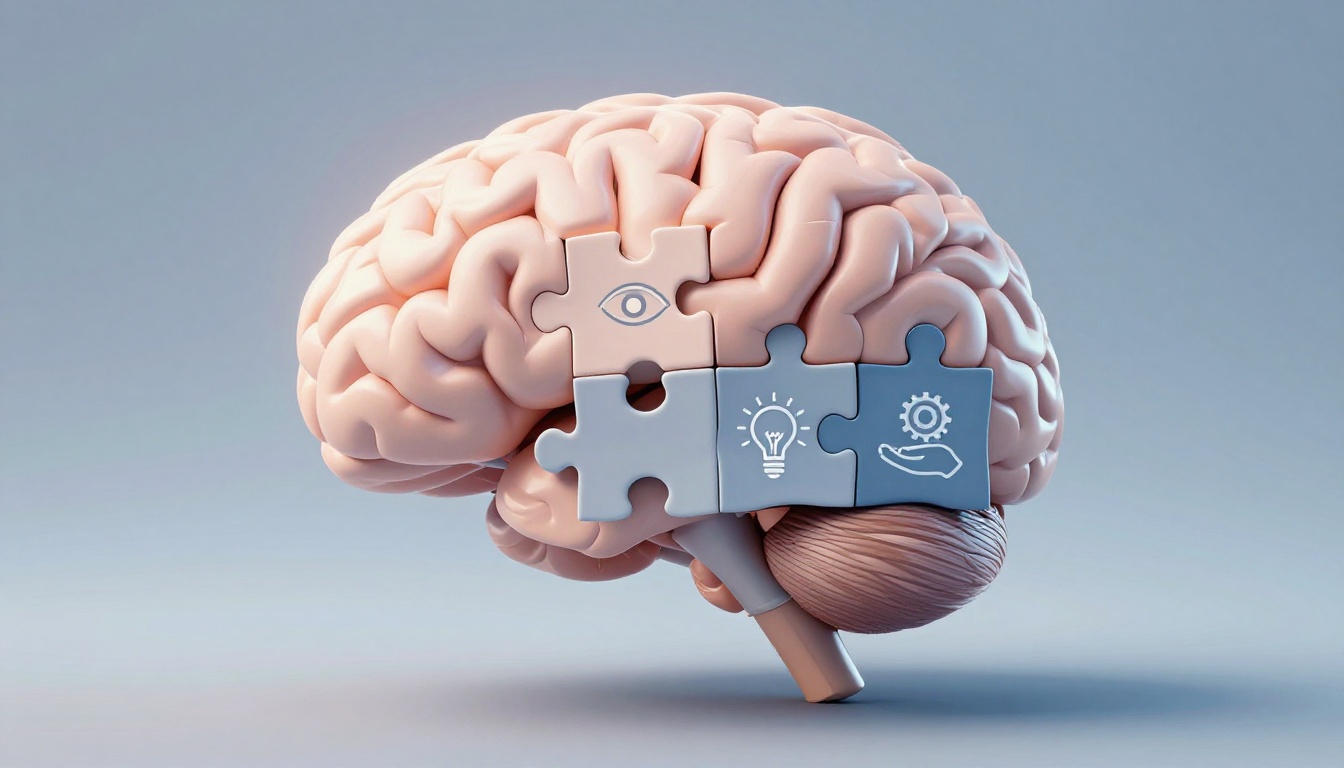
People often confuse being “nice” with being emotionally intelligent. Niceness can be a habit, or even a mask. Emotional intelligence (EI), in the Mayer and Salovey model, is something more practical: four learnable skills for working with emotions in yourself and other people.
This guide breaks EI into its four branches, perceiving, using (facilitation), understanding, and managing. You’ll do a quick self-check to spot strengths and gaps, then pick one small thing to practise this week.
This isn’t a diagnosis, and it isn’t a clinical tool. It’s a simple way to build self-awareness and improve how you handle everyday moments.

Key Takeaways
- The four branches of emotional intelligence are perceiving, using emotions to help thinking, understanding, and managing.
- Perceiving is about reading emotional cues accurately, not mind-reading or guessing.
- Facilitation means letting emotions inform your thinking, while still staying in charge of your actions.
- Understanding emotions is the skill of naming feelings well, noticing blends, and predicting how they may change.
- Managing emotions is regulation plus relationship skill, it’s not suppression or forced positivity.
- Self-checks work best when you rate recent behaviour, not your good intentions.
- Add one real example for every high score, because it stops you over-rating yourself.
- Uneven EI profiles are normal, you can be strong in one branch and weaker in another.
- Choose one branch to practise for a week, then review what changed in real situations.
How This Self-Assessment Works (And How To Be Honest With Yourself)
This self-assessment uses a simple rating method. For each statement, score yourself from 1 to 5:
1 means never, 2 means rarely, 3 means sometimes, 4 means often, 5 means almost always.
Answer based on the last 2 to 4 weeks, not your best week. Recent behaviour is the point, because EI shows up in small moments. Think of it like checking your fitness: one long walk doesn’t prove you’re in training.
For any item you rate 4 or 5, add one real example in a notebook or notes app. Keep it short, one or two lines. This keeps your scores grounded in life, not wishful thinking.
Self-bias is normal, so use a couple of guardrails. First, look for patterns, not one-off events. Second, if you can, ask one trusted person for a quick view, such as, “When I’m stressed, do I listen well?” You’re not asking for a full review, just a reality check.
Formal ability tests exist too. The best-known one in this model is the MSCEIT, which measures EI through tasks rather than self-ratings. That can be useful for coaching or development, but you can still learn a lot from a practical self-check today.
Your Simple Scoring Sheet And What Your Scores Mean
You’ll rate each branch using the statements in the sections below. Then total your score for that branch.
Each of the first three branches has 8 statements (score range 8 to 40). The managing branch has 10 statements (score range 10 to 50). Use these ranges as a plain guide:
| Branch | Needs Practice | Growing | Steady |
|---|---|---|---|
| Perceiving (8 items) | 8 to 19 | 20 to 30 | 31 to 40 |
| Using Emotions (8 items) | 8 to 19 | 20 to 30 | 31 to 40 |
| Understanding (8 items) | 8 to 19 | 20 to 30 | 31 to 40 |
| Managing (10 items) | 10 to 24 | 25 to 37 | 38 to 50 |
The takeaway is simple: treat this as a map, not a verdict. Many people score high in one area and low in another. That uneven profile is common, and it’s useful information.
A strong EI profile is not “high scores everywhere”. It’s knowing what you do well, and what you need to practise next.
Mistakes That Make Self-Checks Useless
Self-checks fail for predictable reasons, so it helps to name them.
You judge intentions instead of behaviour. Fix: score what you did, then write one example.
You only think about work, or only home. Fix: picture three settings, work, home, and social life, then rate the average.
You confuse calm with avoidance. Fix: ask, “Did I stay calm and still deal with it?” Avoidance often feels calm at first.
You score yourself high because you know the right words. Fix: for every 4 or 5, add a real situation from the last month.
Branch 1, Perceiving Emotions: Can You Read Feelings Accurately?
Perceiving emotions means noticing feelings in faces, tone of voice, body language, and context. It also includes perceiving your own internal cues, like tension, heat, or a racing heart. When this branch is strong, you get fewer misunderstandings. You also pick better timing for sensitive conversations.
In real life, accuracy matters more than confidence. A tight smile and a flat “I’m fine” can mean many things. It could be stress, embarrassment, anger, or just fatigue. The skilled move is noticing the cue, then checking your read before reacting.
Imagine a colleague says, “No, it’s fine,” while staring at their screen and speaking quickly. An inaccurate read sounds like, “You’re obviously annoyed.” A more accurate approach is, “You seem a bit rushed, have I caught you at a bad time?” It’s softer, and it gives them room to correct you.

Perceiving Self-Assessment Statements (Rate 1 To 5)
Rate each statement from 1 to 5, based on the last 2 to 4 weeks.
- I notice small shifts in tone, pace, or volume when someone speaks.
- I spot stress signals in my body (jaw, shoulders, stomach) before I snap.
- I check my guess before reacting (for example, “You seem quiet, did I get that right?”).
- In meetings, I can sense the group mood without jumping to conclusions.
- I can tell the difference between tiredness, annoyance, and worry in myself.
- I don’t over-read, I admit when I don’t have enough information.
- I pay attention to context (timing, pressure, relationships), not just words.
- I notice when someone’s facial expression doesn’t match what they say.
If This Is A Weak Spot, Try These Small Practices This Week
Start small, because tiny wins build accuracy.
First, try name and evidence. Silently label the feeling you think is present, then name the evidence you saw (tone, posture, timing). Next, do a 60-second body scan twice a day, shoulders, jaw, chest, hands, and breathe once slowly.
Also use notice and ask with one person you trust. Keep it simple: “You seem a bit tense, anything up?” Finally, reduce distractions during hard chats. Put the phone away, and keep eye contact natural.
Branch 2, Using Emotions To Help Thinking: Can You Use Feelings As Information?
This branch is often called facilitation. It means using emotion to guide attention, memory, creativity, and decisions. You’re not letting feelings drive the bus. Instead, you let them hold the map.
Different moods suit different tasks. Calm helps careful checking. Excitement helps brainstorming. Mild concern can help planning, because it pushes you to think ahead. On the other hand, overwhelm makes your thinking narrow, so it’s a poor time for big choices.
A key point: the goal isn’t “always positive”. The goal is useful and appropriate. Anger can signal a boundary. Sadness can signal a loss that needs time. Joy can signal that you’re aligned with your values. When you use emotions well, you learn from them, then choose your next step.

Facilitation Self-Assessment Statements (Rate 1 To 5)
- I match tasks to my state (creative work when energised, detail work when steady).
- I treat irritation as a signal to check a boundary or unmet need.
- I pause big choices when I feel overwhelmed, rushed, or overly emotional.
- I can use a quick mood shift tool (walk, music, breathing) before problem-solving.
- I use feelings to prioritise, rather than trying to ignore them.
- I can stay curious when I’m anxious, instead of freezing or distracting myself.
- When I’m excited, I capture ideas quickly rather than acting on impulse.
- I can focus even when I feel low, by choosing a simpler task first.
Quick Ways To Put Your Mood To Work (Without Faking It)
Pick one tool that fits your life, not an ideal routine.
Start by choosing the right task for your current state. If you feel scattered, do admin for ten minutes. If you feel energised, draft ideas or outline a plan. Then write one sentence: “This feeling might be pointing to…” and finish it honestly.
A 10-minute reset helps too. Walk outside, stretch, or breathe slowly for a minute. Finally, set a cool-off rule for important emails. Draft it, save it, then re-read it later when you feel steadier.
Branch 3, Understanding Emotions: Do You Know What Feelings Mean And How They Change?
Understanding emotions is the skill of knowing emotion words, common causes, blends, and patterns over time. It’s also the ability to predict what might happen next. For example, disappointment can turn into anger if you feel ignored. Anxiety can turn into relief after you get clarity.
This branch improves communication, because you can describe what you feel without a messy story. It also reduces surprises, because you notice early signs. Even better, you can separate similar emotions that lead to different actions.
Take jealousy vs envy. Envy wants what someone else has. Jealousy fears losing what you already have. Those feelings push you towards different conversations. Or consider stress vs excitement. Both can feel like a buzz in the body. Stress often comes with threat thoughts, excitement often comes with opportunity thoughts. Naming it well changes what you do next.

Understanding Self-Assessment Statements (Rate 1 To 5)
- I can name precise emotions, not just “good”, “bad”, or “stressed”.
- I spot mixed emotions (for example, proud and worried at the same time).
- I can explain what triggered a feeling, without blaming or mind-reading.
- I can predict what might happen next if nothing changes.
- I notice the story I tell myself, and how it changes the feeling.
- I can tell the difference between shame, guilt, and embarrassment in myself.
- I recognise that others may feel differently in the same situation.
- I can link feelings to needs (rest, respect, space, reassurance, clarity).
Build Your Emotion Vocabulary In Minutes A Day
A small routine works better than a big plan you won’t keep.
Pick one emotion word a day. Define it in your own words, then note one trigger and one body cue. Finally, write one healthier response you could try next time.
Also replace broad labels with clearer ones. “Stressed” might become “worried about time”, “overloaded”, “on edge”, or “embarrassed about that comment”. Clear language makes clearer choices.
Branch 4, Managing Emotions: Can You Regulate Yourself And Support Others?
Managing emotions means handling feelings in yourself and responding to others in ways that support goals and relationships. This is where many people struggle, because it’s easy to slip into suppression, blaming, or people-pleasing.
Managing is not pretending you’re fine. It’s choosing what to do with the emotion. Sometimes you calm down before you speak. Sometimes you set a boundary. Sometimes you listen without taking on the other person’s stress. Good management includes safety, timing, and respect, for you and for them.
In workplace studies using ability-based measures like the MSCEIT, people who score higher tend to get better peer and supervisor ratings, such as being easier to work with and handling stress better. That fits everyday experience: people trust you more when you stay steady and repair quickly after friction.
Managing Self-Assessment Statements (Rate 1 To 5)
- When I’m triggered, I can calm down without lashing out or shutting down.
- I can stay respectful, even when I’m upset.
- I repair after conflict (own my part, apologise, and reset expectations).
- I can ask for what I need clearly (time, help, space, or clarity).
- I set boundaries without over-explaining or attacking.
- I don’t try to “fix” someone who only wants listening.
- I can take feedback without spiralling into shame or defensiveness.
- I recover after mistakes, then act on what I learned.
- I can tolerate awkward feelings long enough to have a needed conversation.
- I choose the right moment for hard topics, rather than dumping them at peak emotion.
A Simple Regulation Plan For The Next Time You Get Triggered
Use a plan you can remember under pressure.
First, pause. Stop talking for one breath. Next, label the feeling in one word (anger, fear, hurt, shame). Then choose the goal (be fair, get clarity, protect the relationship, set a boundary).
After that, pick one tool: slow breathing, step away, or write quick notes. Finally, respond in a way that fits your goal.
A simple time-out script helps when you need space: “I want to respond well. I need 10 minutes. I’ll come back at 3 pm.” You’re not avoiding the issue, you’re choosing a better moment.
Reading Your Results: What Your EI Profile Is Telling You
Your scores tell a story, especially when you compare branches. Start by circling your lowest branch. That’s often where daily friction lives. Then look at your highest branch. That’s usually what you rely on when things get tense.
Some common profiles show up again and again:
Strong perceiving but weak managing can feel like you absorb everything. You notice every mood shift, then struggle to stay steady. Strong managing but weak perceiving can look like calm competence, but you miss cues and people feel unseen. Strong understanding but weak using emotions can mean you can explain feelings well, yet you don’t use them to make better choices in the moment.
Choose what to focus on based on your real pain points. If conflict keeps repeating, start with managing. If you misread people, start with perceiving. If you get stuck overthinking, facilitation often helps most.
Pick One Branch To Improve First With A One-Week Goal
Use this decision rule: pick the branch that, if it improved slightly, would reduce the most friction this week.
Here are three simple one-week goals you can copy:
- Perceiving goal: Ask two “Did I read that right?” questions before reacting.
- Using emotions goal: Delay one big decision until you feel calm and rested.
- Managing goal: Do one repair conversation within 24 hours of a slip-up.
Keep the goal measurable. Then review in seven days and adjust.
FAQ
What Are The Four Branches Of Emotional Intelligence?
In the Mayer and Salovey model, EI has four skills: perceiving emotions, using emotions to help thinking, understanding emotions, and managing emotions. In other words, you notice feelings, use them as information, make sense of them, then respond well.
Is Emotional Intelligence The Same As Being Nice Or Calm?
No. You can be polite while missing cues, or calm because you avoid hard talks. EI is skill, so it shows in accuracy, timing, and behaviour under pressure.
Is Ability EI Different From Personality Traits?
Yes. Ability EI focuses on skills for reasoning with emotions, often measured with tasks (not just self-ratings). Personality traits describe your typical style, like being outgoing or cautious, which can influence how those skills show up.
Can You Improve Emotional Intelligence, Or Is It Fixed?
You can improve it, because these are learnable skills. Small practice works best, such as checking your read before reacting, or labelling the feeling before replying.
How Long Does It Take To See Progress?
You can notice small changes within weeks if you practise one branch on purpose. Bigger shifts usually take longer, because real change needs repetition across many situations.
What Is The MSCEIT, And Do I Need It?
The MSCEIT is a formal, ability-based emotional intelligence test aligned to this four-branch model. You might consider it for coaching, leadership development, or structured feedback. For most people, a self-check plus real-world practice is a solid start.
How Do I Use EI At Work Without Feeling Fake?
Focus on behaviour and needs, not performance. You can say, “I’m concerned about the deadline, so I’d like clarity on priorities.” That’s honest, and it fits a professional tone.
Can Emotional Intelligence Be Used To Manipulate People?
It can, which is why intent matters. A simple rule helps: use EI to support mutual respect and clear consent, not to control outcomes or push someone past their boundaries.
What If My Emotions Feel Too Big To Manage?
Start with basic grounding, slow breathing, cold water on your hands, or a short walk. Also talk to someone you trust, because support reduces intensity. If big emotions affect daily life or safety, professional support is a sensible next step.
Conclusion
Emotional intelligence isn’t a single trait, it’s four skills you can practise: perceiving, using, understanding, and managing emotions. When you score yourself honestly and focus on behaviour, your results become a useful guide, not a label. Pick your lowest branch, choose one small one-week goal, and review what changes in real situations. Write down your lowest branch now, then note one action you’ll try today.
Leave a Reply