

Caffeine doesn’t create energy or sustained alertness, it masks tiredness by blocking the brain signals that tell you to rest. That’s why the same morning coffee can feel brilliant at 10:00, then edgy at 12:00, and trigger an afternoon crash by 15:00.
If you want calm focus, the trick isn’t “more caffeine”. It’s caffeine timing, dose size, and a sensible cut-off that protects sleep. Get those right and you’ll feel steadier, not wired.
Key takeaways
- Delay your morning coffee so your morning energy rises naturally first.
- Start smaller than you think, then top up only if you still need it.
- Pair caffeine with food and water to reduce jitteriness and stomach upset.
- Treat midday as a “maintenance” window, not a second morning.
- Set a firm caffeine cut-off that suits your bedtime, not the clock.
- If you experience an afternoon crash at 15:00, check lunch, hydration, and total intake first.
- Track your caffeine consumption for a week, patterns show up fast when you write them down.
How Caffeine Works In Your Brain (And Why Timing Beats Willpower)
Your brain builds “sleep pressure” during the day as part of its circadian rhythm, starting after the morning rise in cortisol levels. A key part of that pressure involves adenosine, a chemical that rises and binds to adenosine receptors as you stay awake. Caffeine occupies those adenosine receptors like a bit of tape over a warning light. You feel more alert, but the underlying tiredness hasn’t vanished.

This helps explain two common problems:
First, anxiety. Caffeine can nudge stress chemistry (like adrenaline) upward and elevate blood pressure. If you’re already under pressure, that extra push can feel like worry or agitation.
Second, the afternoon crash. When caffeine wears off, adenosine can “catch up” and hit hard. Add a heavy lunch and poor sleep, and 15:00 can feel like walking through treacle.
So, caffeine timing matters because it decides whether you ride the day smoothly or bounce between peaks and dips.
The Best Morning Caffeine Timing For Calm Focus
Many people do best when they don’t drink caffeine the moment they wake. In the first part of the morning, cortisol levels naturally peak as your body shifts into “day mode”. Neuroscientist Andrew Huberman recommends delaying your morning coffee to let peak cortisol subside, avoiding a fast spike followed by a faster slide.
A practical rule: wait 90-120 minutes after waking for your first caffeinated drink. This tends to support steadier focus, with fewer jitters, since cortisol levels have stabilized. It also makes your first dose feel “worth it”, rather than wasted.

Keep the first dose modest. Coffee strength varies a lot, and a “normal mug” can be surprisingly strong. If anxiety is a risk for you, start with half a cup, or choose a weaker brew, then reassess after 30 minutes.
Food helps too. Caffeine on an empty stomach can hit like a drumbeat, but a balanced breakfast (protein, fibre, and healthy fats) slows caffeine absorption and stabilizes blood sugar for a calmer feel. If you want ideas, this guide to the best foods for cognitive health is a useful starting point.
Dose Patterns That Reduce Jitters And Prevent A Crash
Think of smart caffeine consumption like turning up a dimmer switch, not flicking a light on with a big hit from energy drinks. A smaller first dose, followed by a smaller top-up, often beats one big hit. You stay functional, and you’re less likely to tip into jitteriness with shaky hands and racing thoughts.
Try this simple pattern for sustained alertness:
- Take your first caffeine mid-morning, not at wake-up.
- If you still need a boost, add a smaller top-up 3 to 4 hours later.
- Skip “panic caffeine” when you feel behind, it usually backfires.
Here’s a quick guide you can adapt. Use it as a starting point, not a strict plan, while staying under the safety threshold of 400 mg daily.
| Your Day | First Caffeine | Optional Top-Up | Latest Sensible Time |
|---|---|---|---|
| Typical office day | 60 to 90 mins after waking | 3 to 4 hours later | 8 to 10 hours before bed |
| High-anxiety tendency | 90 mins after waking, smaller dose | Only if needed, half-size | Earlier cut-off, protect sleep |
| Poor sleep last night | 90 mins after waking, keep it light | Prefer a walk and water first | Don’t chase tiredness with late caffeine |
The takeaway: split doses and stop earlier. You’ll often get more focus with less buzz.
Your Caffeine Cut-Off Time (So Sleep Doesn’t Suffer)
If you want focus tomorrow, protect sleep tonight. Caffeine lasts longer than most people think due to its caffeine half-life. Its effects also vary by person, dose, stress level, and even hormones.
A useful rule is to stop caffeine 8 to 10 hours before bed. If you aim to sleep at 23:00, a cut-off around 13:00 to 15:00 often works. If you have caffeine sensitivity from slower caffeine metabolism, bring it earlier.
This is where many afternoon slumps begin. Late caffeine can reduce sleep quality, then the next day feels foggy, so you drink more caffeine, and sleep quality suffers again. It’s a loop.

If you must work late (or you do shifts), anchor the cut-off to your planned sleep, not the time of day, to respect your sleep-wake cycle. In other words, keep caffeine early in your “awake block”, then let your body wind down.
If caffeine helps you work but harms your sleep, it’s borrowing focus from tomorrow.
Tea, Food, And A Simple Tracking Method That Makes This Personal
Coffee vs tea: coffee is punchy, tea is often smoother. That’s partly because tea usually has less caffeine per cup, and many people sip it more slowly. Green tea also contains L-theanine, an amino acid linked with a calmer feel for some people, which helps balance energy levels.

If caffeine makes you anxious, add a “buffer” around it:
Drink water first, then caffeine. Eat something with it. Also, take two minutes for slow breathing before a meeting. If stress already feels high, that small downshift helps. This guide on box breathing to quiet stress responses fits well with a caffeine routine.
Most importantly, track your caffeine timing for one week. Don’t guess. Write down the time, the drink, and how you felt an hour later, noting shifts in your energy levels.
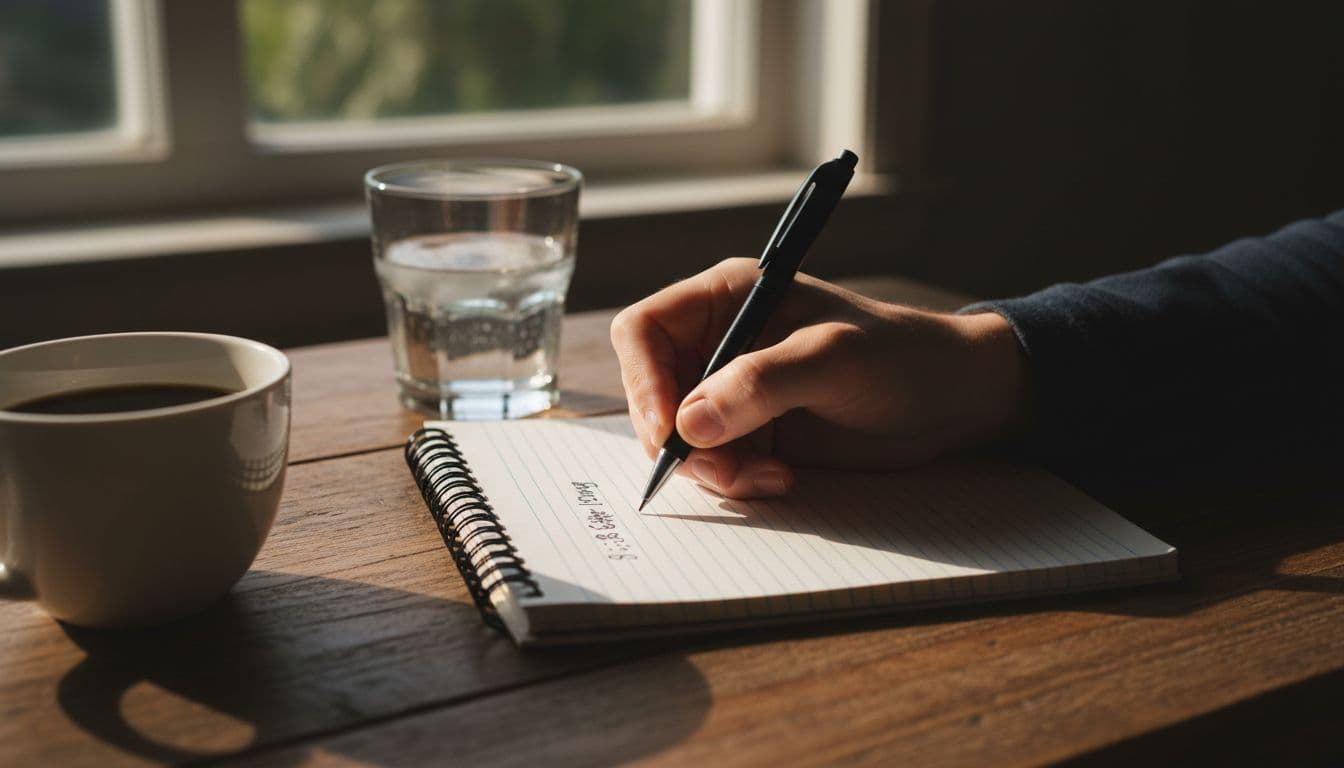
Patterns show up fast, like “jittery if I skip breakfast” signaling caffeine withdrawal, or “fine with tea, edgy with double espresso” hinting at caffeine dependence. That’s your personalised plan, and it beats generic advice.
Conclusion
Calm focus and alertness come from caffeine timing, not caffeine intensity. Delay your first dose, keep it smaller, and stop early enough to protect sleep. Then track what happens, because your body’s response is the final judge. Pick one change today, either a later first coffee or an earlier cut-off, and stick with it for seven days.
FAQ
How long should I wait after waking before my first coffee?
Many people do well waiting 90 to 120 minutes after waking before their first morning coffee. It often reduces jitters and makes the caffeine feel more effective.
What time should I stop caffeine to avoid sleep problems?
For optimal caffeine timing, a good starting point is 8 to 10 hours before bed. If you’re sensitive or anxious, stop earlier and see if sleep improves.
Why does caffeine sometimes feel like anxiety?
Caffeine can increase physical arousal, like a faster heartbeat. If you’re stressed, that body feeling can be mistaken for anxiety.
Is green tea better than coffee for focus without jitters?
For some people, yes. Tea is often lower in caffeine and sipped slower, which can feel steadier.
How do I prevent the 15:00 afternoon crash?
First, check lunch, hydration, and total caffeine to fend off the afternoon crash. Next, try a smaller mid-morning dose and avoid late caffeine that harms sleep.
Should I have caffeine on an empty stomach?
If you’re prone to anxiety or nausea, it’s usually better with food. A simple breakfast can make the effect feel smoother and more predictable.
Leave a Reply