
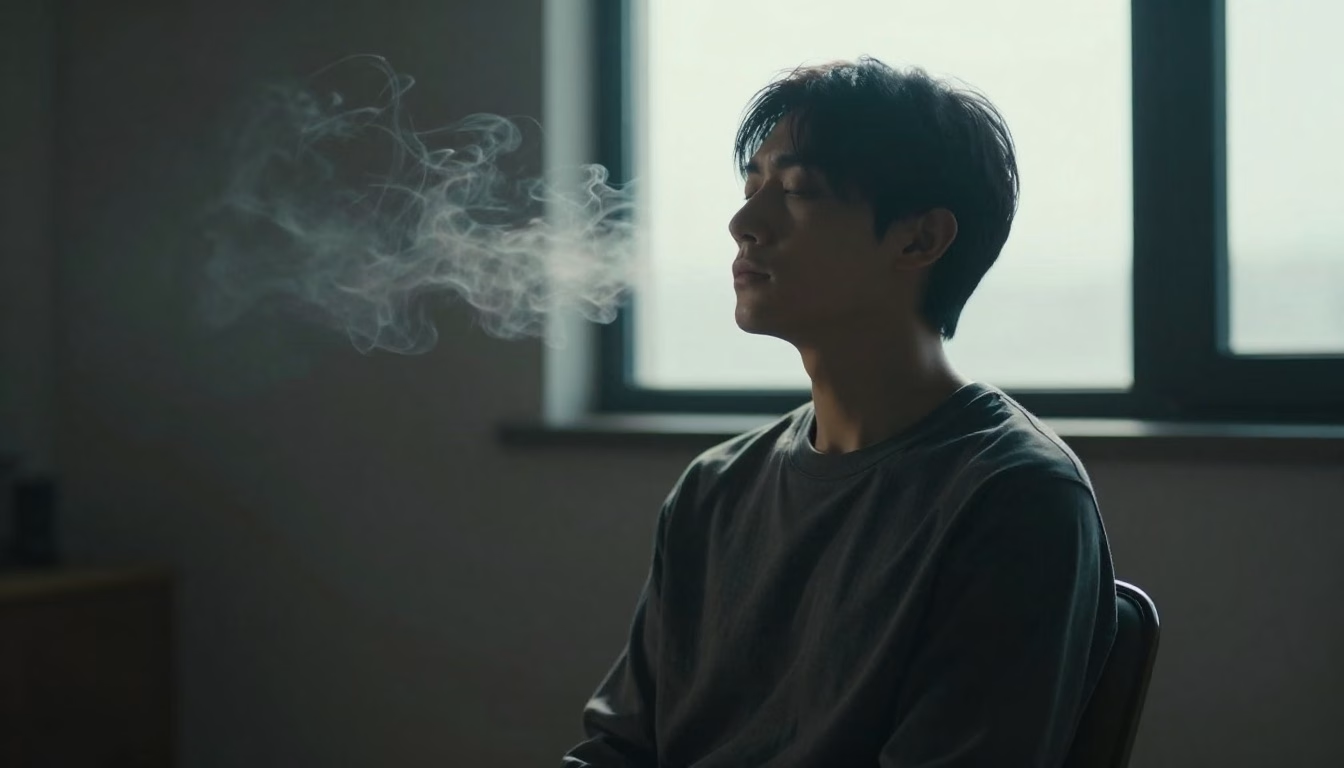
Your breathing pattern often changes before your thoughts catch up. When stress rises, many people start breathing faster, higher, and more shallowly, which can make the mind feel even less steady.
That’s why simple breathing exercises for anxiety can do two jobs at once. They can ease the physical feeling of panic, and they can help your attention stop bouncing around. You don’t need incense, silence, or 30 spare minutes. A few well-timed breaths can be enough to settle the noise and bring your focus back.
Why Breath Affects Anxiety And Focus So Quickly
Anxious breathing tends to stay high in the chest. The shoulders lift, the jaw tightens, and the body acts as if something urgent is happening. Your brain then reads those signals and keeps the alarm switched on.
Slow, controlled breathing can interrupt that loop. A longer exhale often helps most, because it nudges the body towards a calmer state. In plain terms, the body stops shouting, so the mind has a better chance of thinking clearly.
That’s one reason breathwork can help with concentration as well as nerves. If your system feels safer, it’s easier to read, write, revise, or sit through a meeting without your thoughts running off. NHS guidance on breathing and relaxation exercises reflects this practical link between slower breathing and reduced stress. If you want a brain-based view of the same process, this guide on how to shift from stress to focus adds helpful context.
Start With Diaphragmatic Breathing For Steady Calm
Diaphragmatic breathing sounds technical, but it’s simply belly breathing. Instead of hauling air into the upper chest, you let the stomach expand gently as you inhale. Think of filling a balloon low down, not puffing up your shoulders.
A simple way to practise it is this:
- Sit or lie down with one hand on your chest and one on your stomach.
- Breathe in through your nose and let the lower hand rise first.
- Exhale slowly through your nose or mouth, and let the belly soften.
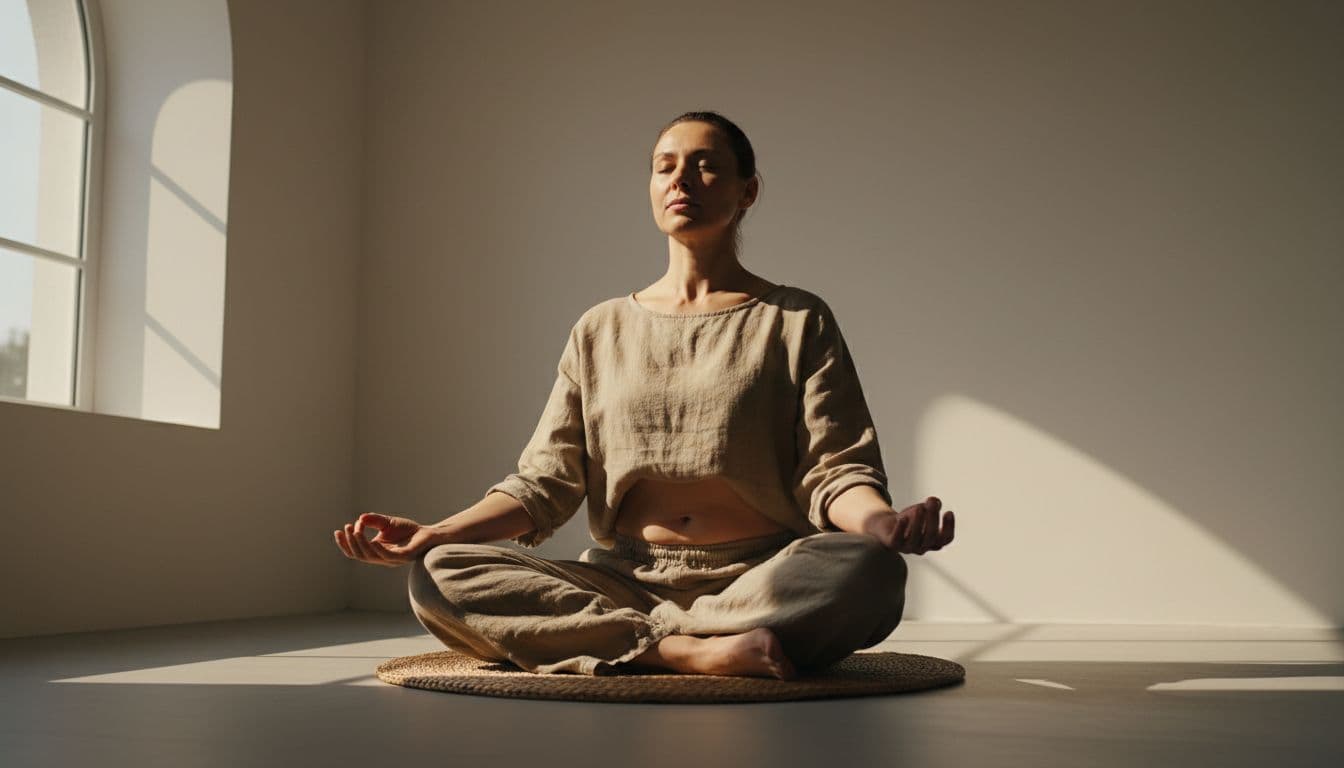
Keep the breath easy. Bigger isn’t better. If you force a huge inhale, you may feel light-headed, which defeats the point. Gentle and regular is what you want.
This technique suits beginners because it teaches control without much mental effort. It also works well before bed, after stressful travel, or whenever your chest feels tight. For a clear NHS-backed overview, how breathing can reduce stress and anxiety explains why this slower pattern can feel grounding.
Use Box Breathing When Your Thoughts Jump Between Tasks
Box breathing is useful when your mind feels scattered rather than deeply panicked. It gives attention something simple to follow, which can stop mental spiralling. That’s why people often use it before presentations, revision sessions, and demanding work.
The pattern is straightforward, inhale for four, hold for four, exhale for four, hold for four. Then repeat for four rounds. The equal rhythm can feel like putting your thoughts into neat squares instead of letting them spill everywhere.
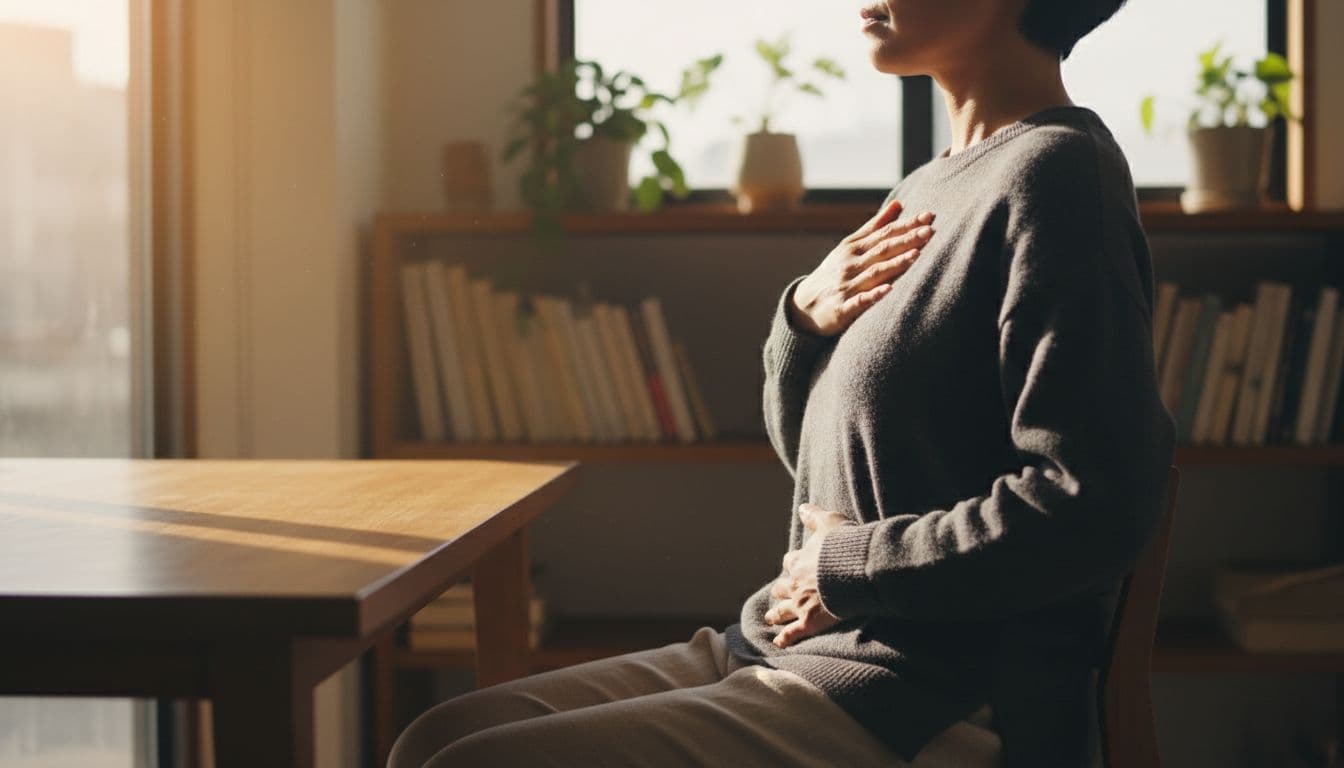
This method is especially good before you start a task that needs clear thinking. Try it before opening your inbox, joining a call, or reading a chapter that normally makes your attention wander. If the holds feel uncomfortable, shorten them to three seconds, or drop the final hold. The aim is steadiness, not strain.
When anxiety rises, don’t chase a perfect inhale. First, make the exhale smooth and controlled.
Try 4-7-8 Breathing For Sharper Anxiety Spikes
When anxiety hits harder, a longer exhale can be more helpful than a balanced rhythm. That’s where 4-7-8 breathing comes in. You inhale for four, hold for seven, and exhale for eight.
The long out-breath is the main event. It encourages the body to slow down, which can make racing thoughts less convincing. Many people use this method when they feel the first wave of panic, or when they can’t switch off after a stressful moment.
Go carefully, though. If seven and eight feel too long, scale it down. A 3-4-6 pattern still works well. You shouldn’t feel starved of air.
This technique is best used sitting still, not while driving or walking. And if panic attacks are frequent or severe, it’s worth pairing breathing practice with broader support, such as the NHS panic self-help guide.
Turn Breathing Into A Daily Concentration Ritual
Breathing works best when you don’t save it for bad days only. A short daily practice trains your body to find calm faster. It’s a bit like rehearsing a fire drill, you don’t want to learn the route when the alarm is already blaring.
Pick one repeatable moment. For example, breathe for one minute before studying, before your first work block, or after sitting down at your desk. Students can use it before revision. Professionals can use it before switching between meetings. Anyone can use it before checking messages, which often pull the nervous system into a rush.
Small routines matter because they reduce friction. You don’t need motivation each time, only a cue. Over time, that regular cue-response pattern can become part of how you enter focused work. If jittery energy keeps undermining your calm, these tips on caffeine timing for focus can help the rest of your routine support better attention as well.
Conclusion
Breath is not a magic fix, but it is a fast and practical tool. The best breathing exercises for anxiety are usually the simplest, belly breathing for steady calm, box breathing for scattered focus, and long-exhale methods for sharper spikes. Start with one practice, use it for a few minutes a day, and let repetition do the heavy lifting. Calm concentration rarely arrives all at once, but it does build, one steady breath at a time.
Leave a Reply