

When considering how to improve your red light sleep routine, it is helpful to understand your eyes. They contain special cells that react strongly to blue light exposure, even when a room does not seem particularly bright.
That is why your evening lighting choices impact your circadian rhythm more than many people think. If you are comparing bulbs, bedside lamps, or specialized therapy devices, the short answer is simple: red light can make nights less disruptive, but it cannot do all the heavy lifting on its own.
Its true value comes from what it replaces, how bright the light is, and when you choose to use it. That distinction makes all the difference in how well you rest.
Key Takeaways
- Dim red light usually disturbs your body clock less than bright white or blue-rich artificial light at night.
- Red light can support a calmer evening environment to assist with falling asleep, but it does not act like a sleeping pill.
- A red bulb, a red bedside lamp, and a bright red therapy panel are not the same thing.
- Brightness matters as much as colour, because even red light can be too intense.
- Red light helps most when it replaces overhead lighting, phone glare, and late-night bathroom lights.
- It will not cancel out caffeine, stress, late meals, or poor sleep hygiene.
- Morning daylight and a steady wake time matter more for sleep than buying a red bulb.
- Shift workers and parents may find dim red light useful for night-time tasks and easier return to sleep.
Why Red Light Gets So Much Attention
Light is one of the primary cues that tells your brain whether it is day or night. Within the visible light spectrum, different colors are perceived as different wavelengths. Blue-rich light pushes the system towards alertness, whereas longer, warmer wavelengths tend to interfere much less with your biology. This is why red light is frequently framed as the sleep-friendly choice for your evening environment.
What matters here is your circadian rhythm, the internal clock that helps time melatonin production, alertness, hunger, and sleepiness. Light at the wrong time can nudge that clock later, and evening blue light exposure, especially from bright cool bulbs and screens, often causes significant melatonin suppression.
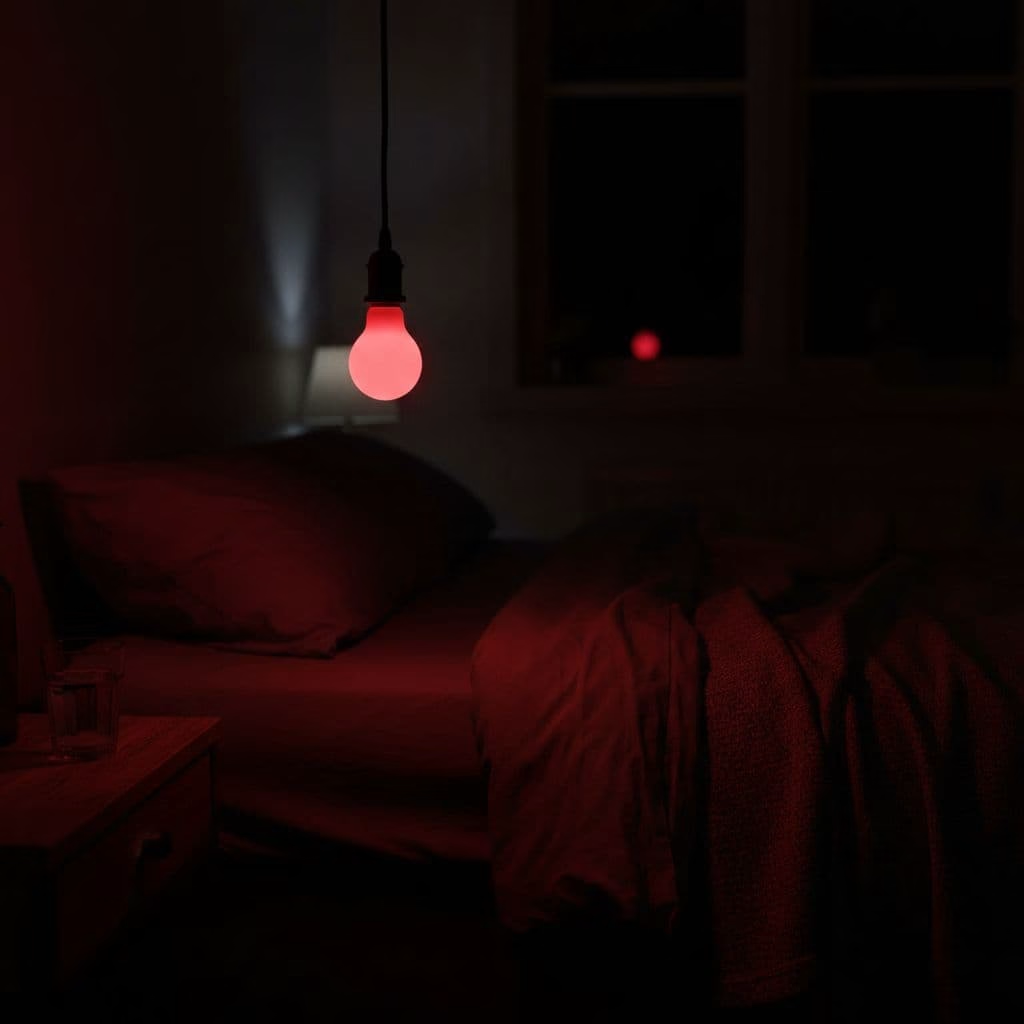
Red light gets so much attention because it stimulates the light-sensitive pathways in your eyes significantly less than blue or white light. In plain English, a dim red lamp is much gentler on your biology at night than a bright kitchen spotlight. That makes it a practical tool for your evening routine, midnight trips to the bathroom, or middle-of-the-night nursery checks.
Still, it is important to remember that being less disruptive is not the same as being sleep-inducing. A red bulb does not force your brain into sleep mode; it simply removes one common obstacle to your body’s natural wind-down process.
What Red Light Can Actually Do
The biggest benefit of red light for sleep is modest but real. It can reduce how much your evening lighting pushes your brain towards wakefulness. If you swap a harsh white bedside lamp for a dim red one, you are lowering one source of circadian friction, which can lead to a measurable improvement in overall sleep quality.
That can help in practical ways. Because red light is less disruptive to your night vision, you may feel less jolted during a night waking. Your eyes may feel less strained, and you will likely find it easier to settle back down after checking on a child, using the loo, or grabbing water. By avoiding harsh, bright light, you also reduce the intensity of sleep inertia, making it easier to transition back into rest.
For some people, the effect is strongest because their old setup was so bright. A ceiling light at 22:30 sends a very different message to the brain than a low red lamp in the corner. The improvement often comes from reducing light intensity and blue exposure at the same time.
Red light can also work as a behavioural cue. When you turn on the red lamp, close the laptop, and lower the noise level, your body starts to recognise a pattern. That pattern matters. Sleep often improves when the whole evening feels predictable and calm.
What Red Light Cannot Do
A red light cannot override poor sleep hygiene. If you are drinking coffee late, scrolling in bed, working under stress until midnight, or changing your bedtime every night, the colour of one lamp will not solve the problem.
It also won’t treat sleep disorders on its own. Insomnia, sleep apnoea, restless legs, chronic pain, depression, reflux, and hormone changes all affect sleep. In those cases, lighting may help at the edges of your sleep architecture, but it isn’t the primary fix.
Red light is best viewed as a supportive habit, not a treatment.
This matters because sleep products often blur the line between helpful and therapeutic. Some claims go too far. A red bulb may help you wind down, but it does not sedate you, repair a broken sleep schedule overnight, or replace medical care.
The same caution applies to red light therapy devices. Some small studies suggest sleep benefits in specific groups, but the evidence remains mixed, the devices vary significantly, and the study setups do not always match home use. A bright panel aimed at your face is not the same as a soft lamp by the bed.
Bulbs, Lamps, And Therapy Devices Are Not The Same
If you are shopping for a red-light sleep setup, it helps to separate simple room lighting from specialized wellness products. They often get lumped together, but they perform very different jobs.
| Option | What It Does Well | Main Limitation |
|---|---|---|
| Red bulb in a lamp | Replaces bright white light in the evening | Can still be too bright if the bulb output is high |
| Small red night light | Helps with night-time movement without blasting the room | Usually not bright enough for reading or tasks |
| Red or amber bedside lamp | Creates a calmer pre-bed environment | Works best only if the rest of the room is also dim |
| Bright red light therapy panel or mask | Delivers targeted light exposure for therapy-style use | Sleep benefit is less clear, and brightness may be counterproductive at night |
| Phone on red filter or night mode | Cuts some blue light from the screen | The screen still emits light and the content still wakes the brain |
The takeaway is simple: for most people, a standard dim red or amber lamp using LED lights is the most practical place to start. It changes the atmosphere of the room without requiring a complex new gadget habit.
Therapy panels sit in a different category. While standard red bulbs are for ambiance, red light therapy is designed for specific biological effects. These devices often utilize photobiomodulation, also known as low-level light therapy, to target tissues. Many devices also include near-infrared light, which penetrates deeper than visible light. For sleep, these devices can confuse the picture because they are often too bright for evening use. Furthermore, while these tools are excellent for recovery, they are not primarily designed for evening wind-down routines.
Using a smartphone in bed is another concern. Even if you apply a red filter, you are still subjecting yourself to blue light exposure through the screen, and the stimulating nature of the content can keep your brain active. Ultimately, a simple, inexpensive bulb can outperform an expensive red light therapy device if it effectively helps you avoid blasting your eyes with high-intensity light at the wrong time of night.
Brightness, Timing, And Routine Matter More Than Colour Alone
Colour matters, but brightness and timing are more important than many adverts suggest. A very bright red light at midnight is still bright light. If it illuminates the whole room like a shop display, you have missed the point of minimizing your exposure to artificial light before bed.
Aim for low light levels during the final hour or two while you are preparing for falling asleep. Use only as much illumination as you need to move around safely, read briefly, or get ready for the night. A small lamp placed below eye level often works better than an overhead fitting because it prevents direct glare from reaching your eyes.
Your body clock also responds to the wider pattern of the day. Evening lighting helps, but morning cues are stronger. That is why how morning light anchors your circadian rhythm often matters more than the exact shade of your bedside bulb.
Regularity counts as well. If your bedtime drifts and your wake-up time swings around, your brain receives mixed messages. A calmer evening is more effective when it is paired with a consistent wake-up time, as that repeated morning signal helps stabilize your sleep-wake cycle so that sleepiness arrives on time later in the evening.
Who May Notice The Biggest Difference
Some people see a clear benefit from red light because their nights include regular interruptions. Parents doing feeds or nursery checks often want enough light to function without feeling fully awake. A dim red lamp can help with that.
Shift workers can also find it useful, especially on the way into sleep after a late or night shift. If you are coming home tired, bright kitchen lights and bathroom mirrors can wake you up fast. Red or very warm dim light may make that transition easier.
People who wake once or twice at night may notice the same effect. Whether you are dealing with common sleep disruptions during perimenopause or simply need to navigate a dark hallway, red light is a gentler option that helps preserve your night vision. It may not stop the waking, but it can reduce how alert you feel during a midnight trip to the bathroom.
Still, some people should be more careful. If you are one of many light-sensitive individuals, have an eye condition, or suffer from light-triggered migraines, check with a clinician before using bright light devices. The same applies if you take medicines that increase light sensitivity. You should also consult a doctor if you have bipolar disorder or a history of mania, because light can affect mood and sleep timing in complex ways.
A Simple Evening Setup That Works In Real Life
You do not need a complicated system. A small change in the right place often beats a fancy setup that never becomes a habit.
Start with the room you use most before bed. Replace one bright bulb with a dim red or warm amber LED light, or use a low bedside lamp instead of the ceiling light. Keep the light source off to the side and below eye level if you can.
Then, build a consistent bedtime routine around it:
- About 60 to 90 minutes before bed, switch off bright overhead lights.
- Use the dim lamp for reading, getting changed, or light chores.
- Keep screens lower, briefer, and farther from your face.
- During the day, get outdoor light soon after waking and keep your wake time fairly steady.
If you need light during the night, keep it brief and local. Light the path, not the whole room. That usually works better than leaving a stronger light on all night, as it helps you focus on falling asleep afterward.
Amber can also be a good choice if pure red feels too dark or strange. The best evening light is the one you will use consistently, because habit beats perfection here.
Conclusion
Red light can help your red light sleep routine in one clear way: it makes your evening environment less likely to push your brain towards alertness. That is useful, especially for night wakings, parents, and anyone trying to cut down on harsh late-night lighting to improve their overall sleep quality.
Its limits matter as much as its benefits. Red light will not fix insomnia, erase stress, or replace strong daytime cues like morning daylight and a regular wake time. It is also important to note that a simple bulb is not the same as clinical red light therapy, which uses specific wavelengths and intensities for targeted physiological effects.
A practical next step is simple. Swap one bright evening light for a dim red or amber one, use it for a week, and judge the change by how easy it feels to wind down and fall back asleep after waking.
FAQ
Is red light better than amber or warm white for sleep?
Usually, dim red light is less disruptive than bright cool white light because it operates at specific wavelengths, typically around 600 to 700 nanometers, which have less impact on your circadian rhythm. Amber and very warm white lights can also work well if they are dim enough. Ultimately, minimizing blue light exposure is the most important factor for protecting melatonin production and maintaining a healthy sleep-wake cycle. In real life, brightness often matters more than splitting hairs over the exact shade or the specific nanometers of the light source.
Can I leave a red light on all night?
You can, but dimmer is better. If the light is bright enough to illuminate the whole room, it may still disrupt your sleep quality or lead to sleep inertia when you wake up. A small night light or low lamp is usually a better choice than a stronger bulb left on until morning.
Do red light therapy panels help you sleep?
They might help some people, but the evidence is mixed and the devices vary significantly. Unlike a bedside lamp, professional red light therapy focuses on cellular health, aiming to support mitochondria and boost ATP production while helping to reduce oxidative stress and inflammation. However, these devices can cause skin warming and may stimulate cortisol levels if used too close to bedtime. If your goal is simply better sleep, start with dim room lighting rather than using high-intensity therapy panels.
Does red mode on a phone help at night?
It can reduce the blue light that suppresses melatonin, which is better than using a bright standard screen. Still, the phone remains an active light source, and the content can keep your brain engaged. A red filter is a partial fix, not a free pass for late-night scrolling.
How long before bed should I switch to red light?
A good starting point is 60 to 90 minutes before bed. Some people prefer two hours if they are sensitive to light or struggle to switch off. The key is consistency, not chasing an exact minute mark.
Can red light help babies or children sleep?
Dim red light can make night-time care less disruptive for adults and may keep the environment calmer. It won’t stop normal waking, feeding needs, or sleep regressions. Keep the room safe, dark enough for sleep, and simple.
When should I speak to a GP instead of changing my lighting?
Talk to a GP if sleep problems last for weeks, affect daily life, or come with loud snoring, gasping, severe daytime sleepiness, low mood, or restless legs. Lighting tweaks are fine for mild support, but ongoing sleep trouble deserves proper assessment.
Leave a Reply