
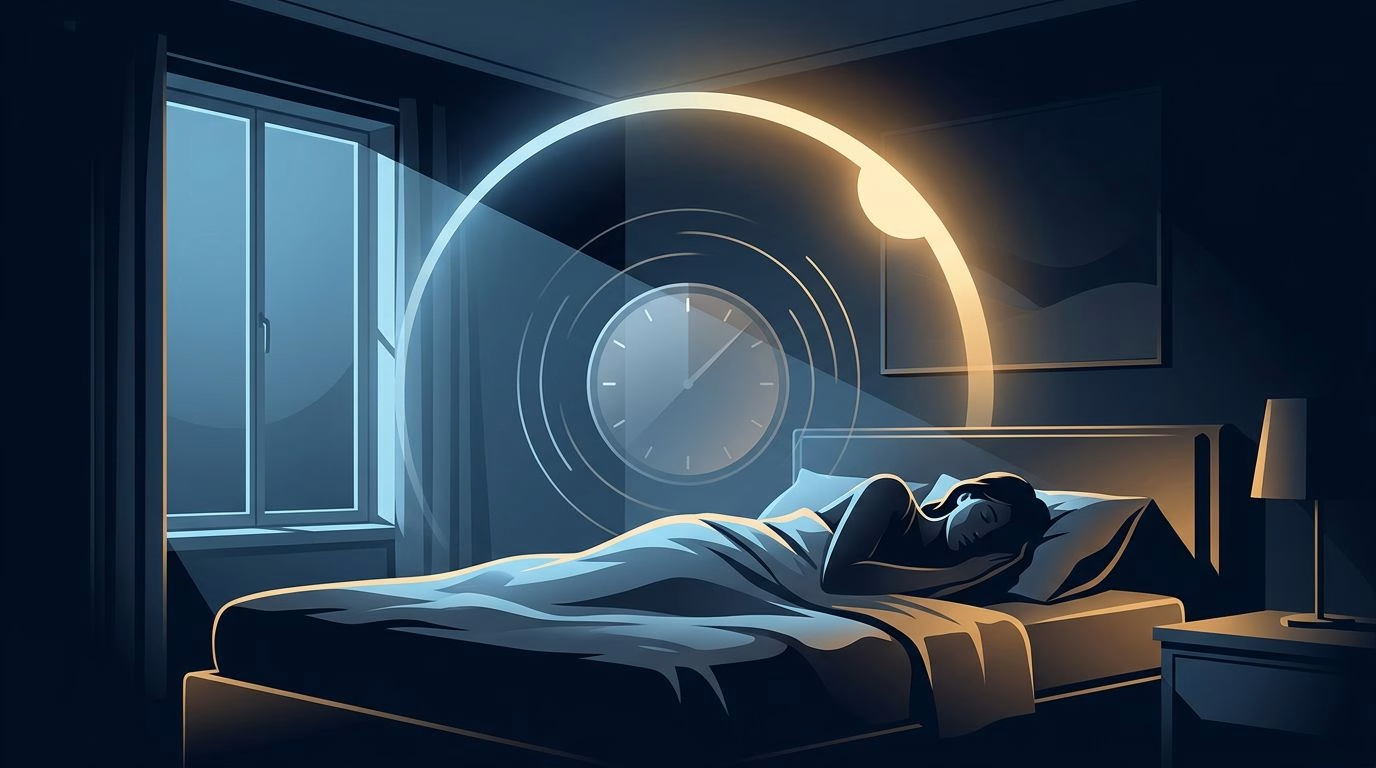
Studies estimate that non-24-hour sleep-wake disorder affects 55% to 70% of blind individuals who are totally blind and have no light perception. For these individuals, and the smaller number of sighted individuals affected, the sleep-wake cycle can shift later each day despite determined efforts to keep a routine.
This condition is a recognised circadian rhythm disorder, not simply poor sleep or an occasional late night. Its biological clock follows a circadian rhythm that can move away from the 24-hour day, disrupting work, relationships, safety and mental wellbeing.
Key Takeaways
- Non-24 causes a free-running rhythm as the circadian rhythm drifts later each day instead of matching the 24-hour day.
- Insomnia and daytime sleepiness often alternate as the drifting sleep period moves in and out of sync with daily life.
- It is most common in blind individuals with no light perception, although sighted individuals can also develop it.
- A sleep diary and actigraphy record should usually cover at least 14 days to show the repeating pattern.
- Treatment focuses on entrainment, helping the body clock match a stable 24-hour routine.
- The timing of melatonin matters more than taking a large dose at a convenient bedtime.
- Tasimelteon is an FDA-approved melatonin receptor agonist for Non-24 in the United States, mainly studied in totally blind adults.
- For sighted people, bright light or light therapy may help, but timing needs professional guidance.
- Regular routines can reduce disruption, yet they do not replace proper assessment and treatment.
What Non-24-Hour Sleep-Wake Disorder Means
Your circadian rhythm is an internal timing system that regulates sleepiness, alertness, core body temperature and hormone release. A tiny region in the hypothalamus, called the suprachiasmatic nucleus, acts as its main timekeeper.
Daylight is the strongest signal that resets this clock. Light entering the eyes helps the brain distinguish morning from evening, while darkness supports the release of melatonin later in the day.
With this condition, the clock fails to synchronise with the external day. The person’s sleep-wake cycle follows a free-running rhythm because normal entrainment to daylight breaks down. Its internal circadian rhythm may exceed 24 hours, moving sleep later by minutes or hours each day. Someone may sleep from 23:00 to 07:00 one week, then naturally sleep from 04:00 to midday later that month.
The condition does not mean a person is lazy or needs less discipline. When their biological clock happens to align with night-time, they may sleep soundly and wake rested. Problems return when that internal timing moves away from work, family and daylight hours.

Non-24-Hour Sleep-Wake Disorder Symptoms
The clearest sign is a free-running rhythm, with bedtime and waking time moving forward each day. This occurs when the circadian rhythm no longer stays aligned with the 24-hour clock.
Unlike delayed sleep phase disorder, the schedule does not remain consistently late. It continues drifting around the clock, bringing sleep to different parts of the day.
During a misaligned period, a person may lie awake for hours when they need to sleep, resulting in insomnia. When morning commitments arrive during their biological night, they may experience overwhelming daytime sleepiness. These periods alternate as the timing continues to shift.
Poor concentration, memory lapses, low mood, irritability and headaches may also occur. Sleep deprivation can worsen these effects, but it is not the defining cause. These symptoms alone do not establish a diagnosis, though routine tasks and safety may become harder.
A person can get enough total sleep on some days and still have Non-24 if their sleep timing continues to move around the clock.
The pattern can be especially confusing because symptoms are not always present. A few days of good sleep may be followed by a difficult fortnight. Keeping a long-term record helps reveal the pattern that a single bad night cannot show.
Why Blind And Sighted People Can Develop It
Non-24 is strongly linked to total blindness without conscious light perception. For blind individuals, the suprachiasmatic nucleus receives no reliable daylight signal, so the circadian rhythm lacks its usual daily reset. The internal clock may then run longer than 24 hours.
Blindness itself does not automatically cause Non-24. Some blind people retain enough light perception for their biological clock to respond to day and night. A specialist can assess symptoms rather than making assumptions based on eyesight alone.
The condition is rare among sighted individuals, but non-24-hour sleep-wake disorder can occur. Reports link some cases to traumatic brain injury, neurological conditions or an unusually long intrinsic rhythm. A sudden, persistent change in sleep timing after a head injury needs medical assessment.
Irregular work hours, late-night screens and weekend lie-ins can create a phase delay, but they do not prove a free-running rhythm. A late but stable pattern may simply reflect a person’s natural body clock and chronotype. A genuinely shifting circadian rhythm continues to move, even when someone tries to hold the same routine.
Diagnosing A Drifting Sleep-Wake Cycle
Start with a GP if your sleep times keep changing and daily life is suffering. This pattern may indicate non-24-hour sleep-wake disorder, a circadian rhythm disorder. They can review medicines, mental health, physical illness and other sleep disorders, then refer you to a sleep specialist if needed.
Diagnosis depends on the pattern over time. A circadian rhythm that progressively shifts is more informative than one poor night. The American Academy of Sleep Medicine advises recording progressively shifting sleep times with a diary, actigraphy, or both, for at least 14 days. Symptoms generally need to have persisted for at least three months.
A sleep diary records when you tried to sleep, your estimated sleep onset, when you woke, naps, caffeine, alcohol and any medication. Actigraphy uses a watch-like movement sensor to estimate periods of rest and activity. Together, they give a clearer picture than memory alone.
| Pattern Seen Over Time | What It May Suggest |
|---|---|
| Sleep shifts later most days | A free-running rhythm such as Non-24 |
| Sleep stays late but remains stable | A phase delay or late chronotype |
| Sleep changes around shifts or weekends | Shift-work effects or social jet lag |
| Sleep is poor at all times | Insomnia or another sleep disorder may be involved |
A sleep specialist may also assess circadian rhythm timing by measuring melatonin release. Repeated urine, saliva or blood samples can track its by-product, 6-sulphatoxymelatonin. This can help show timing coordinated by the suprachiasmatic nucleus and support diagnosis when the pattern is unclear.
An overnight sleep study may help rule out sleep apnoea or periodic limb movements. Still, one night in a laboratory cannot usually confirm a disorder defined by a schedule that drifts over weeks.

Treatment For Non-24-Hour Sleep-Wake Disorder
Treatment aims to establish entrainment to a 24-hour day and stabilise the circadian rhythm. It isn’t simply about making someone sleepy at night, but guiding a free-running rhythm into a regular sleep-wake cycle.
Timed cues can influence the central clock, including the suprachiasmatic nucleus. The plan depends on light perception, the current sleep phase, other health conditions and daily responsibilities.
Carefully Timed Melatonin
Melatonin can act as a timing cue for the circadian rhythm. A clinician may recommend a low dose at a carefully chosen time to shift the rhythm earlier. Taking it at the wrong time can be unhelpful and may move the rhythm in the wrong direction.
The best timing is individual. Melatonin may be needed well before the person’s natural sleep onset, rather than at their chosen bedtime. For that reason, don’t change its dose or timing repeatedly without advice from a GP, pharmacist or sleep specialist.
Chronotherapy involves deliberate schedule shifts, but it isn’t suitable for everyone and should be specialist-led, not a DIY alternative.
This treatment isn’t a universal sedative for insomnia. Cognitive behavioral therapy may help the coexisting problem, but it doesn’t by itself correct the underlying timing pattern. The overall plan works best when based on tracked sleep timing.
Tasimelteon And Receptor Agonists
This medicine is a melatonin receptor agonist. The US Food and Drug Administration has approved tasimelteon for Non-24, and it’s sold there under the brand name Hetlioz. Clinical evidence is strongest for adults with no light perception.
The medicine can help some people achieve entrainment to a 24-hour pattern, although it doesn’t work instantly for everyone. Access, licensing and prescribing arrangements can differ in the UK. Discuss tasimelteon with a specialist rather than trying to source it independently.
A prescriber should also review other medicines, supplements and health conditions before starting any treatment that affects timing. Consistent use and careful monitoring matter because the desired change is gradual.
Morning Light And Daily Time Cues
For sighted individuals, morning bright light can help advance the circadian rhythm. Outdoor daylight after waking is useful, while a medically suitable light box may be recommended in some cases. Light therapy does not provide the same benefit for blind individuals without usable light perception.
Timing remains important. Bright light at the wrong point in a person’s cycle may cause a further phase delay. People with eye conditions or bipolar disorder should seek medical advice before using such a device.

Making Daily Life More Manageable
A diagnosis can make unpredictable sleep feel less personal and more manageable. Track sleep and symptoms consistently, including days when sleep feels normal. That record helps your clinician adjust treatment and helps carers understand why your availability changes.
Daily cues may support your sleep-wake cycle. Regular meals, gentle movement after waking and lower light levels before the planned sleep period may reinforce circadian rhythm timing. Together, these habits form useful sleep hygiene, but good sleep hygiene cannot necessarily provide entrainment for a genuinely drifting rhythm. Avoid late caffeine and long, unplanned naps, which can worsen sleep deprivation during a difficult phase.
For many people, a regular wake time supports better sleep. Why consistent wake times matter explains how morning timing can anchor a typical schedule and support entrainment. With a drifting pattern, this approach remains supportive, but it may not be enough without medical treatment.
Practical adjustments can protect work and safety. Medical documentation may help you discuss flexible starts, remote working or adjusted hours with an employer. Avoid driving, operating machinery or making high-risk decisions when daytime sleepiness is severe.
Carers can help by respecting the condition’s shifting nature. A person may need support arranging appointments, explaining changing availability or protecting a sleep period that falls at an inconvenient time.
Conclusion
A sleep-wake cycle that shifts later each day needs assessment, not generic sleep hygiene alone. Non-24-hour sleep-wake disorder is a circadian rhythm condition requiring long-term tracking and individual care.
A GP or sleep specialist can distinguish it from insomnia, delayed sleep phase disorder and social jet lag. Accurate timing supports entrainment and helps the body align with the external 24-hour day, so seek assessment if the pattern continues.
FAQ
Is Non-24 The Same As Delayed Sleep Phase Disorder?
No. Delayed sleep phase disorder involves a consistently late sleep schedule, while insomnia can involve isolated difficulty sleeping. With Non-24, the preferred bedtime and waking time keep drifting later over days and weeks.
Why Does Non-24 Affect Totally Blind People More Often?
Many blind individuals without light perception do not receive the daylight signals that reset the circadian rhythm. Without that daily cue, the circadian system can run freely instead of matching the 24-hour day.
Can Sighted People Have Non-24-Hour Sleep-Wake Disorder?
Yes, although non-24-hour sleep-wake disorder is uncommon. A specialist should assess sighted people carefully because a circadian rhythm disorder, delayed sleep phase disorder, shift work, medication, mental health conditions or neurological conditions can cause similar symptoms.
How Long Should I Keep A Sleep Diary?
A sleep diary and actigraphy record should usually cover at least 14 days. Longer records are often more useful because Non-24 creates a repeating pattern that may take weeks to become obvious.
Do I Need An Overnight Sleep Study?
Not always. A sleep study does not usually diagnose a drifting sleep-wake pattern, but it can identify conditions such as sleep apnoea that may worsen daytime sleepiness.
Can Pharmacy Melatonin Treat Non-24?
Melatonin may help, but the timing matters as much as the product. It may need to be taken before your natural sleep onset. Ask a pharmacist, GP or sleep specialist before using it, especially if you take other medicines or have ongoing health conditions.
How Effective Is Tasimelteon?
Tasimelteon is a melatonin receptor agonist that helps some people, particularly totally blind adults with Non-24. In the US, it is FDA-approved as Hetlioz for this condition, but UK access and prescribing arrangements can differ. It is not a quick fix, so a specialist should assess whether this treatment is suitable and available to you.
Will Bright Light Therapy Work If I Am Blind?
Light therapy relies on light reaching the circadian system through the eyes. It is unlikely to reset the sleep-wake pattern for someone with no light perception, although a clinician can advise based on individual vision.
Can A Strict Routine Cure Non-24?
A stable routine can support your sleep-wake cycle and circadian rhythm, while good sleep hygiene may reduce disruption. However, routine cannot necessarily cure a genuinely free-running rhythm or provide entrainment on its own, so professional assessment remains important.
Leave a Reply