

While a normal body temperature is generally considered to be 37C, your actual core body temperature fluctuates significantly throughout the night as part of your natural sleep cycle. Your body usually reaches its lowest night-time temperature shortly before dawn, rather than in the middle of the night. If you find yourself consistently waking at 04:30 or 05:00, that timing may reflect your underlying biology more than simple bad luck.
The core body temperature minimum serves as the primary biological marker for your internal clock, signalling the precise rhythm of your circadian timing. When this low point shifts earlier in the night, the rest of your morning physiological signals often shift along with it, and persistent early waking can frequently follow.
Key takeaways
- Your core temperature follows a daily rhythm, and its lowest point often lands a few hours before your usual wake time.
- Many people wake during the temperature rise after that low point, not at the low point itself.
- Experiencing an early morning wake-up can occur when your body clock shifts earlier, often because of light exposure, daily routine, age, or shift work patterns.
- A fixed wake-up time near the same hour each day often points to circadian timing rather than random insomnia.
- Alcohol, anxiety, hot flushes, sleep apnoea, pain, and a warm bedroom can also cause early waking without changing your body clock.
- Wearables usually track skin or wrist temperature, not true core temperature, so trends matter more than single-night readings.
- If you want to shift an early pattern later, light timing and wake time matter more than simply going to bed earlier.
- Persistent early waking with snoring, low mood, weight change, or severe fatigue deserves a chat with a GP.
What Core Body Temperature Minimum Actually Means
Your body temperature is not fixed across the day. It rises and falls in a regular pattern, guided by your circadian rhythm, sleep pressure, light exposure, hormones, and behaviour. At the centre of this process is the hypothalamus, which acts as the body’s control centre for thermoregulation. By constantly adjusting your set-point temperature, the hypothalamus maintains normothermia to ensure your biological systems function optimally.
The term core body temperature minimum refers to the lowest point in this 24-hour cycle. Sleep researchers also call it the body temperature nadir. As metabolic activity decreases during your rest period, your internal temperature gradually drops to reach this lowest point. This cycle reflects the timing of your internal clock more than the temperature of your bedroom or the reading on your skin.
That distinction matters because core body temperature and skin temperature often move in different ways. During sleep, your body sheds heat through the hands, feet, and skin to facilitate cooling, while your deep internal temperature reaches its lowest level. This process is essential for setting up deeper sleep during the first part of the night.
The minimum point is not a magical switch. Still, it marks the late stage of your biological night. After it passes, your system starts moving towards wakefulness. Melatonin falls, alertness rises, and temperature begins to climb again as your circadian rhythm shifts into a daytime state.
Most people do not wake at the night’s coldest point. They wake as the body starts warming for the day.
The low point also does not happen at the same clock time for everyone. It shifts with your chronotype, light exposure, work pattern, travel, illness, alcohol, and menstrual cycle phase. Consequently, the specific data provided by a tracker matters less than the broader, underlying timing pattern of your internal rhythm.
When Your Lowest Temperature Usually Occurs
For most adults with a regular schedule, the core body temperature reaches its lowest point about two to three hours before their usual wake time. If you normally wake at 07:00, your minimum may land around 04:00 to 05:00. If you are a later chronotype, it often lands later as well.
That timing is one reason a 05:00 wake-up can feel oddly consistent. It may not be random; your body may simply be finishing its biological night earlier than you want.
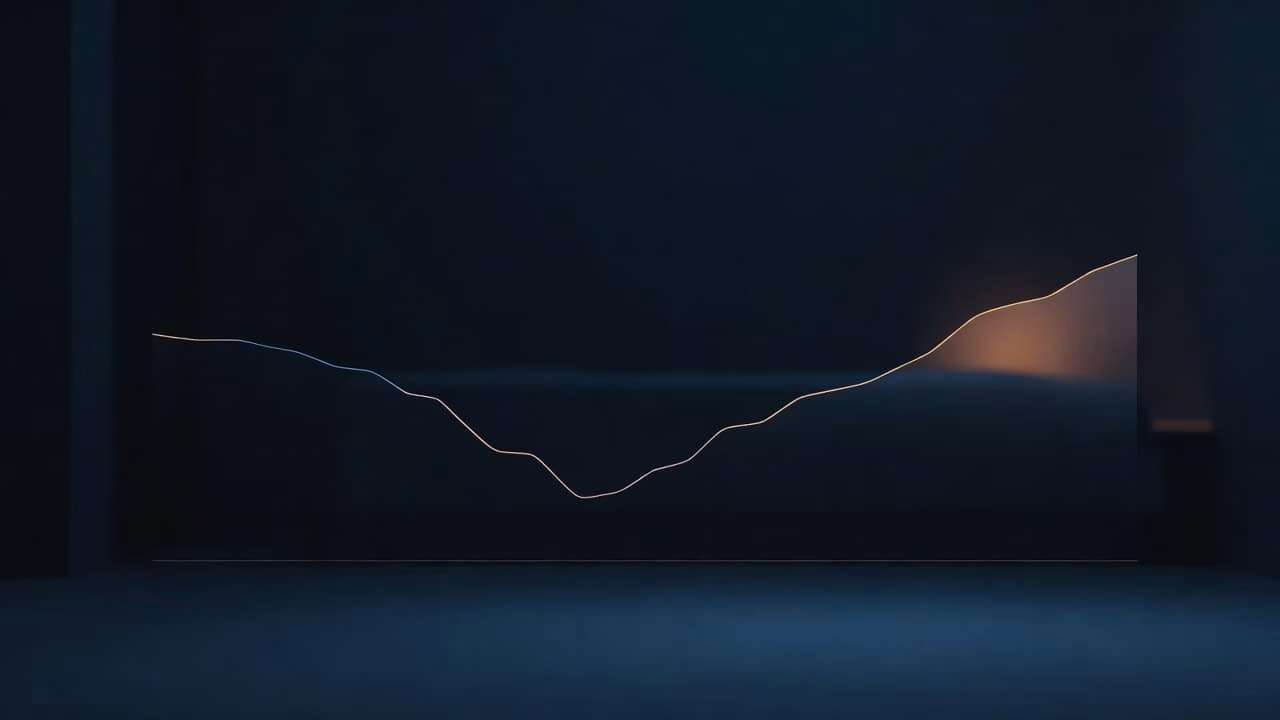
The curve across the night tends to follow a clear shape. Temperature drops after evening, reaches its nadir in the early morning hours, and then climbs towards sunrise. Sleep stages also change across that period, with more REM sleep later in the night and a greater chance of lighter sleep before waking.
Your natural timing matters here. Someone with an early chronotype may hit that low point well before dawn, while a night owl may still be on the downward slope when an early alarm goes off. Furthermore, hormonal fluctuations such as those related to the menstrual cycle can cause this timing to shift slightly throughout the month. If you want more background on this pattern, understanding your natural sleep and wake tendencies can help you judge whether your wake time fits your built-in rhythm.
Shift workers often get the messiest picture. A week of early starts can pull the clock forward, then a late weekend can drag it back again. The body clock dislikes that tug-of-war, so the temperature minimum can become harder to predict.
Why Early Wakeups Often Happen On The Upswing
The common idea is that early waking means your sleep ran out. Sometimes that is true. Often, though, you wake because your system has transitioned onto the upward side of the temperature curve.
As your metabolic activity begins to increase, your core body temperature starts to rise, signalling to the brain that it is time to wake. During this early morning transition, melatonin levels fall away while alertness signals begin to build. Blood pressure starts edging up, and in the same window, the morning cortisol rise begins to prepare you for the day ahead.
That is why some early wakeups feel sharp and final. You are not tossing and turning in a half-asleep fog. You wake, your mind clicks on, and getting back to sleep feels almost impossible. The clock may say 04:45, but your body may already be moving into its daytime programme.
This is also why forcing an earlier bedtime does not always help. If you go to bed at 21:00 and still wake at 05:00, you may simply be giving yourself an eight-hour sleep window that finishes before sunrise. In that case, the problem is not broken sleep. The problem is timing.
The morning handover includes more than temperature. It also depends on the role of cortisol in the sleep-to-wake transition. When those signals line up early, waking can happen before the alarm and feel surprisingly settled rather than jarring.
What Can Pull The Clock Earlier
Light is the biggest driver. Bright light soon after waking sends signals to the hypothalamus, which processes these inputs to pull your internal clock earlier when used day after day. On the other hand, light in the late evening can push the clock later. So, if you walk outside at 05:30 every morning, your body may treat that as a strong cue that the day starts early.
Routine also shapes the pattern. Early meals, early exercise, and a rigid early wake time can all reinforce a phase-advanced schedule. That is one reason some people feel stuck with a 04:30 wake-up even on days off.
Age and biology play a significant part as well. Older adults often drift earlier, with sleep and wake times shifting forward over time. Menopause or hormonal fluctuations throughout the menstrual cycle can add another layer, as these physiological changes influence body temperature regulation and can break the second half of the night, even when the underlying clock has not shifted much. Genetics matter too, as some people are simply built to wake early.
Stress changes the picture in a different way. It may not move the clock much, but it can make the last few hours of sleep lighter and easier to interrupt. If you are already near the temperature upswing, stress can tip you into full wakefulness. The same goes for long daytime naps, spending too much time in bed, or sleeping in late after a poor night. Those habits lower sleep pressure, so the early-morning rise meets a brain that is no longer sleepy enough to stay asleep.
Travel and shift work can push timing around even faster. Eastbound travel often brings earlier waking for a few days. Early shifts can do the same if they repeat often enough. By contrast, a run of late shifts or bright light at night can push the minimum later.
Why Some Wakeups Are Not About Circadian Timing
Not every early wakeup is driven by your internal clock. Many disturbances occur during the second half of the night, when sleep is naturally lighter and your body is more sensitive to its environment. It is important to distinguish these situational factors from genuine circadian rhythm issues, as well as from medical emergencies like hypothermia or hyperthermia, where the body loses its ability to maintain a normal body temperature within a safe, narrow range.
A bedroom that is too warm is a common culprit. Your body needs to shed heat during sleep, so a hot room can impede this process and increase the likelihood of waking. Alcohol is another classic trigger. While it may help you drift off, it often fragments the second half of the night and leads to earlier waking. Physical discomfort, such as pain, acid reflux, a full bladder, hot flushes, or noisy surroundings, can have a similar effect.
Breathing issues are also significant. Signs such as snoring, gasping, a dry mouth upon waking, or heavy daytime sleepiness may point to sleep apnoea. These interruptions are distinct from a circadian wake-up, even if they happen during those early hours. Similarly, anxiety and low mood often manifest as waking between 03:00 and 05:00, frequently accompanied by racing thoughts or a lingering sense of dread.
A practical clue is consistency. If you wake near the same time on most days, regardless of your bedtime, circadian timing is more likely the cause. Conversely, if your wake time shifts based on your intake of alcohol, stress levels, room temperature, or specific symptoms, the cause is likely situational.
When the pattern feels mixed, keep it simple. Track your wake time, bedtime, alcohol and caffeine intake, room temperature, light exposure, and any symptoms for two weeks. Patterns usually become much clearer once you stop judging each night in isolation and look at the broader picture of your sleep hygiene.
What Wearables Reveal, And What They Miss
Wearables can be useful, but they do not reveal the entire story. Most consumer devices, including the Oura ring, Apple Watch, and Whoop, track skin temperature or peripheral body temperature trends while you sleep. They do not measure true core body temperature with the same level of accuracy as a laboratory study, which typically relies on rectal temperature or oral temperature readings for higher precision.
That does not make your wearable useless. It simply means you should interpret the data as rough timing clues rather than precise clinical measurements. A steady drift towards earlier temperature changes across two or three weeks can still tell you a great deal, especially when the data aligns with earlier waking times. Many athletes also track these metrics alongside VO2 max and heat training to monitor their physical performance and recovery, adding another layer of complexity to the data.
Context always matters more than a single graph. Compare your temperature trend with your bedtime, wake time, morning light exposure, training load, alcohol intake, menstrual cycle phase, and room conditions. If your wrist temperature spikes on one warm night, that does not necessarily mean your circadian rhythm has changed. It may simply mean the bedroom was too stuffy.
The best way to use these tools is to look for repeated patterns. Do you wake early after several days of bright outdoor light at dawn? Does your low-temperature phase seem delayed after a week of late evenings? Do early shifts drag your wake time forward, even after you attempt to recover at the weekend? Those are the clues worth investigating.
If your schedule feels chaotic, using wake time as an anchor for better sleep usually provides more useful feedback than obsessing over your bedtime. A regular wake time gives the body clock one clear, consistent message every day.
How To Shift The Pattern Back
If your early wakeups originate from an early body clock, going to bed even earlier often backfires. You may fall asleep sooner, only to complete your sleep cycle earlier and wake up even sooner. A better first move is to hold your bedtime steady or shift it slightly later, then observe whether your waking time moves in sync.
Light timing is the most effective lever. If you are trying to mitigate a strong early shift, reduce your exposure to very bright light the moment you wake, and seek more light in the late afternoon or early evening. You do not need to live in darkness all morning; the goal is simply to avoid giving your internal clock an even earlier nudge.
Daily habits are most effective when they point in the same direction. Keep meals at regular times, avoid long naps, and limit caffeine late in the day. Maintaining a consistent temperature is also vital. Practices like heat acclimation can help stabilise your system, as can keeping the bedroom cool, dark, and quiet. Many people sleep best with the room on the cooler side, often around 17 to 19 C. To track your progress, monitoring your basal body temperature alongside your core body temperature can provide helpful data to identify if your efforts to shift your circadian pattern are working.
Shift workers require a different approach. After a night shift, bright daylight on the commute home can pull the clock in the wrong direction. Dark glasses worn outdoors, a pitch-black bedroom, and a fixed sleep block can help protect daytime rest. For those on early shifts, try to keep the pattern stable throughout the week rather than swinging between your work schedule and your weekend routine.
If anxiety, hot flushes, snoring, pain, or low mood are part of the picture, address those factors first or alongside your timing adjustments. Body clock tweaks will not solve everything. When early waking has lasted for weeks and leaves you feeling exhausted, a GP can help rule out common medical causes and decide whether you need further support.
Conclusion
Early waking often begins before you even open your eyes. It starts when your core body temperature minimum is reached, marking the lowest point of your cycle before your internal clock begins the climb towards the day.
Understanding this biological rhythm explains why the same early wake-up time can happen night after night, even when your bedtime shifts. If you want to adjust this pattern, start by focusing on consistent timing, strategic light exposure, and a steady evening routine, whilst remaining mindful of other potential sleep disruptors.
Track your sleep patterns for at least two weeks rather than focusing on a single bad night. Your internal clock usually tells its own story when you give it enough time to reveal the underlying trends. By aligning your habits with your core body temperature minimum, you can begin to regain control over your morning wake-up time.
FAQ
What is the difference between core body temperature and skin temperature?
Core body temperature refers to the heat levels within your body, specifically around your vital organs and brain. In contrast, skin temperature fluctuates much more rapidly in response to your environment, such as the room temperature, your bedding, and changes in blood flow to the skin’s surface. While many modern wearables track skin temperature or peripheral measurements from the wrist, these are distinct from a true basal body temperature or internal core reading, which is typically used for precise medical assessment. Consequently, wearable data provides helpful insights rather than exact core readings.
What time does the core body temperature minimum happen?
For most adults, the internal temperature minimum occurs approximately 2 to 3 hours before their habitual wake time. For example, if you typically wake at 07:00, your lowest temperature point likely falls between 04:00 and 05:00. However, the exact timing varies based on your chronotype, daily light exposure, recent travel, and your established work pattern.
Can waking at 04:00 be normal?
Yes, this can be considered normal if your body clock is set to an earlier rhythm and you are still achieving sufficient total sleep. If you naturally fall asleep between 20:30 and 21:00, a 04:00 or 05:00 wake-up aligns with your internal biological rhythm. It only becomes a clinical concern if it leaves you feeling fatigued, distressed, or unable to function effectively throughout the day.
Does anxiety cause early morning waking?
Anxiety is a common trigger for early awakenings. It often causes sleep to become lighter during the second half of the night, which is precisely when many people find themselves wide awake with a racing mind. If your wake-up time is driven by psychological stress rather than your internal body clock, you may notice that the hour you wake varies significantly from one night to the next.
Can a cooler bedroom stop early wakeups?
In some cases, yes. A warm bedroom environment can interfere with your body’s natural physiological process of losing heat during sleep, which increases the likelihood of waking up during the later stages of the night. If overheating is contributing to your sleep fragmentation, cooling the room may provide relief, though it will not shift an early body clock on its own.
Can melatonin change the timing of the temperature minimum?
Melatonin can indeed influence circadian timing, but both the dosage and the timing of intake are critical. If taken at the incorrect time, melatonin may inadvertently shift your body clock in the wrong direction or leave you feeling groggy the following morning. In the UK, it is often a medication to discuss with a clinician rather than a supplement to experiment with casually.
How long does it take to shift an early body clock later?
Shifting your body clock usually takes days or even weeks rather than a single evening. Small, incremental adjustments of 15 to 30 minutes, when combined with consistent light exposure at the appropriate times, are typically more effective than attempting dramatic changes. If you are a shift worker, the process may take longer because your irregular schedule frequently works against your efforts to adjust.
When should I speak to a GP about early waking?
You should consult a GP if early waking persists for several weeks, results in significant daytime fatigue, or is accompanied by other symptoms such as snoring, gasping for air, low mood, unexplained weight change, heavy night sweats, chronic pain, or hot flushes. Seek medical advice sooner if your sleep deprivation begins to compromise your personal safety, work performance, or mental health. Persistent sleep disturbances deserve professional medical attention.
Leave a Reply