
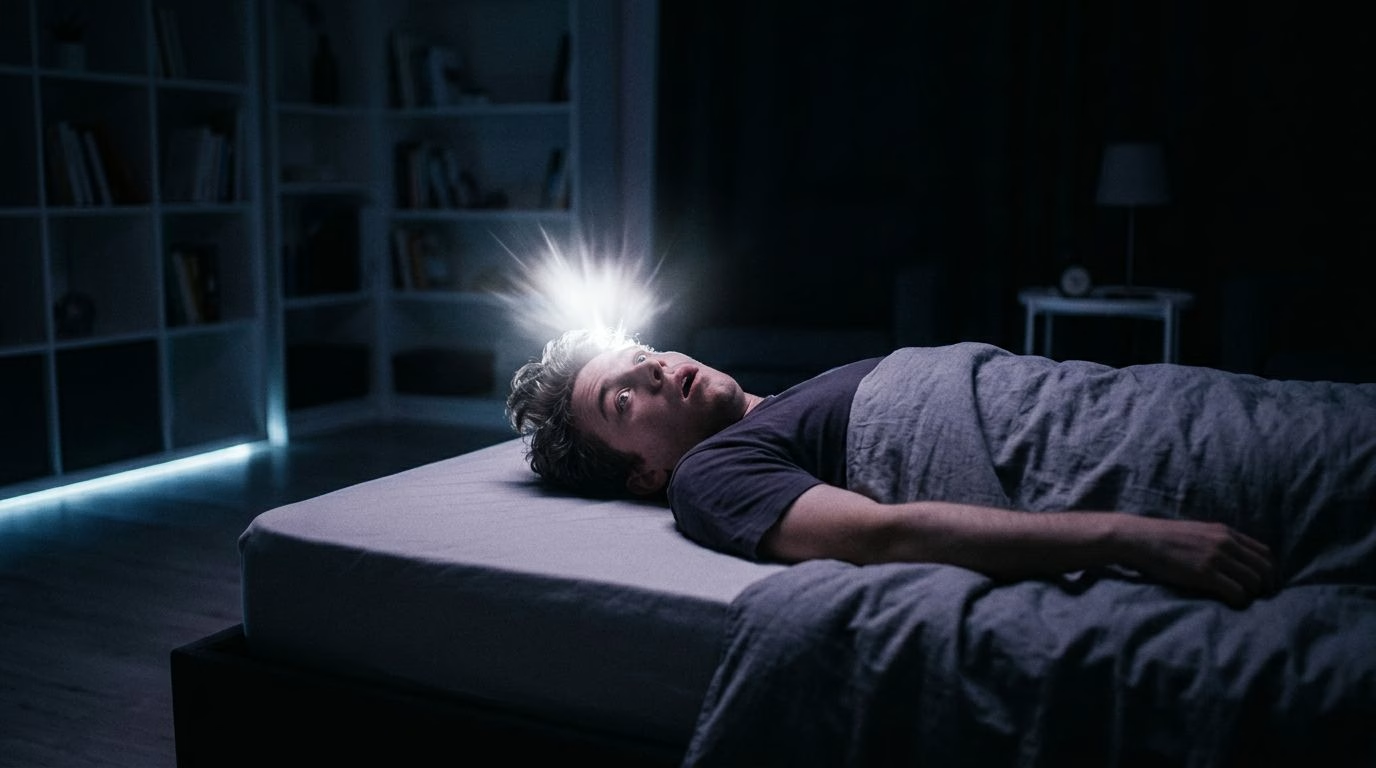
A sudden, jarring noise that seems as loud as a slammed door can be deeply unsettling when it occurs in a silent bedroom.
If you have experienced this sensation while falling asleep or upon waking up, please know that you are not alone, and you are certainly not losing your mind. Exploding head syndrome is a recognized sleep phenomenon that sounds alarming, yet it is typically not dangerous.
The most difficult part of experiencing exploding head syndrome is the initial shock. Your heart might race, your sleep is immediately interrupted, and your mind may jump to the worst possible conclusions. However, once you understand that this is simply a benign sleep event, it often becomes far less frightening.
Key Takeaways
- Exploding head syndrome is a type of parasomnia, which is a sleep-related event where you hear a sudden loud noise that no one else can hear.
- These episodes typically occur during the transitions of falling asleep or waking up rather than when you are fully alert.
- The auditory experience may manifest as a bang, crash, pop, clap, or electrical snap.
- Many people report seeing flashes of light, experiencing a sudden body jolt, or noticing a racing heartbeat immediately following the noise.
- Although startling, the event is usually brief and is not considered physically harmful on its own.
- Lifestyle factors such as stress, poor sleep quality, irregular sleep hours, and anxiety can increase the frequency of episodes.
- Effective management strategies include finding peace through professional reassurance, establishing more consistent sleep habits, and lowering your level of physiological arousal at night.
- You should consult a GP to review any symptoms that are new, frequent, painful, confusing, or accompanied by other concerning neurological signs.
What Exploding Head Syndrome Feels Like
People often describe their experiences with exploding head syndrome in vivid ways because the sound feels remarkably real. These auditory hallucinations may manifest as the sound of gunshots, a cymbal crash, a door slam, a shout, or a sudden electrical burst. Because this loud noise is perceived as external, it can be incredibly jarring.
The timing of these events is significant. They typically occur at the border of sleep, either as you are drifting off or just as you are waking up. That sleep-wake transition is the classic setting for these sensory events.
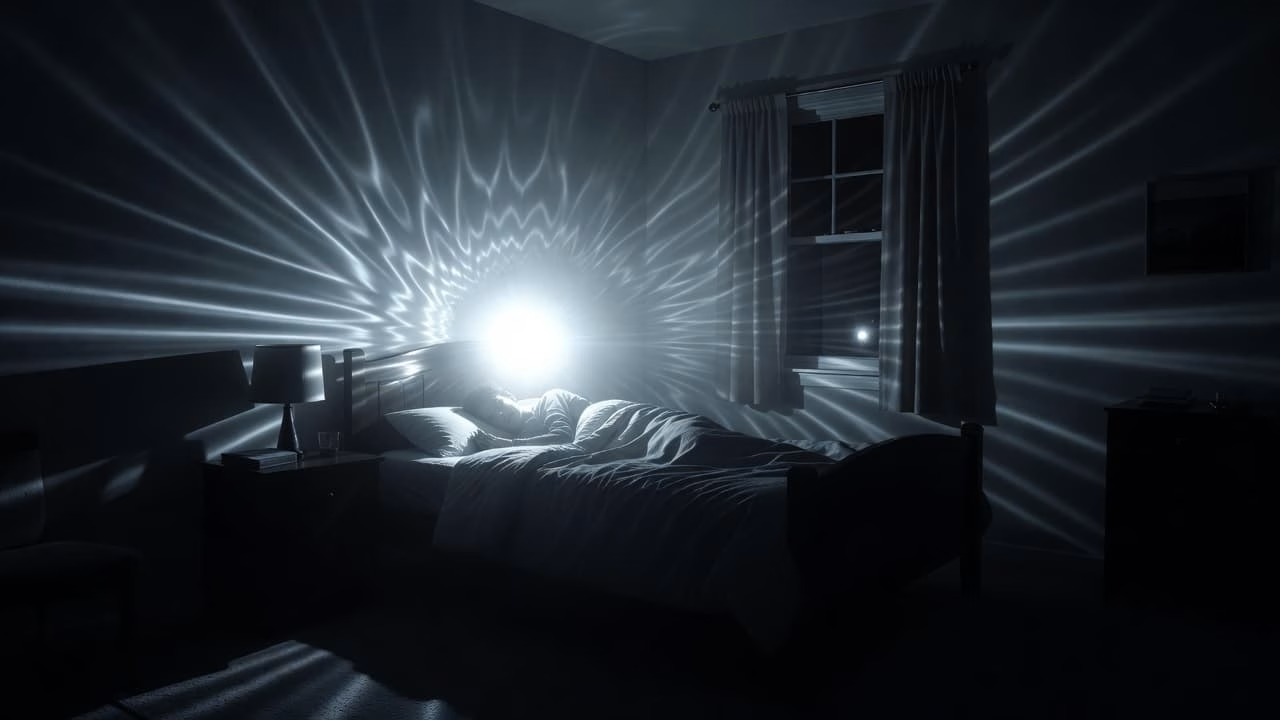
Some people only hear the sound. Others also notice a flash, a head jolt, or a quick muscle twitch. The fear can be intense for a few seconds, and your pulse may shoot up, even though there is no external danger.
Pain is the detail that often confuses people. Despite the violent name, exploding head syndrome usually does not cause actual head pain. You may feel scared or tense afterwards, but the event itself is usually over almost as soon as it starts.
The noise feels external and urgent, but there is no actual explosion and no sound in the room.
That mismatch is why the experience can be so upsetting. Your body reacts as if an alarm has gone off, even though these sensory events are entirely internal and the room remains silent. For many people, simple recognition is the first big step toward calmer nights.
Why It Happens At Sleep Transitions
No one has pinned down one single cause for this phenomenon. What doctors do know is that it is officially recognized as a parasomnia by the ICSD-3, which classifies it among the various sleep-related events that occur during sleep-wake transitions.
A leading scientific theory suggests that these episodes involve a brief brainstem dysfunction. During the normal process of falling asleep or waking up, parts of the brain involved in sensory processing should transition smoothly. Instead, there may be a sudden neurological misfire that the mind interprets as a loud sound or an intense flash of light.
This explains why the timing is so specific. Exploding head syndrome is almost exclusively tied to the moment of falling asleep or waking up, rather than occurring in the middle of a stable sleep cycle. In other words, it is deeply linked to the physiological changeover itself.
Stress may also play a role because a tense, over-alert brain often struggles to settle down smoothly. Poor sleep habits can have the same effect. If your nervous system is already running hot, these brief false alarms become more likely to occur during those delicate windows of transition.
The good news is that a mysterious cause is not the same as a dangerous one. Many sleep conditions are strange without being harmful. This condition often improves as your sleep quality becomes steadier and the fear surrounding the episode begins to fade.
Common Triggers And Risk Factors
Episodes of exploding head syndrome often show up when life feels chaotic. A late night here, an early start there, or a particularly stressful week can cause these sudden auditory sensations to appear. This pattern is common because exploding head syndrome is a sleep disorder that often thrives when your internal rhythm is disrupted.
Significant stress and anxiety serve as primary triggers, as these states keep the brain on a high state of alert precisely when it should be easing into rest. Short sleep is another frequent culprit. Irregular bedtimes, jet lag, shift work, and persistent insomnia all increase the likelihood of an episode.
Caffeine does not cause exploding head syndrome by itself, but consuming too much late in the day can make your sleep lighter and more fragmented. If that sounds familiar, optimal caffeine timing for better sleep can help you spot an easy win.
Maintaining good sleep hygiene is vital, as a shaky schedule can destabilize your transition into rest. The brain prefers a consistent rhythm, and sleep onset often becomes rougher when your daily routine swings wildly. If your mornings are inconsistent, why your wake time matters for sleep quality is worth reading.
Some people notice other experiences during the same season of life, such as sleep paralysis, vivid dreams, or hypnic jerks. While these are separate phenomena, they are related events that demonstrate how the sleep-wake boundary can become unstable when your rest is under pressure.
Age does not protect you from the condition, and having one episode does not mean you will experience many more. For some, it happens once and vanishes. For others, it comes in clusters for a few nights or weeks before fading away again as their sleep hygiene improves.
How It Differs From Other Problems
The symptoms of this condition can feel dramatic enough to mimic something more serious. Still, the pattern usually provides useful clues. Exploding head syndrome, sometimes referred to as episodic cranial sensory shock, is brief, happens around sleep transitions, and usually leaves no ongoing neurological deficits.
To understand the condition better, it is helpful to look at a differential diagnosis. This quick comparison can help you see the differences between common sleep disturbances.
| Experience | Usual Timing | Common Features | What Sets It Apart |
|---|---|---|---|
| Exploding head syndrome | Asleep onset or waking | Sudden bang, pop, or flash, fear, racing heart | Usually painless, very brief, no real sound in the room |
| Hypnic jerk | As falling asleep | Sudden body jerk, falling feeling | Movement is more obvious than sound |
| Hypnic headache | During sleep | Sharp, throbbing pain | Usually wakes the person up due to pain |
| Tinnitus | Any time, often quiet settings | Ringing, buzzing, hissing | Tends to last longer and is not tied only to sleep transitions |
| Nocturnal seizures | During sleep | Repeated movements, confusion, tongue biting in some cases | May leave clear after-effects or require witness reports |
| Migraine aura | Before or during headache | Visual changes, odd sensations | Usually lasts longer and is not limited to drifting off |
This table serves as a guide rather than a clinical diagnosis. Your own health history matters more than any simple checklist. Because exploding head syndrome is distinct from other conditions, it is important to observe the specific circumstances surrounding your experience.
Real external noises can also muddy the picture. If a partner hears the same bang, or if it happens in the same room at the same time each night, check the obvious things first. Heating pipes, radiators, doors, and nearby traffic can all create surprise noises that mimic internal sensations.
The main red flags to watch for are persistence, physical pain, confusion, or symptoms that do not fit the usual sleep transition pattern. Those scenarios deserve medical advice rather than guesswork.
What Helps In The Moment And Over Time
The first goal is to stop the fear spiral. When an episode hits, remind yourself what it is. A short sentence helps, such as, “That was a sleep event, not an emergency.” This can keep one startling moment from turning into two hours of worry. Finding comfort in this simple reassurance is often the most effective way to prevent the cycle of anxiety from worsening.
Next, calm the body before trying to sleep again. Slow breathing helps because it lowers the sense of threat. Try a longer exhale than inhale for a minute or two, keep the lights low, and avoid checking upsetting messages on your phone.
A sleep log can be surprisingly useful for managing exploding head syndrome. Note the date, how much you slept, your stress level, caffeine timing, alcohol, and whether the episode happened at sleep onset or waking. Patterns often appear within a couple of weeks.
Good sleep hygiene is a core long term strategy. Regularity matters more than perfection. A steady wake time, even after a rough night, often works better than sleeping in for hours. Daily outdoor light soon after waking can also steady the body clock, and using daylight to regulate your sleep cycle explains why that habit punches above its weight.
Night time habits count as well. Keep late caffeine low, reduce alcohol close to bed, and give yourself a simple wind down period. That could be dimmer light, a warm shower, gentle stretching, paper reading, or quiet music. The best routine is the one you will repeat.
If anxiety is feeding the problem, tackle the anxiety directly. Relaxation audio, journalling before bed, and structured support for insomnia can all help. Some people find that the episodes fade once they stop bracing for them every night.
There is no single standard medicine for this condition. If symptoms are frequent or badly disruptive, a GP or sleep specialist may look at the bigger picture, including stress, insomnia, medication effects, and other sleep disorders. In rare and severe cases, a specialist might consider medications such as amitriptyline or calcium channel blockers. In most cases, however, reassurance and better sleep habits are the primary starting point for treatment.
When To See A GP Or Seek Urgent Help
Most people with typical exploding head syndrome do not need urgent care. Even so, getting checked is sensible if episodes are new, frequent, or seriously affecting your sleep.
Book a GP appointment if you have repeated episodes, strong fear about going to bed, or if persistent daytime sleepiness is beginning to impact your quality of life. The same goes for symptoms that do not fit the usual pattern, such as ongoing headaches, hearing changes, or events that happen when you are fully awake. During your consultation, your doctor may consider diagnostic tests like an EEG or a polysomnography study to rule out other neurological conditions or seizure disorders, ensuring that your symptoms are indeed related to exploding head syndrome and not another underlying issue.
Use NHS 111 if you are unsure what level of care you need, especially outside normal surgery hours. They can help you decide between self-care, a GP review, or urgent assessment.
Go to A&E or seek urgent help if the event comes with one-sided weakness, trouble speaking, a new severe headache, fainting, chest pain, or a prolonged period of confusion. Those are not standard features of exploding head syndrome and should not be brushed off as just sleep stuff.
If a bed partner reports repeated shaking, unusual breathing, or spells that last more than a moment, tell your GP. Another sleep or neurological issue may need a proper look.
Living With It Without Feeding The Fear
The hardest part of exploding head syndrome is often the emotional aftermath, rather than the event itself. Once you begin dreading bedtime, your sleep becomes lighter, and this state of heightened alertness can unfortunately keep the cycle going.
Maintaining a calm response is the most effective way to break that loop. It is helpful to remember that this is a benign condition, so try to name the experience, write it down if needed, and return to a simple wind-down routine instead of scanning your body for perceived danger. The less drama your brain attaches to the event, the less power it tends to hold. Managing the stress and anxiety associated with the anticipation of these episodes is crucial for long-term improvement.
It also helps to talk about it openly. Many people keep quiet because the name of the condition sounds absurd, yet GPs and sleep clinicians are very familiar with this pattern. A plain description, such as experiencing a sudden loud bang in the head as you fall asleep, is usually enough to start a useful conversation about exploding head syndrome with a healthcare provider.
If you are already working on improving your sleep hygiene, stay focused on the basics. Good mornings often lead to better nights, and steady, consistent rest usually helps reduce the occurrence of strange sleep-boundary events.
Conclusion
A silent room can still feel explosive when you experience these sounds, but this benign condition is generally brief and not considered harmful. The main burden is often the cycle of fear, lost sleep, and the worry that you are experiencing a serious medical emergency.
Most people manage this sleep disorder effectively through medical reassurance, establishing a consistent sleep schedule, and reducing evening arousal. If your symptoms are frequent, unusual, or accompanied by red flags, a GP review is the right next step to rule out other underlying health concerns.
Ultimately, understanding the mechanics of exploding head syndrome, keeping a regular routine, and practicing patience often take the sting out of the experience, helping you find peace in the quiet of the night.
FAQ
Is Exploding Head Syndrome Dangerous?
Usually, no. Exploding head syndrome is generally seen as a harmless sleep-related event, even though the perception of a loud noise feels intense. The main problems associated with this condition are fear, broken sleep, and the stress that can follow.
Can It Happen More Than Once In One Night?
Yes, it can, although many people only get single episodes. Some have clusters over a few nights or weeks, especially during times of poor sleep when falling asleep or waking up, and then the frequency settles again.
Does It Mean I Am Having A Seizure?
Not usually. Exploding head syndrome tends to be very brief and tied to the moments of falling asleep or waking up, without ongoing confusion or repeated body movements. If you experience unusual movements, memory gaps, injury, or prolonged confusion, seek medical advice to rule out other issues.
Why Does It Feel So Real?
Your brain reacts to these sensory events like a real alarm. Even without an outside source for the loud noise, the sudden event can trigger a strong startle response, a fast heartbeat, and instant alertness.
Can Stress And Anxiety Make It Worse?
Yes, they often can. High levels of stress and anxiety, along with insomnia, can keep the brain more alert at night. This state may make transitions when falling asleep less smooth, which makes episodes of exploding head syndrome more likely to occur.
Is There A Test For Exploding Head Syndrome?
There is no single medical test that confirms it. A GP usually diagnoses the condition based on the description of the loud noise, the timing of the symptoms during transitions like waking up, and the overall experience. They will then decide if any further investigations are necessary.
Should I Wake My Partner Or Turn On All The Lights?
You do not need to do so if the episode matches the usual pattern and passes quickly. Keeping the room dim and focusing on calming your breathing often works better than turning these sensory events into a reason for a full wake-up.
Can Better Sleep Habits Stop It Completely?
Healthy habits can help a lot, but they do not work like an on-off switch. Many people experience fewer episodes when they keep a steady wake time, cut out late caffeine, lower their stress, and avoid the fatigue that comes from running on too little sleep.
Leave a Reply